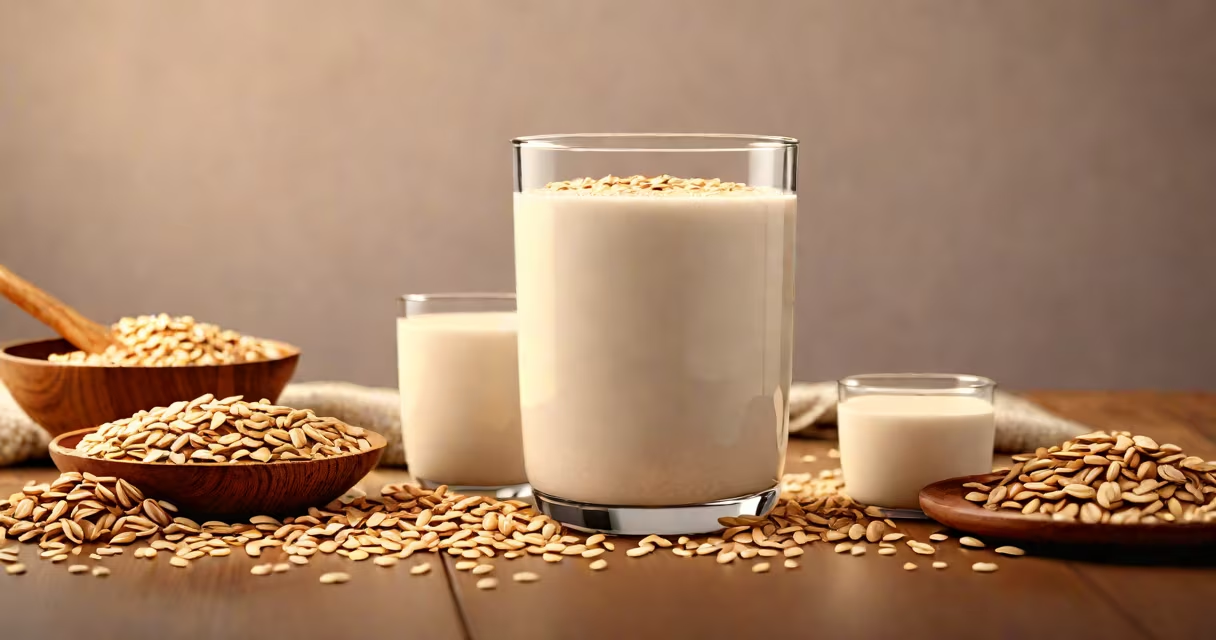
Oat milk is a plant-based drink made from blended oats and water, then strained. It's generally safe and nutritious, though some people may need to watch for allergies or added sugars.
Oat milk is produced by soaking steel-cut oats in water, blending them until smooth, then straining the mixture through a cheesecloth or nut milk bag. The result is a creamy, slightly sweet liquid. Commercial versions often add vitamins, minerals, and sweeteners.
Unsweetened oat milk contains about 70 calories per cup, 1.5 grams of fat, 16 grams of carbs, and 2 grams of protein. Many brands fortify their products with vitamins A, D, B12, and calcium. While it lacks the protein of cow's milk, it offers fiber and antioxidants like avenanthramides, which may reduce inflammation.
For context, a study published in the Journal of Food Science and Technology highlights oat milk's potential cholesterol-lowering properties due to its beta-glucan content.
Oat milk may contain gluten if cross-contamination occurs during processing, posing a risk for those with celiac disease. Always check labels for certifications. Some store-bought varieties are high in added sugars, which can negate health benefits. Opt for unsweetened versions when possible.
Some believe oat milk is inferior to other plant-based milks because of its lower protein content. However, it compensates with higher fiber and often more added nutrients. Others assume it's always healthy, overlooking added sugars or lack of fortification in certain brands.
One non-obvious fact: oat milk is often used in coffee shops because it froths well, making it a popular dairy alternative for lattes and cappuccinos.
People with oat allergies or gluten sensitivities should steer clear unless they find certified gluten-free versions. Those monitoring blood sugar levels should choose unsweetened oat milk to avoid spikes.
Oat milk is not inherently bad for you. It offers a nutritious, plant-based alternative to dairy, especially when unsweetened and fortified. However, individual health needs and dietary restrictions should guide its consumption.