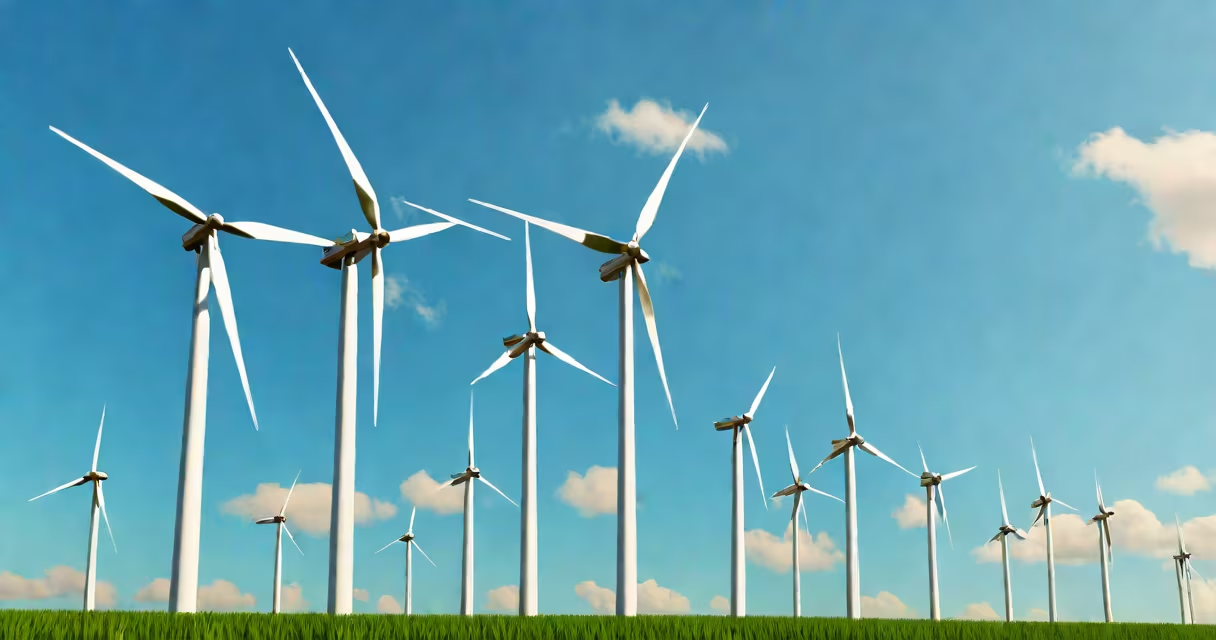
Wind is not a non-renewable resource because it's replenished naturally by Earth's atmospheric processes. Unlike finite fossil fuels, wind energy is sustainable as long as the sun heats the planet unevenly, driving air currents.
Wind forms when solar radiation warms different parts of Earth's surface at varying rates. This creates temperature gradients that generate pressure differences, causing air to move. Wind turbines convert this kinetic energy into electricity through mechanical rotation.
| Type | Description | Example |
|---|---|---|
| Onshore Wind | Turbines installed on land, typically in rural areas with consistent wind speeds. | Texas Panhandle wind farms |
| Offshore Wind | Turbines placed in bodies of water, often near coastlines, where winds are stronger and more consistent. | Block Island Wind Farm, Rhode Island |
Wind is classified as a renewable resource because it's continuously replenished by natural processes. The sun's heat drives global wind patterns, ensuring a steady supply. Unlike coal or oil, wind doesn't deplete over time. According to the U.S. Department of Energy, wind power could supply up to 40% of U.S. electricity by 2030.
Some confuse wind with non-renewable resources due to its variability. However, wind's intermittency is managed through energy storage and grid integration, not scarcity. Unlike fossil fuels, wind doesn't require extraction or combustion, making it far more sustainable.
In 2023, I visited a wind farm in Iowa where turbines generated enough power for 100,000 homes annually. The site's operator explained how predictive software adjusted turbine angles to maximize output during peak wind periods-a clear example of sustainability in action.
Wind is a renewable resource because it relies on perpetual natural cycles. Its sustainability makes it a key player in clean energy transitions worldwide.