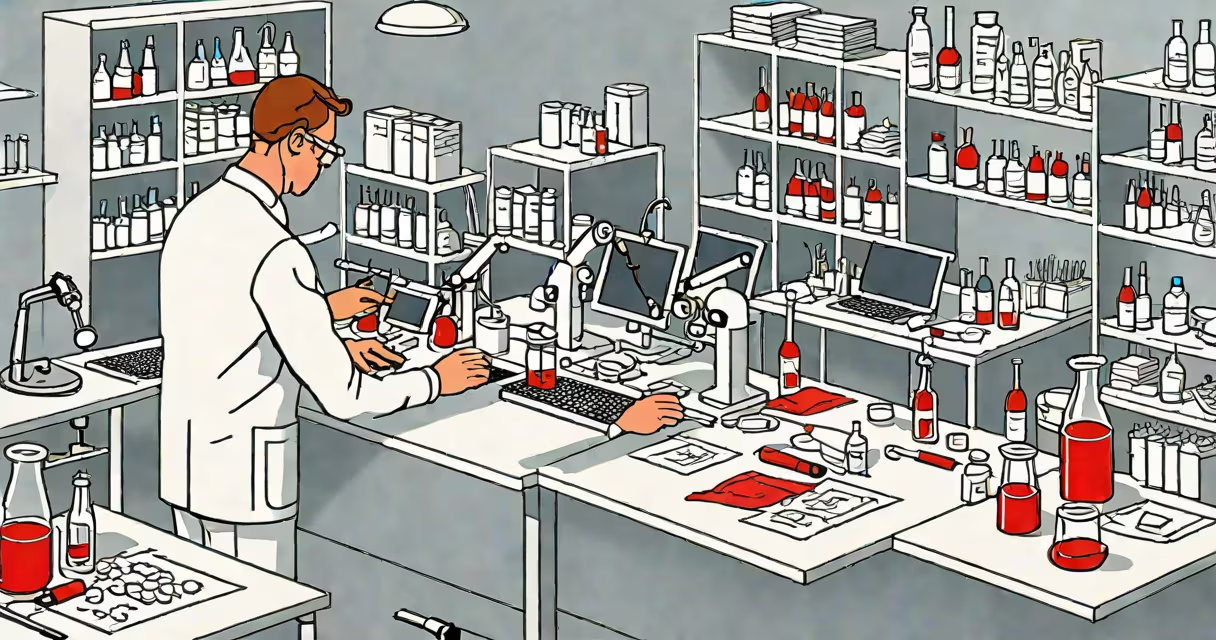
A lab technician performs diagnostic tests on biological samples to help doctors diagnose and treat diseases. They work in hospitals, clinics, and research labs, operating sophisticated equipment and following strict safety protocols.
Lab technicians collect, analyze, and document results from blood, urine, and tissue samples. They prepare specimens, calibrate instruments, and maintain sterile environments. Their work supports medical diagnoses, treatment plans, and public health monitoring.
| Type | Key Responsibilities | Work Setting |
|---|---|---|
| Clinical lab technicians | Perform routine tests like complete blood counts (CBCs) and urinalyses | Hospitals, clinics, and diagnostic labs |
| Medical laboratory technicians | Conduct complex tests using advanced equipment | Research institutions and specialized labs |
| Phlebotomists | Draw blood for tests, transfusions, research, or donations | Hospitals, blood donation centers, and labs |
Many people confuse lab technicians with lab assistants. Technicians require specialized education and certification, while assistants often have less training and perform basic tasks like cleaning and organizing supplies.
In a typical day, a clinical lab technician might process 50 blood samples for CBCs. They'd centrifuge the samples to separate plasma, platelets, and red and white blood cells. Using an automated analyzer, they'd measure hemoglobin levels, red blood cell counts, and other parameters. Results would then be documented in a laboratory information system for physicians to review.
I once shadowed a lab technician at a local hospital. She showed me how to properly label samples, run quality control checks, and troubleshoot equipment malfunctions. The precision and attention to detail required was impressive.
For more details on what a clinical lab technician does, see clinical lab technician roles.