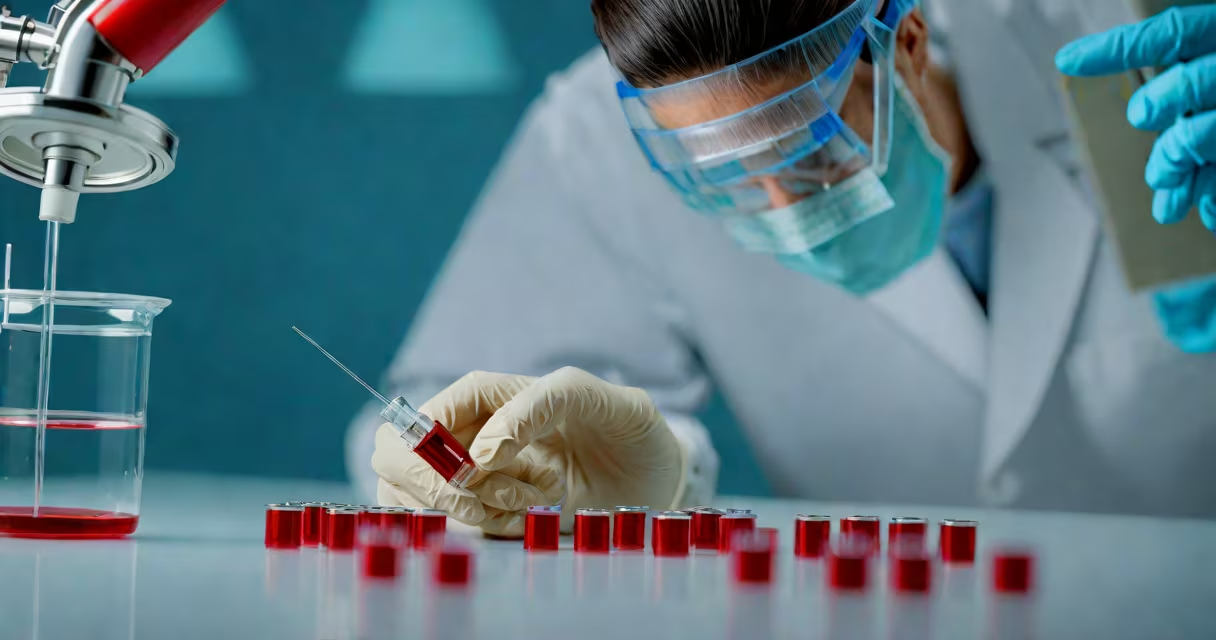
A clinical lab technician collects, tests, and analyzes body fluids like blood and urine to help doctors diagnose diseases and plan treatments. They work under medical laboratory scientists in hospitals, clinics, or private labs.
Lab technicians follow strict protocols to ensure accurate results. They operate sophisticated equipment like centrifuges and microscopes, often processing dozens of samples daily. For example, a technician might prepare a blood sample by separating its components using a centrifuge, then analyze the results to detect infections or disorders.
Technicians perform several types of tests:
Each test requires different techniques and equipment. A common misconception is that lab techs only handle blood-urine, tissue, and other fluids are also tested.
Most clinical lab technicians work in hospitals (60%), but they're also found in diagnostic labs, physician offices, and research facilities. Their work is critical because 70% of medical decisions rely on lab results, according to the American Society for Clinical Pathology.
For instance, during the COVID-19 pandemic, lab technicians processed thousands of viral tests daily, helping track the virus's spread. Without their work, doctors would lack important data to treat patients effectively.
Some people confuse clinical lab technicians with medical lab technicians or clinical technicians. While similar, lab technicians focus on testing samples, whereas clinical technicians may also maintain lab equipment or train staff.
Another mistake is assuming lab work is purely technical-technicians must also document results precisely and communicate findings to healthcare teams. Attention to detail is important to avoid errors that could impact patient care.
When I visited a local hospital lab, I saw technicians wearing protective gear while handling samples. One technician explained how they cross-check results with colleagues to minimize mistakes-a practice called "double-checking" that ensures accuracy.
Most lab technicians earn an associate degree in clinical laboratory science and pass certification exams from organizations like the American Society for Clinical Pathology. Some states require licensure, which involves additional training or exams.
According to the U.S. Bureau of Labor Statistics, employment for clinical lab technicians is projected to grow 7%, about as fast as average.