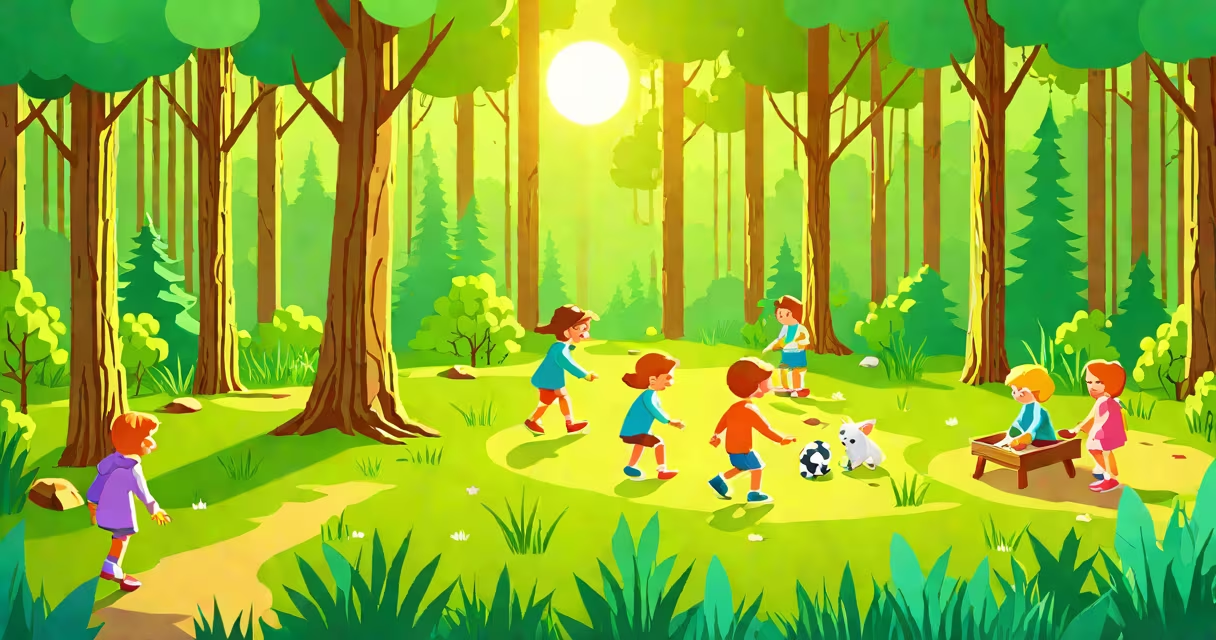
The term "last child in the woods" describes the alarming trend of children spending less time outdoors, leading to what some experts call nature deficit disorder. This phrase was popularized by Richard Louv's 2005 book, which highlighted the negative effects of reduced outdoor play on children's physical and mental health.
As society becomes more urbanized and technology-driven, children spend increasing amounts of time indoors. Louv's research shows that this shift has led to a generation of kids who are disconnected from nature. The consequences include higher rates of obesity, attention disorders, and anxiety. Studies suggest that children who spend time outdoors regularly exhibit better focus, creativity, and well-being.
Outdoor activities for children fall into several categories:
Parents, educators, and policymakers use the concept of "last child in the woods" to advocate for more outdoor time in schools and communities. For example, some schools have introduced outdoor classrooms or nature-based curricula to combat the trend. Programs like wellness in the woods encourage families to spend more time in natural settings, promoting both physical and mental health benefits.
One common misconception is that outdoor play is only about physical activity. While exercise is a significant benefit, outdoor time also fosters cognitive and emotional development. Another myth is that nature activities are only for rural areas. Urban parks, community gardens, and even backyard exploration can provide meaningful experiences. Louv's work emphasizes that even small doses of nature can have profound effects on children's development.
For instance, a study published in the journal Environmental Research found that children who spent at least two hours a week in nature showed improved mental health and reduced stress levels. This finding underscores the importance of integrating outdoor activities into daily routines, regardless of location.
In my experience, even a short walk in a local park can make a noticeable difference in a child's mood and energy levels. Encouraging more outdoor time doesn't require drastic changes-small steps can lead to significant improvements in well-being.