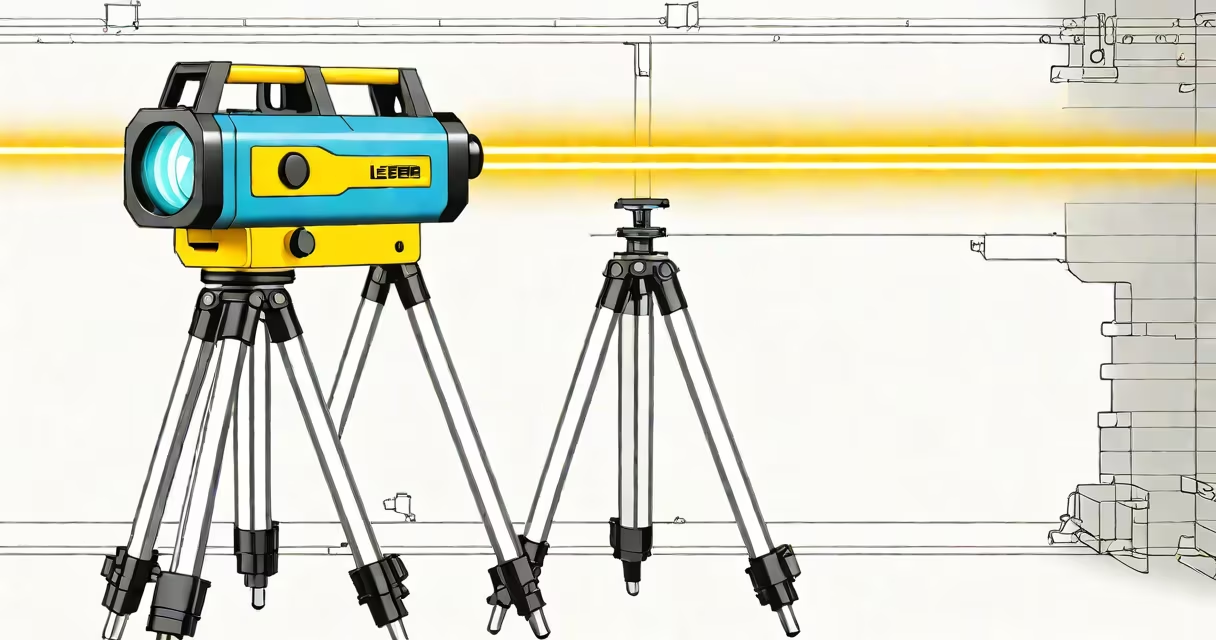
A laser level tool is a precision instrument that projects visible laser beams to create perfectly horizontal or vertical reference lines for construction, installation, and alignment tasks. These devices replace traditional spirit levels by eliminating human error in leveling and plumb checks.
Most laser level tools use a self-leveling mechanism with a pendulum or electronic sensors to detect and compensate for slight tilts. The device projects one or more laser beams onto surfaces, creating visible reference lines. Some models rotate the beam to project a full 360-degree circle, useful for layout work.
When placed on a stable surface, the laser level automatically compensates for minor inclines. If the tilt exceeds the self-leveling range (typically 4 degrees), the laser shuts off or indicates that manual leveling is required. The projected beams can be seen in low-light conditions, making them ideal for both indoor and outdoor use.
| Type | Key Features | Common Uses |
|---|---|---|
| Line Lasers | Projects single or multiple lines (horizontal, vertical, or cross) | Wall mounting, tile installation, cabinet placement |
| Rotating Lasers | Projects a 360-degree plane; often used with a detector | Large construction sites, grading, roadwork |
| Point Lasers | Projects single points at various angles | Alignment tasks, plumbing, electrical work |
| Combination Lasers | Combines line, point, and sometimes rotating functions | Versatile applications in construction and DIY |
Laser level tools are widely used in construction, renovation, and DIY projects. Contractors use them for framing, drywall installation, and flooring. Electricians and plumbers rely on them for precise alignment of fixtures and outlets. In landscaping, they help grade land accurately. Even in home improvement projects like hanging pictures or installing shelves, laser levels ensure perfect alignment.
One common misconception is that laser levels are only for professionals. While they are useful tools on job sites, many models are designed for home use, with simpler controls and lower price points. For example, the Bosch GLL 2-15 is a popular choice among DIY enthusiasts due to its ease of use and affordability.
High-quality laser levels offer accuracy within 1/8 inch at 30 feet. This precision is achieved through careful calibration during manufacturing. Over time, however, the device may require recalibration if dropped or exposed to extreme temperatures. Most manufacturers recommend annual calibration for professional-grade tools to maintain accuracy.
Unlike traditional spirit levels, which can be affected by temperature changes and magnetic interference, laser levels provide consistent results regardless of environmental factors. However, they do require a stable surface to operate correctly. Placing the tool on uneven ground or vibrating surfaces can lead to inaccurate readings.
When selecting a laser level tool, consider the following factors:
For those new to laser levels, starting with a basic line laser is recommended. As skills and project complexity grow, upgrading to a combination or rotating laser can provide additional functionality. Always refer to the manufacturer's instructions for proper setup and usage to ensure accurate results.