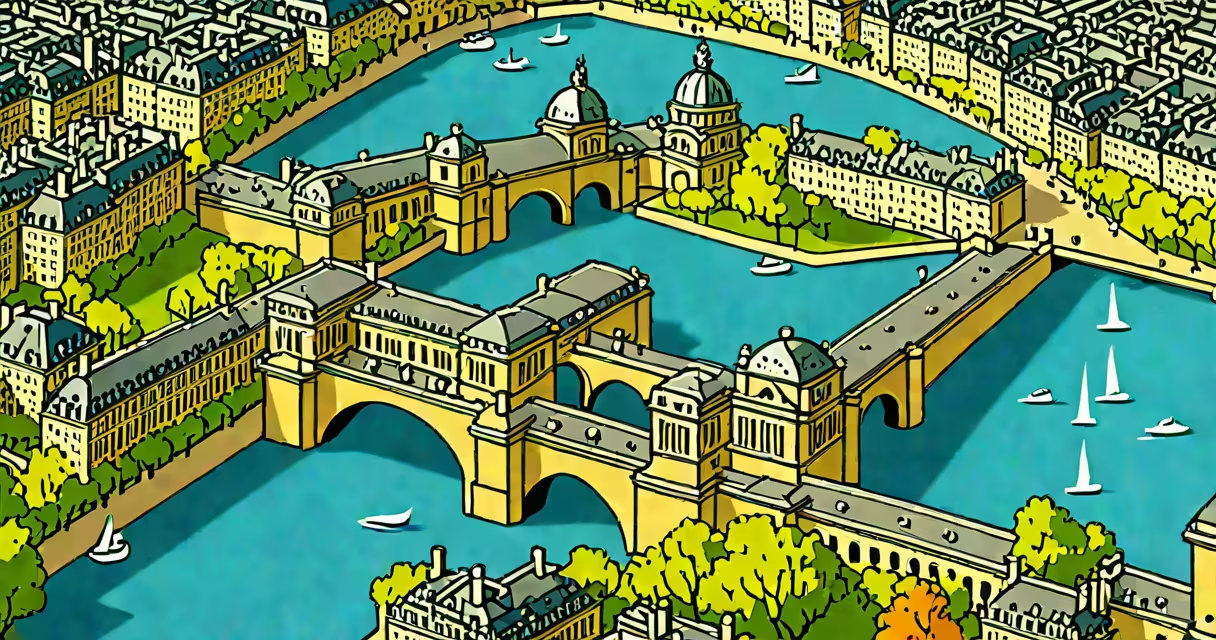
Le Pont des Arts is a pedestrian bridge in Paris that spans the Seine River between the Institut de France and the central square of the Palais du Louvre. Originally constructed in 1984, it replaced earlier versions dating back to 1804, making it one of the city's most historic crossings.
The bridge measures 155 meters long and 11 meters wide, with a flat deck supported by seven steel arches. Its design emphasizes accessibility, featuring gentle slopes rather than stairs to accommodate all visitors. The bridge's name translates to "The Arts Bridge," reflecting its location near major cultural institutions.
Unlike vehicular bridges, Le Pont des Arts serves exclusively pedestrians. Its wide walkway accommodates thousands of daily visitors who stroll, cycle, or pause to enjoy views of the river and surrounding landmarks. The bridge's gentle curves align with the Seine's natural flow, creating an organic connection between both banks.
Structurally, the bridge's steel structure provides flexibility to withstand Paris' seasonal temperature fluctuations. Its pavement consists of light-colored wooden planks that reduce glare while offering traction in wet conditions. LED lighting integrated into the railings illuminates the crossing at night, enhancing safety and visibility.
| Feature | Description |
|---|---|
| Art Installations | Temporary exhibitions displayed along the bridge's railings, rotated monthly |
| Love Locks | Couples attach padlocks to the bridge as symbols of their commitment (removed periodically to prevent structural damage) |
| Accessibility | Wheelchair-friendly ramps at both ends and tactile guidance paths for visually impaired visitors |
Located in the heart of Paris' 1st arrondissement, Le Pont des Arts connects two of the city's most culturally significant areas. On the left bank, it leads to the Louvre Museum and Tuileries Garden, while the right bank provides access to the Latin Quarter and Notre-Dame Cathedral.
The bridge serves multiple purposes beyond basic transportation. It functions as an outdoor gallery space, hosting rotating art exhibitions curated by local institutions. These displays change the bridge into a changing cultural platform accessible to all passersby without admission fees.
Many visitors assume Le Pont des Arts is the oldest bridge in Paris. In reality, the Pont Neuf holds that title, having been completed in 1607. While Le Pont des Arts may appear ancient due to its classical design, the current structure dates only to 1984, replacing earlier versions damaged by floods and war.
Another frequent misunderstanding involves the bridge's name. Despite its association with romantic love through the love lock tradition, "Les Arts" actually refers to the nearby academic institutions rather than artistic expression. The bridge's proximity to the Louvre and other cultural sites contributes to this confusion.
During a recent visit to Paris, I timed my crossing of Le Pont des Arts to coincide with sunset. The warm golden light transformed the bridge's steel arches into silhouettes against the sky, while reflections in the Seine created a mirror image below. As I paused mid-span, I noticed how the bridge's gentle slope encouraged lingering rather than hurried passage - a deliberate design choice that enhances the pedestrian experience.
Nearby, arts by the sea exhibitions along the Seine Riverbank provided additional cultural context. These temporary installations often reference the bridge's history, creating a cohesive artistic experience that extends beyond its physical structure.
Le Pont des Arts remains one of Paris' most distinctive landmarks, blending practical function with cultural significance. Its combination of historical references, artistic programming, and thoughtful design creates a unique urban space that continues evolving to meet modern needs while preserving its heritage.