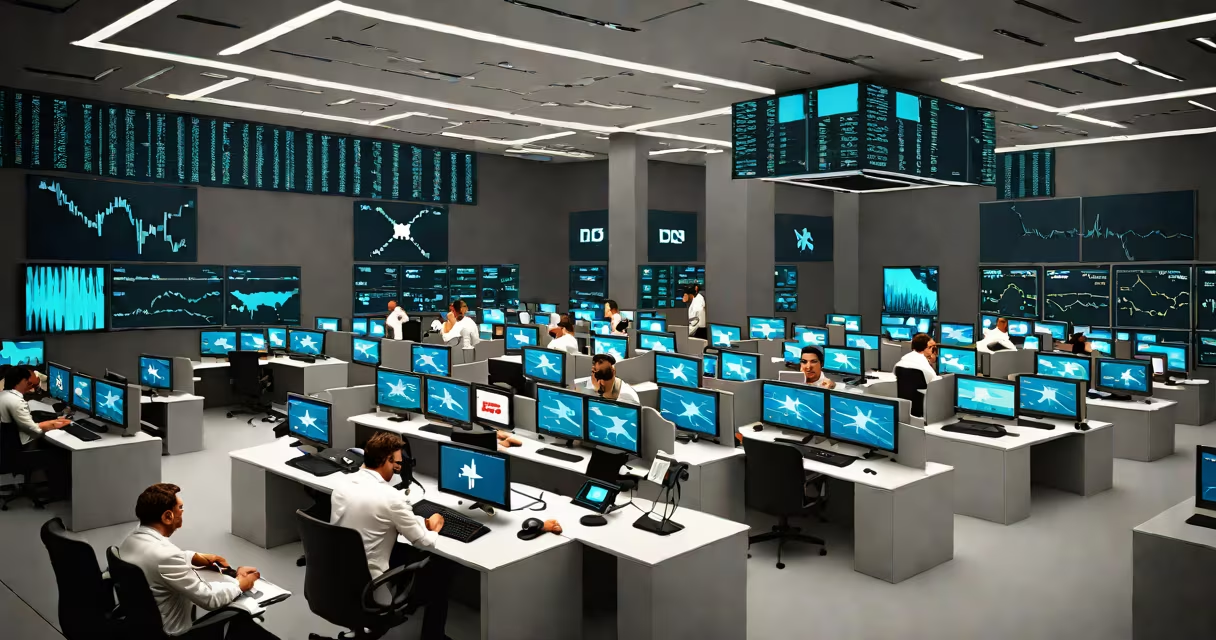
A trade market is a platform where buyers and sellers exchange financial assets like stocks, bonds, or commodities. These markets operate through centralized exchanges or decentralized networks, using price mechanisms to determine fair value.
Markets match buyers and sellers through bids and asks. For example, on the New York Stock Exchange, traders execute orders manually and electronically. The Nasdaq operates entirely electronically, processing millions of transactions daily.
| Market Type | Key Characteristics | Examples |
|---|---|---|
| Stock Markets | Trade equity shares of publicly held companies | NYSE, Nasdaq, London Stock Exchange |
| Forex Markets | Exchange currencies between countries | Interbank market, currency brokers |
| Commodity Markets | Trade physical goods like oil, gold, or wheat | Chicago Mercantile Exchange, ICE |
| Bond Markets | Trade debt securities issued by governments or corporations | U.S. Treasury market, corporate bond exchanges |
Many beginners confuse trading with investing. Trading involves short-term strategies to profit from price fluctuations, while investing focuses on long-term growth. For example, day traders might hold positions for minutes, whereas investors might hold stocks for years.
Another mistake is assuming all trading requires extensive capital. While some markets have high entry barriers, others like fractional shares or forex allow participation with minimal funds. Platforms like Robinhood enable trading with as little as $1.
I began trading with a simulated account, executing mock trades for three months before investing real money. This approach helped me understand market dynamics without financial pressure.
According to the Securities and Exchange Commission, successful traders often combine technical analysis with fundamental research. Technical indicators like moving averages or relative strength index help identify potential entry and exit points.
Modern traders rely on software platforms offering real-time data, charting tools, and order execution capabilities. Popular options include MetaTrader, ThinkorSwim, and TradeStation. These platforms provide access to multiple markets and asset classes from a single interface.
When choosing a platform, consider factors like fees, available markets, and educational resources. Many brokers offer demo accounts for practice before committing funds.
All trading involves risk of loss. The Financial Industry Regulatory Authority (FINRA) warns that use can amplify both gains and losses. Beginners should start with modest position sizes and avoid excessive use until they gain experience.
Diversification is another important concept. Spreading investments across different assets and sectors can reduce portfolio risk. For example, combining technology stocks with healthcare and consumer goods creates a balanced exposure to market conditions.
The markets evolve constantly, requiring ongoing education. Stay updated with financial news, attend webinars, and read market analysis from reputable sources. Understanding economic indicators like GDP growth, inflation rates, and interest rate changes provides context for trading decisions.