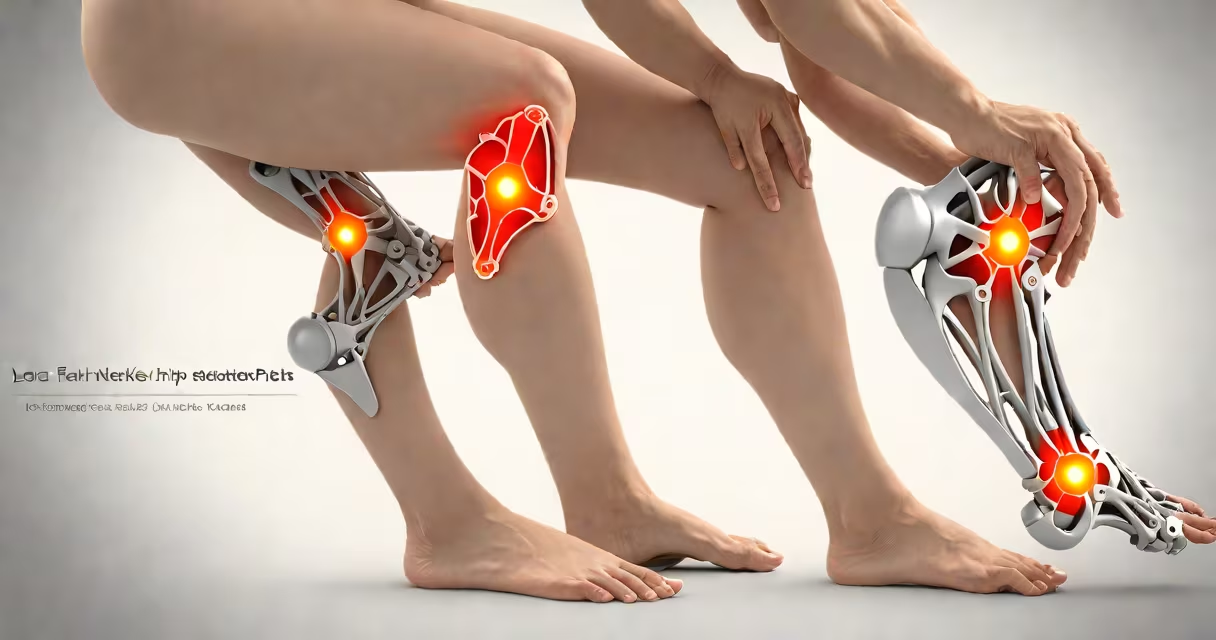
Leg pain between knee and hip typically results from muscle strains, nerve compression, or joint inflammation. This discomfort often affects the thigh region and can stem from overuse, injury, or underlying conditions.
The thigh area contains muscles, nerves, and blood vessels that connect the knee to the hip. Pain in this region often arises from irritation or injury to these structures. For example, the quadriceps and hamstrings, which run along the front and back of the thigh, can become strained from excessive use or sudden movements.
Several factors contribute to leg pain between knee and hip:
Treatment depends on the underlying cause. For muscle strains, rest, ice, and gentle stretching help reduce inflammation. Nerve-related pain may require medications like anti-inflammatory drugs or physical therapy. In severe cases, medical intervention, such as corticosteroid injections, may be necessary.
For example, if the pain stems from a strained quadriceps muscle, applying ice for 15 minutes every few hours and avoiding strenuous activities can promote healing. If the pain persists or worsens, consulting a healthcare professional is advisable.
Underlying conditions like arthritis or sciatica may need more targeted treatments, including physical therapy or lifestyle changes. Proper diagnosis is important for effective relief.
Seek medical attention if the pain is severe, persistent, or accompanied by swelling, redness, or numbness. These symptoms could indicate a more serious condition requiring professional evaluation.
For instance, if the pain is constant and accompanied by tingling or weakness in the leg, it might signal nerve damage or a herniated disc. Early diagnosis and treatment can prevent further complications.
Leg pain between knee and hip can arise from various causes, including muscle strains, nerve issues, or joint problems. Identifying the root cause is essential for effective treatment. If the pain is severe or persistent, consulting a healthcare provider ensures proper care and relief.