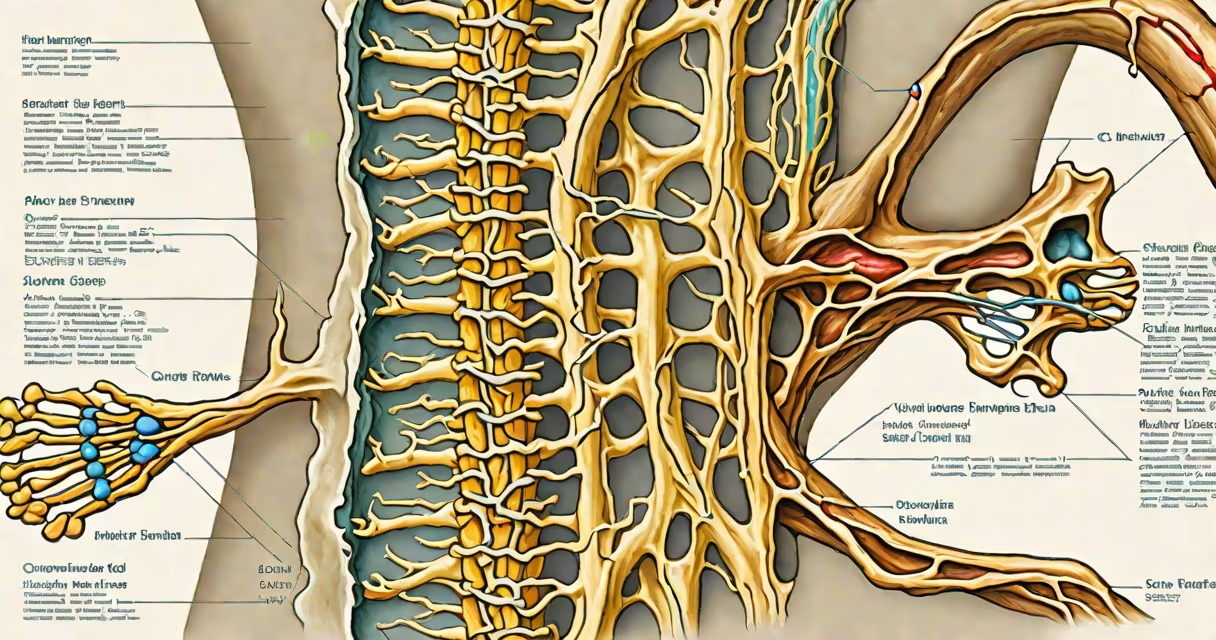
Lumbar spinal nerve compression happens when one or more nerves in your lower back are pressed or squeezed. This typically causes pain, tingling, or numbness that radiates down the leg. The condition is often linked to aging, injury, or degenerative disc disease.
The lumbar spine has five vertebrae (L1-L5), each with nerve roots that branch out. When these nerves are compressed, they can't function properly, leading to symptoms. The compression usually results from:
Compression disrupts nerve signaling, causing pain, weakness, or loss of sensation in areas served by the affected nerve.
| Cause | Description | Common Age Group |
|---|---|---|
| Herniated Disc | A disc's soft center pushes through a tear in its outer layer, pressing on nearby nerves. | 20s-50s |
| Spinal Stenosis | The spinal canal narrows, often due to arthritis or bone overgrowth. | 50+ |
| Bone Spurs | Extra bone grows along joint edges, sometimes pressing on nerves. | 40+ |
| Injury | Trauma, like a car accident or fall, can displace vertebrae or discs. | All ages |
According to the American Academy of Orthopaedic Surgeons, herniated discs are the most common cause of lumbar nerve compression in younger adults, while spinal stenosis is more prevalent in older individuals.
Symptoms depend on which nerve is compressed. Common signs include:
Doctors diagnose compression using:
If left untreated, compression can lead to permanent nerve damage or chronic pain.
Most cases improve with conservative treatments like physical therapy, pain medication, or epidural steroid injections. Severe cases may require surgery, such as a discectomy (removing part of a herniated disc) or laminectomy (removing bone to relieve pressure).
I once worked with a patient who had chronic sciatica due to a herniated disc. After six weeks of physical therapy and targeted exercises, their pain reduced. This shows how effective non-surgical treatments can be.
Many people confuse lumbar nerve compression with general back pain. Unlike muscle strains, which resolve quickly, nerve compression often causes radiating pain down the leg. Another myth is that surgery is always needed-most cases respond well to conservative care.
For more on nerve-related conditions, see how sciatica differs from other nerve issues.
To reduce risk:
While not all cases are preventable, these steps can lower your risk.