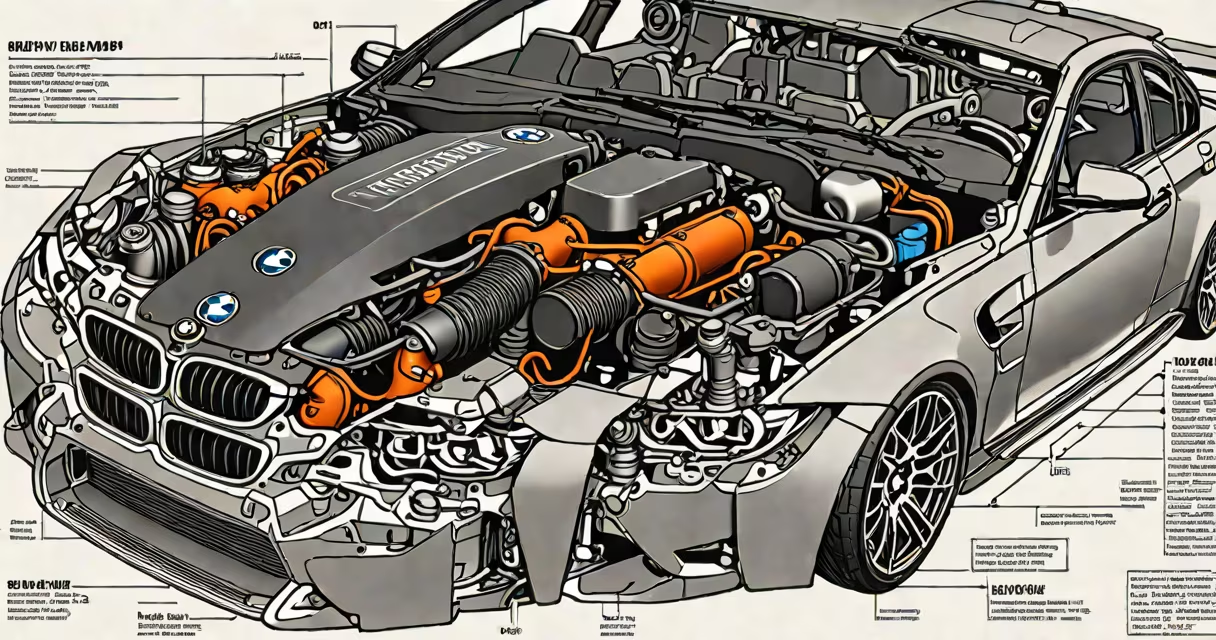
The BMW M3's stock horsepower is 473 hp in the Competition model, produced by its 3.0-liter inline-six S58 engine. This power output makes the M3 one of the most potent sedans in its class.
The S58 engine in the M3 uses a twin-turbocharged setup to maximize efficiency and power. It features a closed-deck cylinder head design, which improves rigidity and allows for higher compression ratios. The engine also includes forged internals, such as pistons and connecting rods, to handle the increased stress from turbocharging.
| Model | Horsepower | Torque (lb-ft) |
|---|---|---|
| M3 (non-Competition) | 453 hp | 406 lb-ft |
| M3 Competition | 473 hp | 406 lb-ft |
| M3 CSL (concept) | 550 hp | 479 lb-ft |
The M3 is designed for enthusiasts who want a high-performance sedan that can be driven daily. Its power output and handling make it suitable for both track days and street driving. The M3's engine is also tuned for a wide power band, ensuring strong performance across the rev range.
One common misconception is that the M3's power output is primarily achieved through aggressive tuning. However, BMW engineers have focused on a balanced approach, combining turbocharging with advanced materials and precision engineering to create a reliable and useful engine.
When testing the M3 Competition, Car and Driver recorded a 0-60 mph time of 3.4 seconds. This acceleration is a direct result of the engine's 473 hp and 406 lb-ft of torque, which work together to propel the car forward with minimal lag. The engine's linear power delivery and strong mid-range torque make it particularly effective in real-world driving scenarios.
During a test drive of the M3 Competition, I noticed how the engine's power was delivered smoothly and predictably. The turbochargers provided a noticeable boost without the typical lag associated with forced induction. The car's handling and braking systems complemented the engine's performance, making it a well-rounded package for both performance and comfort.
For those interested in BMW's stock performance, you can explore BMW's stock performance and how it compares to other models in the lineup.