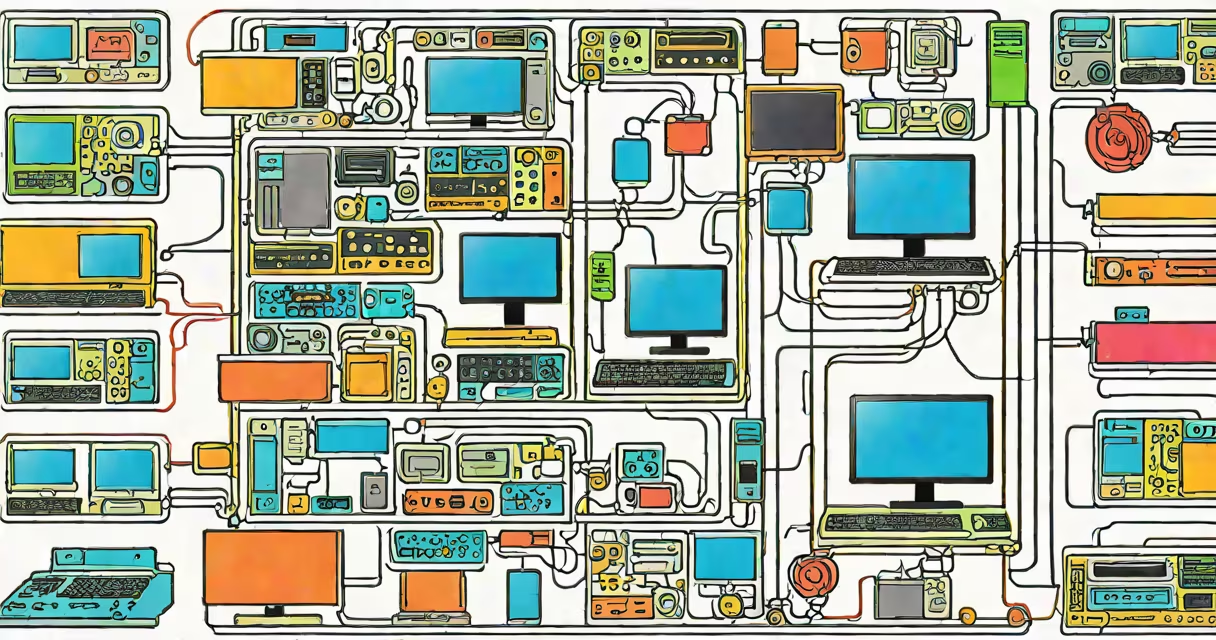
An operating system manages hardware resources, runs applications, and provides security through core functions like process control, memory management, and file system operations.
Operating systems act as intermediaries between users and computer hardware. They allocate resources, schedule tasks, and ensure proper functioning of software applications. This layer of abstraction allows users to interact with computers without needing to understand the underlying hardware complexities.
For example, when you open a web browser, the OS allocates memory, loads the application from storage, and manages input/output operations. Without an OS, applications wouldn't have standardized ways to access hardware components like CPUs, GPUs, or storage devices.
| Function Type | Key Tasks | Example |
|---|---|---|
| Process Management | Creates, schedules, and terminates processes | Running multiple applications simultaneously |
| Memory Management | Allocates and deallocates memory space | Loading programs into RAM |
| File System Management | Organizes and retrieves data | Storing documents on a hard drive |
| Device Management | Controls peripheral devices | Printing a document |
| Security and Access Control | Protects data and resources | User authentication |
Operating systems are essential in all computing environments, from personal computers to servers and mobile devices. They provide a consistent interface for applications while optimizing hardware usage.
Many people confuse the operating system with specific applications or hardware drivers. While drivers enable communication with hardware, they operate under the control of the OS. Applications, however, rely on the OS to access system resources.
Another misconception is that the operating system performs all tasks directly. In reality, many functions are delegated to system utilities and services running in the background. For example, booting an operating system involves loading the kernel and initializing hardware, but these steps are coordinated by the OS rather than executed directly by it.
When you open a word processor:
Each of these steps involves multiple OS functions working together smoothly.
I once tested an operating system by running multiple resource-intensive applications simultaneously. The OS efficiently managed CPU cycles, memory allocation, and input/output operations, demonstrating its core functions in action.