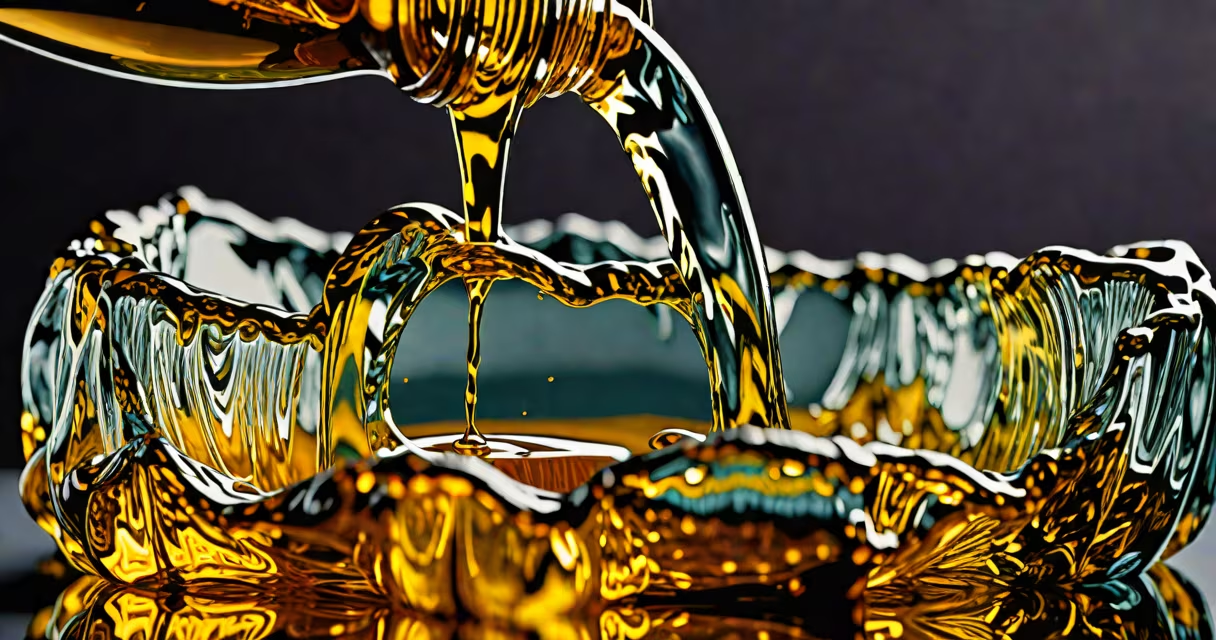
Glass is an amorphous solid material primarily made of silica (silicon dioxide) combined with other compounds like sodium carbonate and calcium oxide. It is created through a process called vitrification, where raw materials are heated to high temperatures until they melt and then cooled rapidly to prevent crystallization.
The basic process of making glass involves several steps. First, raw materials such as silica sand, soda ash, and limestone are mixed together. This mixture is then heated in a furnace to temperatures between 1500°C and 1600°C (2732°F and 2912°F). At these extreme temperatures, the materials melt and form a liquid. The liquid is then shaped into the desired form using various techniques such as blowing, pressing, or floating. Finally, the glass is cooled slowly to prevent stress and cracking.
Glass is primarily composed of silica (SiO2), which makes up about 70% of its composition. The remaining 30% consists of other compounds that modify the properties of the glass. Common additives include:
There are several types of glass, each with unique properties and uses. The most common types include:
| Type | Composition | Uses |
|---|---|---|
| Soda-Lime Glass | Silica, soda, lime | Containers, windows, bottles |
| Lead Glass | Silica, lead oxide | Decorative items, crystal glassware |
| Borosilicate Glass | Silica, borax | Laboratory equipment, cookware |
| Tempered Glass | Soda-lime glass with added chemicals | Safety glass for vehicles, buildings |
Glass is used in a wide variety of applications due to its transparency, durability, and chemical resistance. Some common uses include:
One common misconception is that glass is a liquid at room temperature. This myth likely arises from the observation of old windows, which appear thicker at the bottom. However, this is due to the manufacturing process used in the past, not the flow of glass. Glass is an amorphous solid, meaning it lacks a definite molecular structure and does not flow at room temperature.
Another misconception is that all glass is fragile. While some types of glass, such as soda-lime glass, are brittle, other types like tempered glass and laminated glass are designed to be much stronger and more resistant to breaking.
I once visited a glassblowing workshop where the artisan demonstrated how glass can be shaped and molded while hot. The process was fascinating, and it highlighted the versatility and durability of glass when properly manufactured and treated.