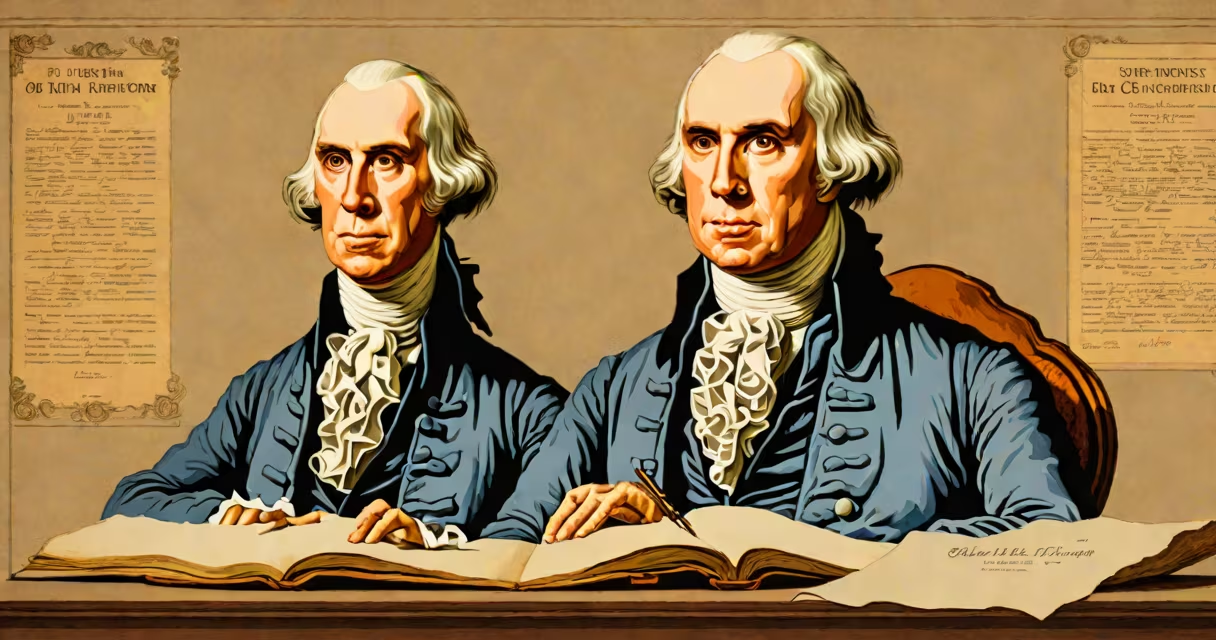
James Madison played the central role in creating the Bill of Rights, the first ten amendments to the U.S. Constitution, which guarantee essential freedoms for American citizens. These amendments were proposed by Congress in 1789 and ratified in 1791.
As a key member of the Constitutional Convention in 1787, Madison recognized the need for a clear statement of individual rights to address concerns raised by Anti-Federalists. He initially proposed a series of constitutional amendments in the Federalist Papers, particularly in Federalist No. 46, advocating for a bill of rights to protect liberties.
After the Constitution was ratified, Madison introduced a series of amendments in the House of Representatives in 1789. Though the original proposal included 17 amendments, only 12 were approved by the House, and, 10 were ratified by the states, becoming the Bill of Rights.
The Bill of Rights includes ten amendments that address fundamental civil liberties:
The Bill of Rights remains a key part of American democracy, ensuring that individual liberties are protected from government overreach. Madison's vision of a balanced government with clear protections for citizens' rights continues to influence legal and political discourse today.
For instance, the First Amendment's protection of free speech has been important in allowing dissent and fostering a vibrant public debate. The Fourth Amendment's safeguards against unreasonable searches have been instrumental in shaping modern law enforcement practices.
Many people mistakenly believe that the Bill of Rights was part of the original Constitution. In reality, it was added later to address concerns about the lack of explicit protections for individual liberties. Another misconception is that the Bill of Rights applies only to the federal government. While this was initially true, the Fourteenth Amendment extended many of these protections to state governments as well.
Madison's work on the Bill of Rights was not just a historical event but a living document that continues to evolve with interpretations by the Supreme Court. For example, the Second Amendment's right to bear arms has been the subject of extensive debate and legal interpretation, reflecting changing societal values and technological advancements.