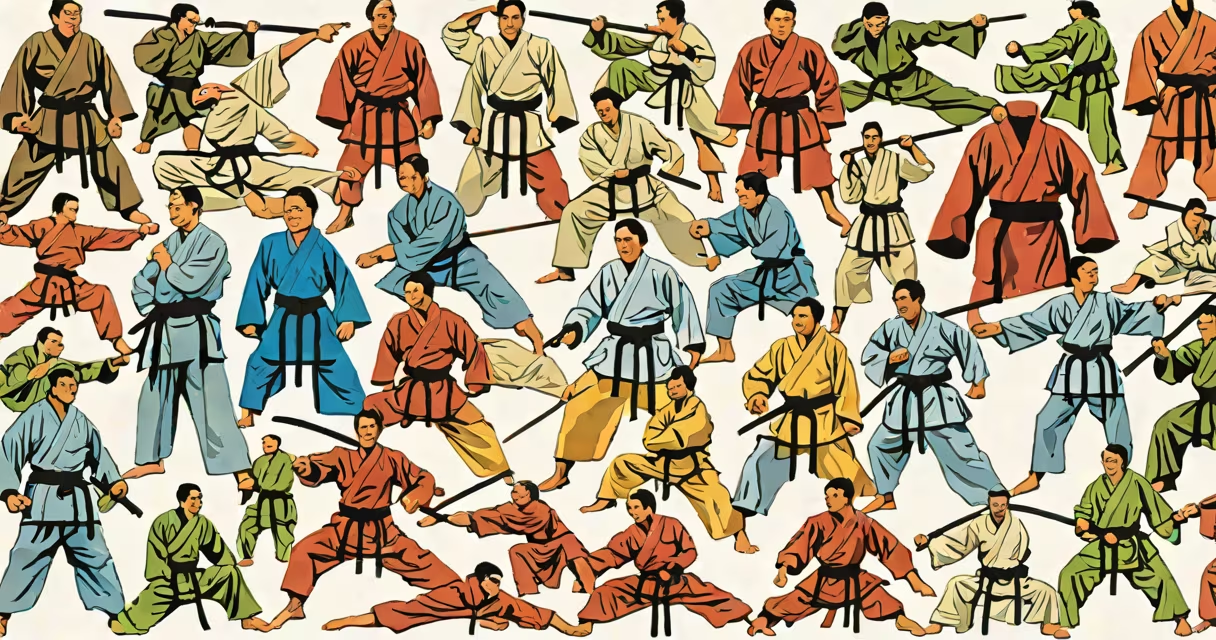
Martial arts types are codified systems of combat originating from various regions and cultures, each with unique techniques, philosophies, and applications. These fighting styles serve purposes ranging from self-defense to competition and spiritual development.
Martial arts types differ primarily in their techniques, training methods, and cultural origins. Some focus on striking, others on grappling, while certain styles incorporate both. The environment also plays a role: some martial arts originated in dense forests, requiring close-quarters combat, while others developed in open plains, favoring long-range techniques.
The following table categorizes martial arts into broad groups based on their primary techniques and origins:
| Category | Examples | Primary Techniques |
|---|---|---|
| Striking Arts | Karate, Taekwondo, Muay Thai | Punches, kicks, knee strikes, elbow strikes |
| Grappling Arts | Judo, Brazilian Jiu-Jitsu, Wrestling | Throws, joint locks, chokeholds, pins |
| Weapon-Based Arts | Kendo, Krav Maga, Filipino Martial Arts | Sword fighting, stick fighting, knife fighting |
| Hybrid Arts | Kickboxing, Mixed Martial Arts (MMA) | Combination of striking and grappling |
Martial arts are practiced worldwide for various reasons. In Japan, traditional martial arts like judo and kendo are deeply rooted in cultural heritage and discipline. In Brazil, capoeira combines dance and music with martial arts, reflecting the country's history of resistance and creativity. Modern combat sports like MMA have gained global popularity for their competitive aspect.
One common misconception is that all martial arts are similar. In reality, they vary widely in techniques, philosophies, and applications. For example, karate focuses on striking with punches and kicks, while aikido emphasizes joint locks and throws to redirect an opponent's energy rather than confront it directly.
Another misconception is that martial arts are purely physical. Many martial arts incorporate spiritual and philosophical elements, such as meditation and ethical codes. For instance, in Zen Buddhism, martial arts like kyudo (Japanese archery) are seen as a path to enlightenment.
I once tried learning karate to improve my fitness and discipline. The structured training and repetitive drills helped me build endurance and focus, demonstrating how martial arts can benefit both physical and mental health.