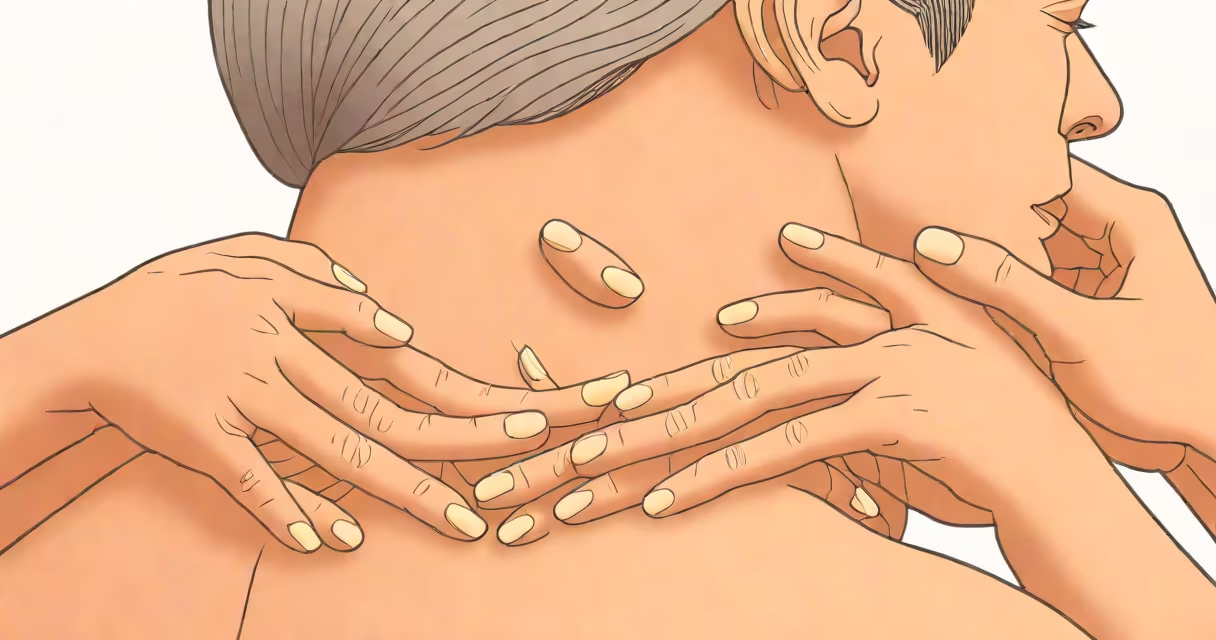
Massage neck trigger points involves applying focused pressure to tight muscle bands that cause localized and referred pain. This technique helps alleviate tension headaches, stiffness, and radiating discomfort.
Trigger points are hyperirritable spots in taut bands of muscle that form due to overuse, injury, or stress. When pressed, they refer pain to other areas. For example, a trigger point in the levator scapulae muscle may send pain to the shoulder or base of the skull.
| Muscle | Common Trigger Point Location | Referred Pain Pattern |
|---|---|---|
| Trapezius (upper fibers) | Between neck and shoulder | Top of shoulder, base of skull |
| Levator Scapulae | Behind the neck near the shoulder blade | Shoulder, upper back, base of skull |
| Sternocleidomastoid | Along the muscle's length | Ear, temple, eye |
Use your thumb, fingers, or a massage tool to apply steady pressure to the trigger point. Hold for 5-30 seconds until the tissue softens. Release and repeat as needed. For example, press into the upper trapezius muscle where it meets the shoulder, then slowly release.
Another method is myofascial release, which involves gently stretching the muscle while applying pressure. This helps break up adhesions and improve blood flow. According to the Journal of Bodywork and Movement Therapies, combining trigger point release with stretching improves outcomes.
Many people confuse trigger points with tender spots caused by inflammation or nerve irritation. True trigger points have a specific referral pattern and a "tender spot" that feels like a hard nodule. Avoid pressing too hard, which can cause additional pain or bruising.
I once treated a client with chronic headaches by focusing on their sternocleidomastoid muscle. After identifying the trigger point, I applied sustained pressure while having them turn their head gently. The headache resolved within minutes, demonstrating the power of precise trigger point work.
The American Journal of Physical Medicine & Rehabilitation notes that trigger point injections can provide relief for persistent cases. However, manual therapy remains the first-line treatment for most people.