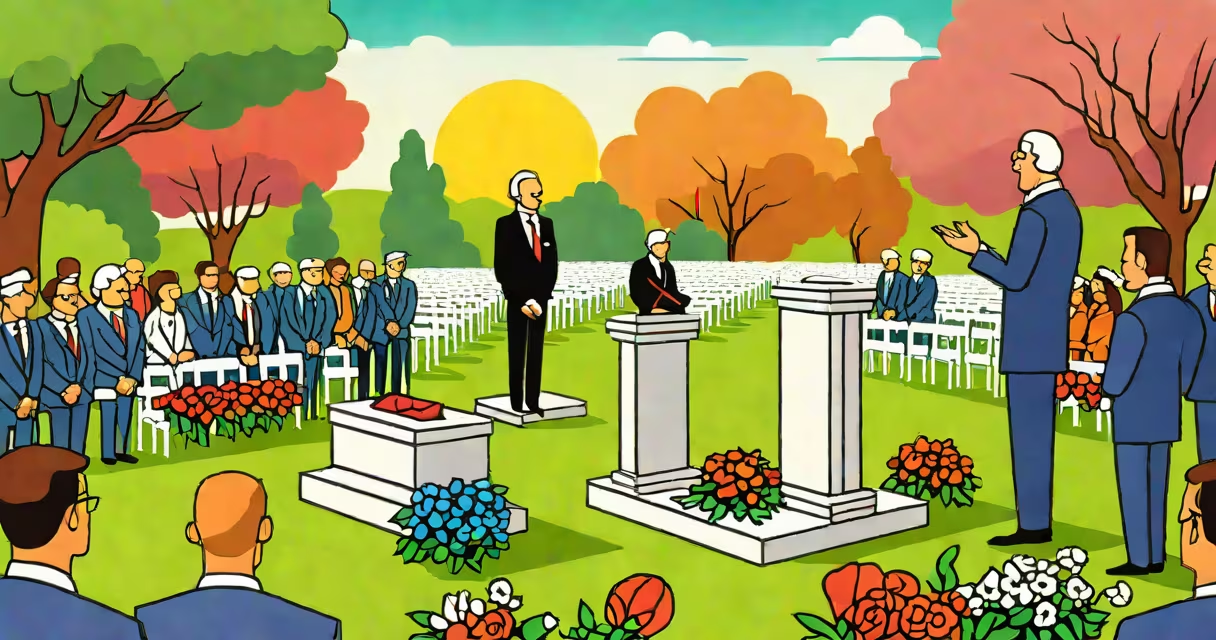
A eulogy is a speech or written tribute praising someone who has died, typically delivered at a funeral or memorial service. It highlights the deceased's life, character, and accomplishments.
A eulogy serves as both a celebration of life and a consolation for those in mourning. It balances respect with warmth, often including personal anecdotes, shared memories, and reflections on the person's impact. The speaker may be a family member, friend, or religious leader. Unlike an obituary, which is factual, a eulogy is emotional and subjective.
Eulogies vary based on cultural, religious, and personal preferences. Common types include:
Eulogies are most common at funerals, memorial services, and celebrations of life. They provide closure for grieving loved ones and honor the deceased. For example, former U.S. President Ronald Reagan's eulogy for astronauts Challenger crew members in 1986 emphasized their bravery and legacy.
Many assume eulogies must be overly somber or strictly factual. However, they can be uplifting, humorous, or even poetic. A eulogy for comedian Robin Williams included lighthearted stories about his playful nature, reflecting his personality. Another misconception is that only professionals can deliver them-anyone who knew the deceased well can speak.
When I helped a friend write a eulogy for her father, we focused on his love for gardening and how he taught others to grow vegetables. Including specific details made the speech personal and meaningful.
| Eulogy | Obituary |
|---|---|
| Emotional, personal, spoken | Factual, objective, written |
| Focuses on memories and feelings | Lists dates, achievements, and survivors |
| Delivered at a service | Published in newspapers or online |
A well-crafted eulogy transforms grief into gratitude, celebrating a life lived rather than mourning a life lost. It's a final gift to the departed and a comfort to those left behind.