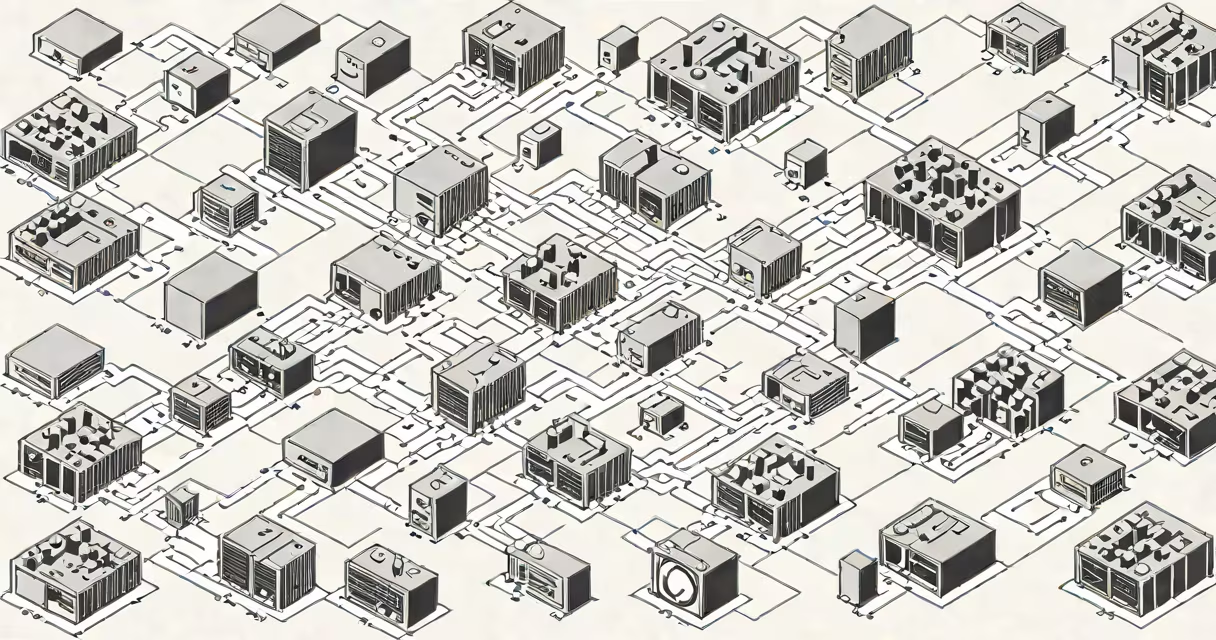
Networking connects computers and devices to share resources and communicate. It uses physical cables, wireless signals, or fiber optics to link devices, enabling data transfer and internet access.
Networks transmit data in packets, small units of information sent between devices. Routers direct traffic, while switches connect devices within a local area. Protocols like TCP/IP govern how data travels and is received.
For example, when you send an email, your device breaks the message into packets. These travel through various networks before reassembling at the recipient's device. This process ensures efficient data transfer even over long distances.
| Type | Range | Use Case |
|---|---|---|
| Local Area Network (LAN) | Single building or office | Connects computers, printers, and servers within a limited area |
| Wide Area Network (WAN) | Multiple locations, cities, or countries | Connects larger organizations or enables internet access |
| Metropolitan Area Network (MAN) | City or large campus | Connects multiple LANs within a metropolitan region |
| Personal Area Network (PAN) | Within a few meters | Connects personal devices like smartphones and tablets |
Networking enables global communication, data sharing, and resource access. Businesses rely on networks for operations, while individuals use them for entertainment, work, and education. Without networking, the internet as we know it wouldn't exist.
For instance, cloud computing depends on solid networks to provide on-demand services. Streaming platforms like Netflix deliver content through optimized networks, ensuring smooth playback.
Many confuse networking with social connections, but technical networking focuses on connecting devices. While both involve connections, one deals with people and the other with hardware and software.
Another common mistake is assuming all networks are the same. LANs and WANs serve different purposes, and understanding their differences is important for proper setup and maintenance.
I once helped set up a small business network. The owner assumed a single router would suffice for all operations. After assessing their needs, I recommended adding switches and access points to ensure reliable connectivity across multiple devices and locations.
The meaning of networking encompasses the systems and protocols that enable device communication. From local connections to global internet access, networks form the core of modern digital infrastructure.