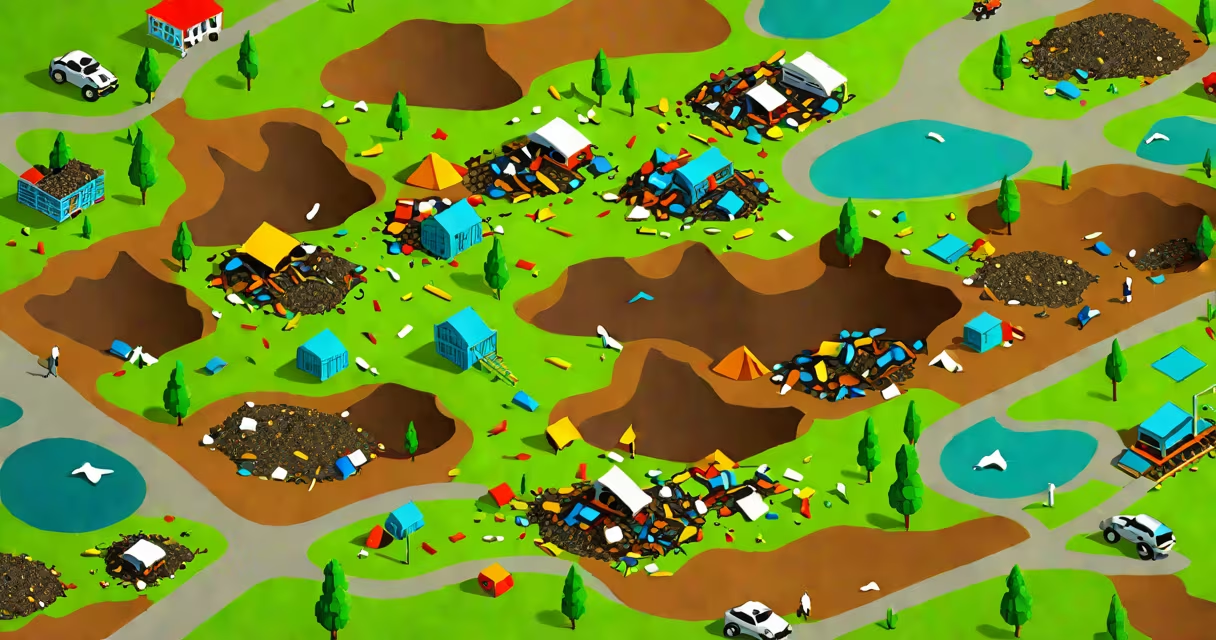
Land pollution occurs when harmful substances contaminate soil, degrading its quality and threatening ecosystems. This form of environmental degradation results from improper waste disposal, industrial activities, and agricultural chemicals.
Pollutants enter the soil through direct dumping, leaching from waste sites, or chemical spills. Once in the ground, these substances can persist for years, poisoning plants, animals, and groundwater. For example, heavy metals from industrial waste can accumulate in soil, making it toxic to crops.
Land pollution falls into several categories:
According to the Environmental Protection Agency (EPA), improper waste disposal is the leading cause of land pollution in urban areas.
Land pollution happens worldwide, particularly near industrial zones, agricultural lands, and densely populated areas. Urbanization increases waste generation, while industrial activities introduce toxic chemicals. For instance, a study by the World Health Organization (WHO) found that over 20% of agricultural land in developing countries is contaminated by pesticides.
Many people confuse land pollution with air or water pollution, but it's distinct. While air pollution involves atmospheric contaminants and water pollution affects aquatic systems, land pollution specifically degrades soil health. Another misconception is that land pollution only affects rural areas-urban regions face significant risks due to improper waste management.