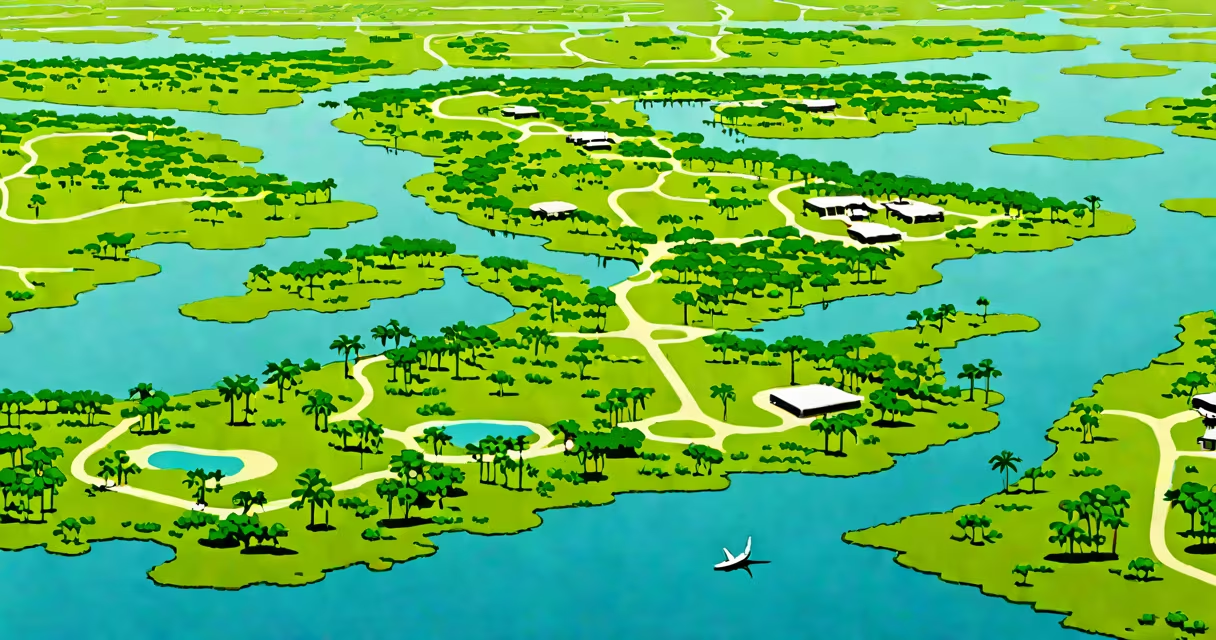
Merritt Island National Wildlife Refuge is a 140,000-acre protected area in Florida, home to diverse ecosystems and NASA facilities. Managed by the U.S. Fish and Wildlife Service, it balances wildlife conservation with space exploration.
The refuge operates under a "compatible use" policy, allowing NASA's Kennedy Space Center to coexist with conservation efforts. Visitors can explore trails, observe wildlife, and learn about space history.
The refuge includes:
Located near Cape Canaveral, the refuge supports over 1,500 plant and animal species. It provides habitat for endangered species like the Florida scrub-jay and protects migratory birds along the Atlantic Flyway.
Many assume the refuge is solely for wildlife, but it also includes NASA's historic launch pads. The refuge's estuaries are often confused with mangrove swamps, though they differ in salinity and plant life.
When I visited, I saw a bald eagle nesting near a rocket launch site-a striking contrast between nature and human achievement.
At the refuge's Black Point Wildlife Drive, visitors can observe osprey nests near the Indian River Lagoon. This estuary supports over 400 fish species, including the endangered smalltooth sawfish.
The refuge's mosquito control program reduces pests while protecting non-target species. This balance is rare in wildlife management.
Source: U.S. Fish and Wildlife Service, NASA