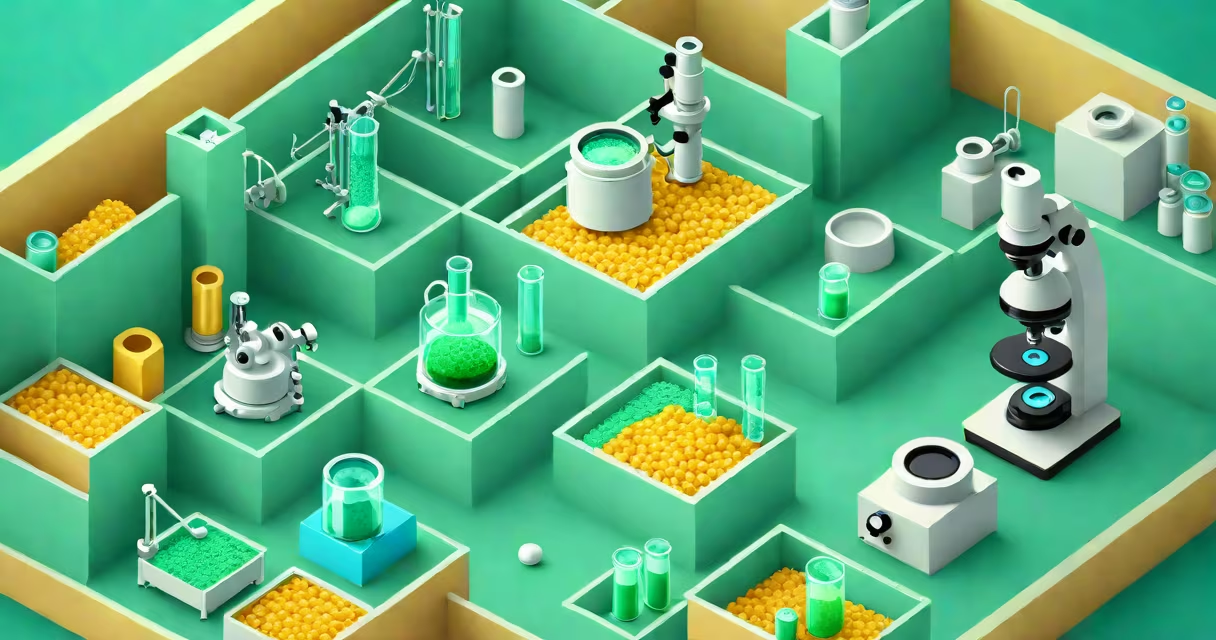
Micro cell biology is the study of cellular processes using miniaturized systems, typically involving microfluidic devices or microfabricated platforms. This approach allows researchers to observe and manipulate cells with high precision at microscale volumes.
Researchers create tiny chambers or channels where individual cells or small groups of cells can be cultured. These microenvironments enable controlled experiments with minimal sample consumption. Fluorescent dyes or genetic markers help visualize cellular structures and activities under a microscope.
For example, a study published in Nature Methods demonstrated how microfabricated devices could track cell migration patterns with single-cell resolution. The devices contained arrays of tiny traps where individual cells could be isolated and observed over time.
| System Type | Key Features | Applications |
|---|---|---|
| Microfluidic chips | Channels etched in silicon or plastic, often with valves for fluid control | Drug testing, cell sorting, single-cell analysis |
| Microarrays | Arrays of tiny wells or spots for parallel processing | High-throughput screening, gene expression studies |
| Microbioreactors | Miniature bioreactors for controlled culture conditions | Stem cell differentiation, tissue engineering |
Many assume micro cell biology simply involves shrinking traditional cell biology techniques. However, the field introduces novel capabilities. For instance, microfluidic devices can generate precise chemical gradients to study cell responses to environmental cues-a challenge with conventional methods.
A common mistake is confusing micro cell biology with nanoscale cell biology. While both study small-scale cellular phenomena, micro cell biology typically operates at the micrometer scale (10-6 meters), whereas nanoscale work focuses on nanometer dimensions (10-9 meters).
Micro cell biology is employed in academic research labs, pharmaceutical companies, and biotech startups. Its applications include drug discovery, stem cell research, and studying disease mechanisms. The technique's efficiency and precision make it ideal for high-throughput screening and personalized medicine approaches.
For instance, cell biology labs use micro cell biology to test drug candidates on human cells before animal testing, reducing costs and ethical concerns. A notable example is the work done at the Wyss Institute, where researchers developed organ-on-a-chip systems to model human organs using microfabricated devices.
Despite its advantages, micro cell biology faces challenges. Fabricating these tiny systems requires specialized equipment and expertise., scaling up findings organisms can be difficult. Researchers must carefully design experiments to ensure results are physiologically relevant.
One limitation is the potential for shear stress on cells during fluid flow in microfluidic devices. Proper design and optimization are important to prevent damaging the cells being studied. As the field advances, new materials and techniques are being developed to address these issues.
The field is evolving toward integrating micro cell biology with other technologies. For example, combining it with CRISPR gene editing could enable precise genetic manipulation at the single-cell level. Advances in automation and AI-driven image analysis are also enhancing the field's capabilities.
As noted in Trends in Biotechnology, the integration of micro cell biology with organ-on-a-chip technology holds promise for revolutionizing drug development and toxicity testing. Researchers are exploring ways to create more complex microenvironments that better mimic natural tissue structures.
I've personally observed how these techniques can simplify research workflows. During a visit to a biotech company, I saw how their microfluidic devices reduced the time needed for cell-based assays, accelerating their research pipeline.
For those interested in learning more, consulting resources like essential cell biology textbooks provides a solid foundation in core concepts before diving into specialized micro cell biology techniques.