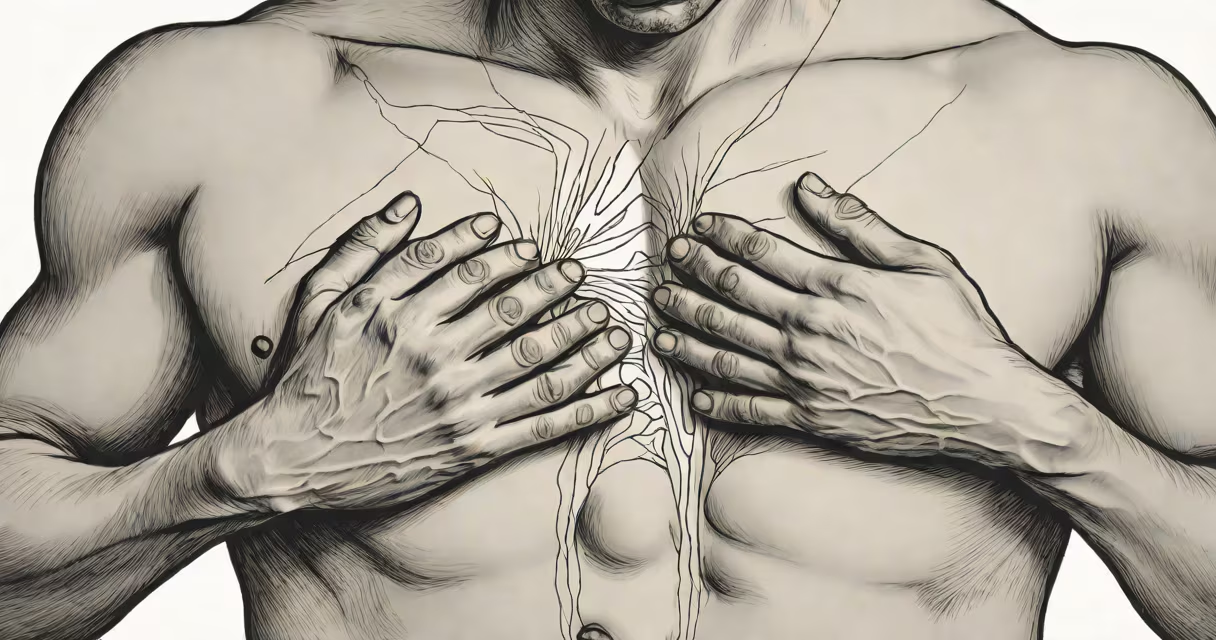
"My chest hurts" is a broad statement that can describe discomfort ranging, originating from muscles, bones, or internal organs. Chest pain affects 1 in 7 adults annually, with causes spanning -threatening.
Chest pain isn't a single sensation-it can feel like pressure, stabbing, burning, or tightness. The brain perceives these signals through nerves connected to the chest wall, heart, lungs, esophagus, and other structures. Pain from different sources travels along distinct neural pathways, which is why descriptions vary widely.
The most common causes fall into four categories:
| Type | Common Causes | Key Characteristics |
|---|---|---|
| Musculoskeletal | Strained muscles, rib injuries, costochondritis | Worsens with movement or touch |
| Cardiac | Angina, heart attack, pericarditis | Pressure or squeezing sensation, may radiate to left arm |
| Digestive | GERD, gallbladder disease, esophageal spasms | Often linked to meals, may feel like heartburn |
| Respiratory | Pneumonia, pleurisy, pulmonary embolism | Worsens with breathing or coughing |
Call emergency services immediately if your chest pain:
These could indicate a heart attack or other serious condition. The American College of Cardiology notes that women and people over 65 often experience atypical symptoms like back pain or extreme fatigue.
Many people assume all chest pain is heart-related, but only about 15% of emergency room visits for chest pain result in a cardiac diagnosis. Conversely, not all heart-related pain feels like the dramatic "elephant on the chest" often portrayed in media. Some heart attacks cause only mild, persistent discomfort.
Another mistake is assuming pain that comes and goes isn't serious. Intermittent pain can still signal dangerous conditions like angina or gastroesophageal reflux disease (GERD).
If your chest pain is mild and doesn't match warning signs, try these steps:
For persistent or recurring pain, doctors may use tests like electrocardiograms (ECGs), blood tests, or imaging scans to determine the cause. The Mayo Clinic recommends keeping a symptom diary to help identify patterns and triggers.