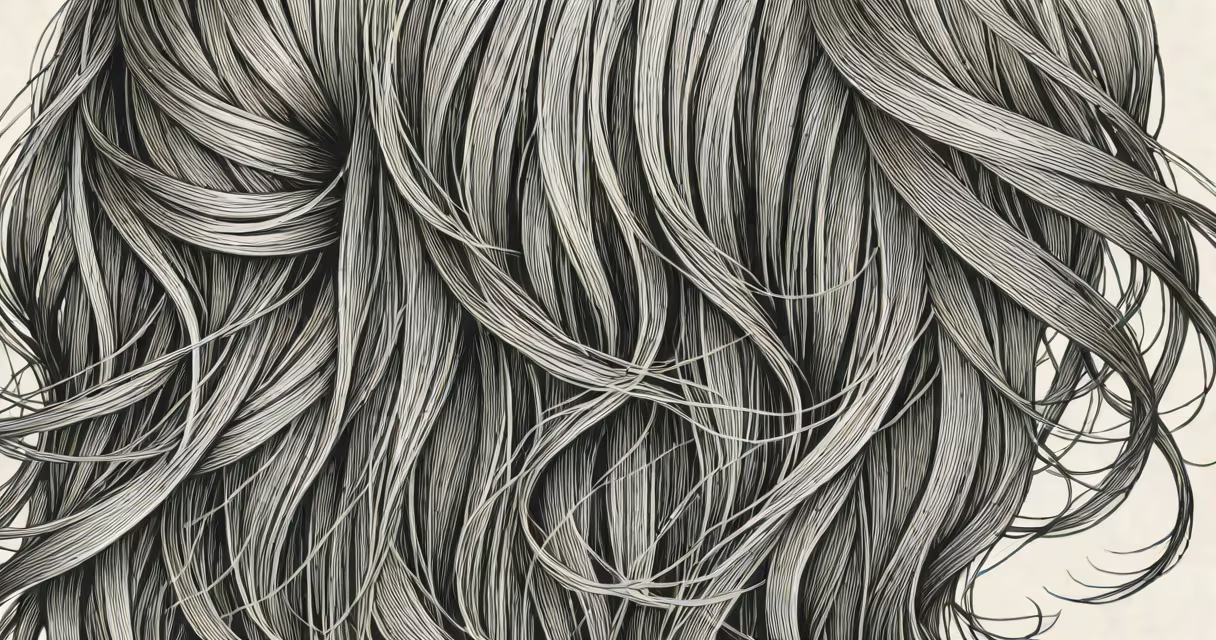
Fine hair has a smaller diameter than average hair, making it more prone to damage and breakage. It often lacks volume and can appear limp or flat.
Hair texture is categorized by diameter: fine, medium, or coarse. Fine hair measures less than 0.05 mm in diameter. Unlike coarse hair, which can hold styles better due to its thickness, fine hair struggles to maintain volume and can look greasy more quickly because oils from the scalp travel down the hair shaft faster.
Many people confuse fine hair with thin hair. Fine hair refers to the diameter of individual strands, while thin hair refers to the density of hair on the scalp. You can have fine hair that's dense or thick hair that's sparse. Another myth is that fine hair cannot hold styles. While it may require different techniques and products, fine hair can still achieve volume and hold styles effectively.
Genetics play the largest role in determining hair texture. However, factors like aging, hormonal changes, and nutritional deficiencies can also contribute to finer hair over time. For example, as we age, our hair naturally becomes finer and may lose some of its pigment, leading to gray or white hair that appears even thinner.
Hormonal imbalances, such as those caused by thyroid issues or menopause, can also affect hair texture., frequent use of heat styling tools, chemical treatments, and rough handling can weaken hair strands, making them appear finer over time.
Fine hair requires gentle handling and specific products to maintain its health and appearance. Use sulfate-free shampoos and conditioners designed for fine hair to avoid weighing it down. Avoid heavy styling products like wax or pomade, which can make fine hair look greasy. Instead, opt for lightweight mousses or sprays to add volume.
When styling, use lower heat settings on hair tools to prevent damage. Regular trims can also help remove split ends and maintain the hair's shape. Consider using a volumizing shampoo or a dry shampoo to add texture and lift at the roots.
Layered cuts can add volume and movement to fine hair. Avoid blunt cuts, which can make fine hair look flat. Use a round brush when blow-drying to lift the hair at the roots and create volume. Braiding or twisting damp hair overnight can also add waves and texture without heat.
Choosing the right styling tools is essential. For fine hair, ceramic or ionic flat irons can help reduce damage while smoothing the hair. Discover the best straighteners for fine hair to keep your locks healthy and stylish.
Understanding that my hair is very fine helps in selecting the right products and techniques to care for it properly. With the right approach, fine hair can look voluminous and healthy. Embrace your hair's natural texture and use gentle, effective methods to improve its appearance.