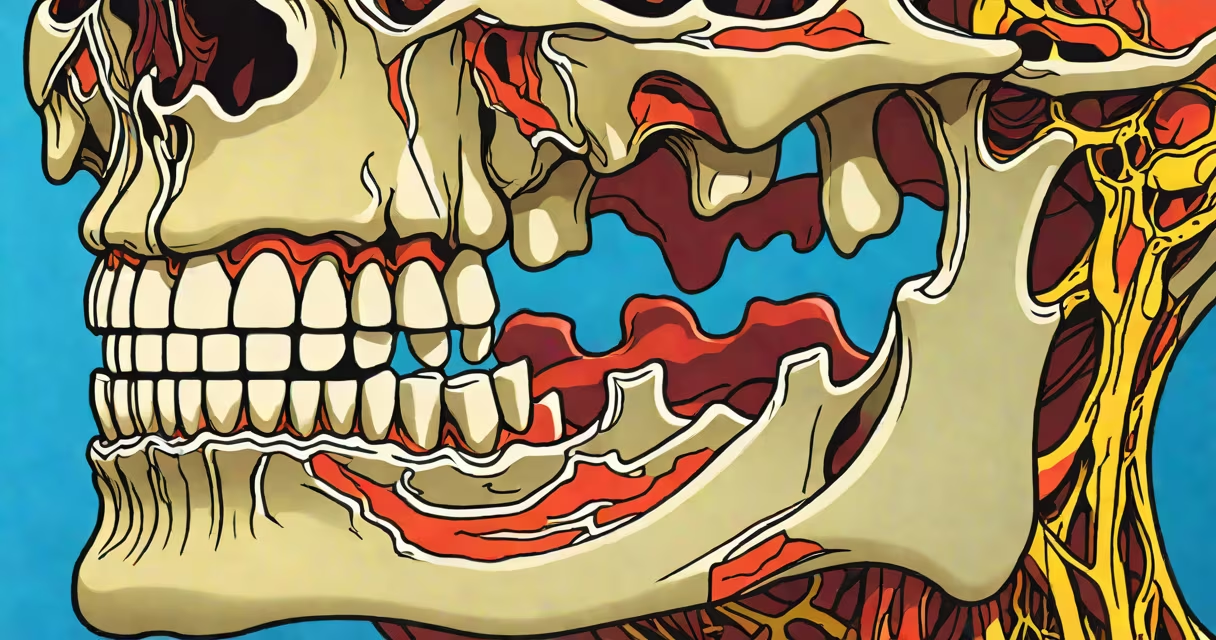
Pain in your right jaw often stems from temporomandibular joint (TMJ) disorders, dental issues, or referred pain from other conditions. The most common causes include teeth grinding, arthritis, or sinus infections.
The temporomandibular joint connects your jawbone to your skull. When this joint or the surrounding muscles become inflamed or irritated, it can cause pain on one or both sides of your face. The right side is often affected due to the way we chew and speak, which can lead to uneven stress on the joint.
Right jaw pain can arise from several sources. The most frequent causes include:
Most cases of jaw pain resolve on their own within a few days. However, if the pain persists for more than a week or is accompanied by swelling, fever, or difficulty opening your mouth, it's time to see a healthcare professional. Persistent pain could indicate a more serious underlying condition, such as an abscess or TMJ disorder.
I once experienced persistent right jaw pain that didn't go away after a few days. After visiting a dentist, I discovered I had an abscessed tooth. The pain subsided completely after treatment. This experience underscored the importance of seeking medical attention for persistent jaw pain.
Treatment for right jaw pain depends on the underlying cause. Common remedies include:
To prevent jaw pain, avoid habits that strain the jaw, such as chewing gum excessively or biting your nails. Maintain good oral hygiene to prevent dental issues, and use a mouthguard if you grind your teeth at night. Regular dental check-ups can also help catch potential problems early.