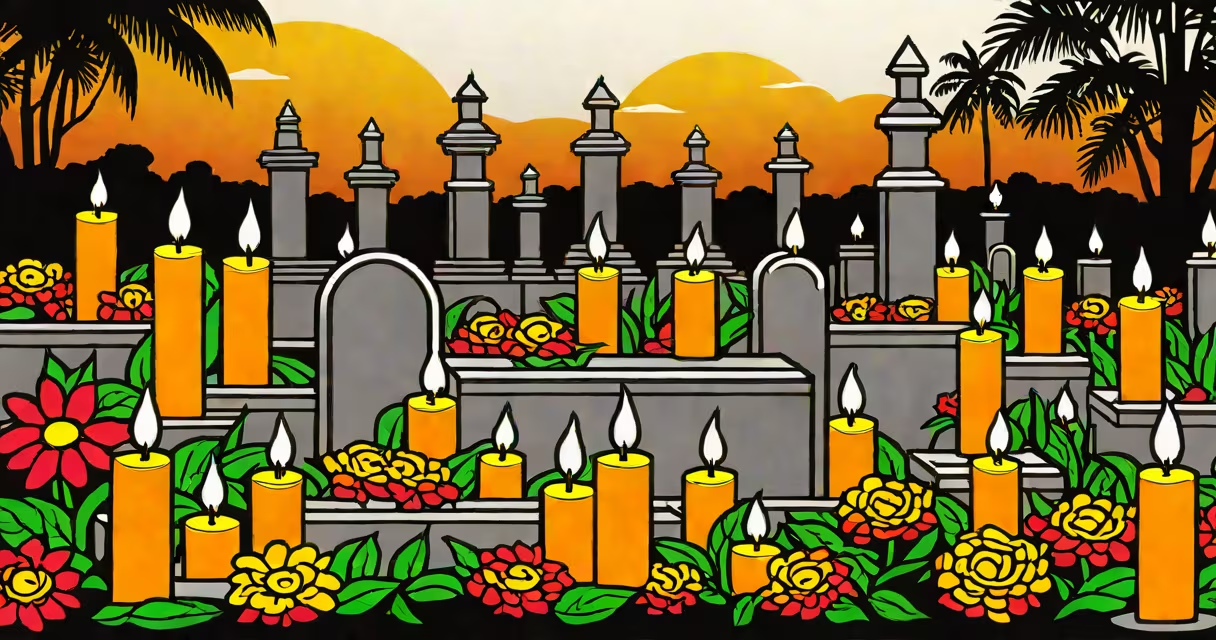
The November Philippine holiday called Undas is a public holiday combining All Saints' Day (November 1) and All Souls' Day (November 2) to honor deceased loved ones through religious rituals and family gatherings.
Undas is a time when Filipinos visit cemeteries to clean graves, light candles, and offer prayers. Many families also hold reunions, preparing favorite foods of the departed. The holiday blends Catholic traditions with indigenous practices, creating a unique cultural experience.
Activities during Undas include:
Undas is observed nationwide, with major celebrations in cities like Manila, where cemeteries like La Loma Cemetery see thousands of visitors. The holiday's roots trace back to Spanish colonial rule, merging Catholic traditions with pre-colonial ancestor veneration practices.
Many assume Undas is solely about mourning, but it's also a celebration of life. Unlike Western Halloween traditions, Undas focuses on respect and remembrance rather than fear or superstition. Another misconception is that it's only a one-day event-it spans both November 1 and 2, with some extending observances into the weekend.
In 2023, I visited a cemetery in Quezon City during Undas. The atmosphere was peaceful yet lively, with families laughing, sharing stories, and lighting candles together. It was striking to see how the holiday fosters both solemn reflection and joyful connection.
For instance, a typical Undas routine might start with a family visiting their ancestral grave at dawn. They clean the tombstone, place fresh flowers, and light candles. Afterward, they attend Mass before gathering at home for a meal, often including the departed's favorite dishes. This ritual reinforces family bonds and cultural identity.
| Aspect | Undas | Western Halloween |
|---|---|---|
| Primary Focus | Honoring the dead | Fright and fun |
| Duration | November 1-2 (often extended) | October 31 |
| Traditional Activities | Grave visits, prayers, family meals | Costumes, trick-or-treating |
According to the Philippine government, Undas is one of the most widely observed holidays, with millions participating annually. The Department of Tourism notes that many overseas Filipinos return home specifically for these observances, highlighting its cultural significance.