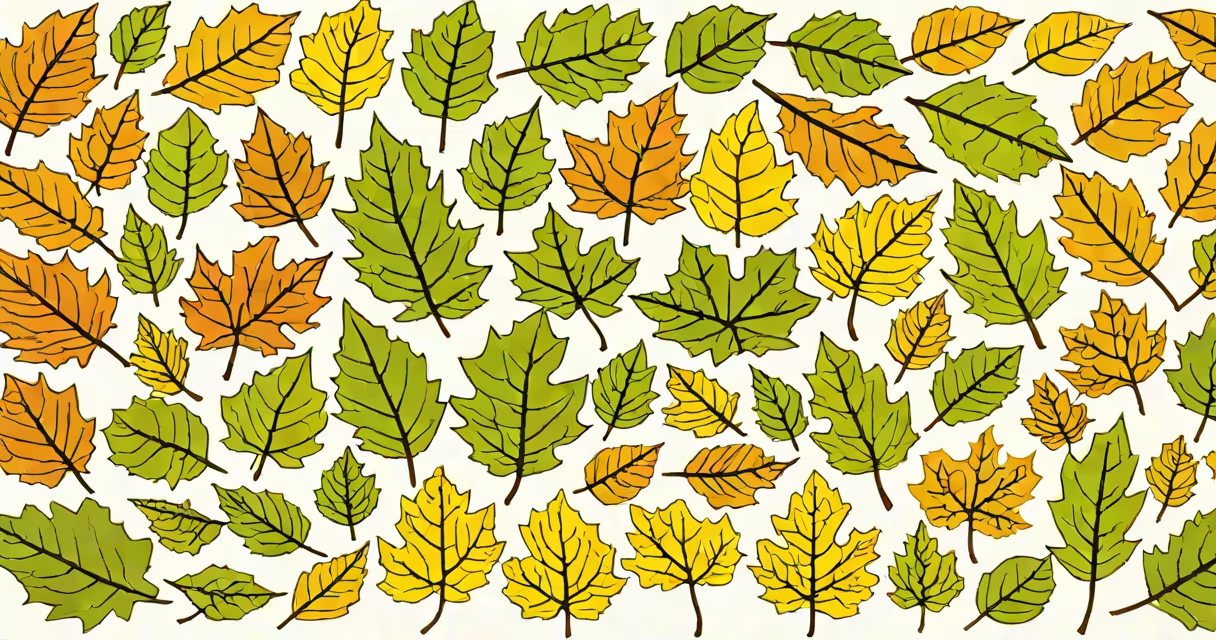
An oak tree leaf is a distinctively lobed or serrated foliage belonging to trees in the Quercus genus. These leaves play a important role in photosynthesis and are key identifiers for oak species.
Oak tree leaves capture sunlight to produce energy through photosynthesis. Their unique shapes and edges vary by species, helping them adapt to different environments. Most oak leaves are deciduous, falling in autumn, while some evergreen oaks retain leaves year-round.
The shape and edge of an oak leaf are primary identifiers. Common types include:
| Leaf Type | Description | Example Species |
|---|---|---|
| Lobed | Deep indentations creating rounded or pointed lobes | White oak (Quercus alba) |
| Serrated | Sharp, tooth-like edges along the leaf margin | Red oak (Quercus rubra) |
| Entire | Smooth edges without lobes or teeth | Live oak (Quercus virginiana) |
Many people confuse oak leaves with maple leaves due to their similar lobed shapes. However, oak leaves typically have more rounded lobes and lack the sharp, pointed tips seen in maple leaves. Another misconception is that all oak leaves are the same size; in reality, they range from small (2 inches) to large (12 inches).
To identify an oak tree leaf, examine its shape, edge, and color. For instance, the white oak has deeply lobed leaves with rounded edges, while the red oak has pointed lobes with sharp serrations. The live oak has elongated, entire-margined leaves that are often evergreen.
Some oak trees, like the cork oak, have leaves that are much smaller and less lobed than other species. These trees are primarily grown for their bark, which is used to produce cork products. The leaves of the cork oak are typically 2-4 inches long and have a smooth, entire margin.
Understanding oak tree leaves involves recognizing their unique shapes, edges, and uses. Whether for identification, education, or decoration, these leaves are a important part of the oak tree's identity and ecological role.