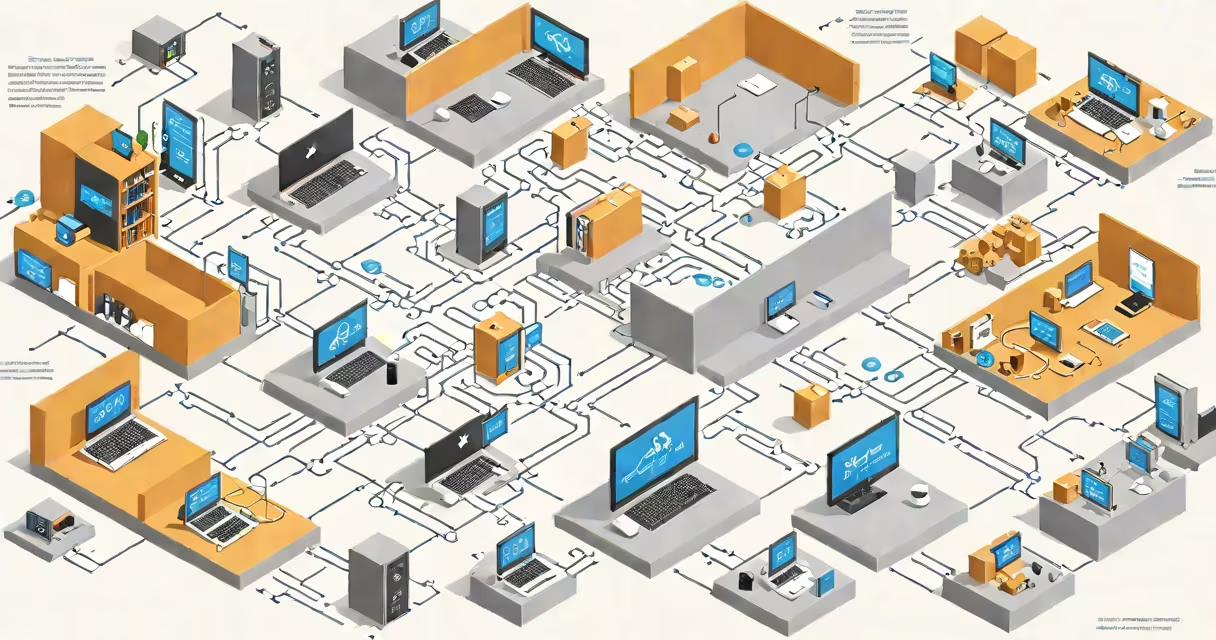
An omnichannel ecommerce platform integrates online and offline sales channels into a single system, allowing retailers to manage inventory, customer data, and orders across all touchpoints. This approach creates a smooth shopping experience whether customers browse online, visit a physical store, or use a mobile app.
These systems use APIs and middleware to connect different sales channels, payment processors, and inventory management tools. When a customer places an order online, the platform updates inventory levels in real time across all locations. Similarly, returns initiated in-store can be processed through the same system used for online orders.
For example, a retailer using an omnichannel platform might allow customers to order products online and pick them up in-store the same day. The platform ensures inventory visibility so customers know which items are available at their preferred location.
Most omnichannel ecommerce platforms include these core components:
Retailers adopt omnichannel strategies to meet customer expectations for convenience and consistency. According to a Forrester study, 73% of consumers use multiple channels during their shopping process. Businesses that implement omnichannel strategies retain 89% of their customers, compared to 33% for companies with weak multichannel capabilities.
Physical retailers often use omnichannel platforms to compete with online giants by offering services like buy online, pick up in-store (BOPIS). Online-only retailers might implement omnichannel strategies to add physical locations or kiosks while maintaining their digital presence.
Many people confuse omnichannel with multichannel retailing. While both approaches use multiple sales channels, omnichannel creates a unified experience across all touchpoints. Multichannel simply uses separate channels without integration.
Consider a customer who browses a retailer's website on their laptop, adds items to their cart, then abandons the purchase. Later, they receive a targeted email reminder about their abandoned cart. They visit the physical store and a sales associate helps them complete the purchase using a tablet, accessing their online cart information. The order is processed through the same system, inventory is updated, and the customer receives a confirmation email.
This smooth experience across channels is only possible with an omnichannel platform that integrates all customer touchpoints and business systems.
| Benefit | Impact |
|---|---|
| Improved customer experience | Consistent service across all channels increases satisfaction and loyalty |
| Operational efficiency | Reduced manual processes and better inventory management lower costs |
| Increased sales | Customers spend more when shopping across multiple channels |
| Better data insights | Unified customer data enables more effective marketing and personalization |
As ecommerce continues to evolve, omnichannel platforms will become increasingly important for businesses looking to provide strong customer experiences and stay competitive in the market. By integrating all customer touchpoints and business systems, these platforms create a smooth shopping experience that drives customer loyalty and business growth.