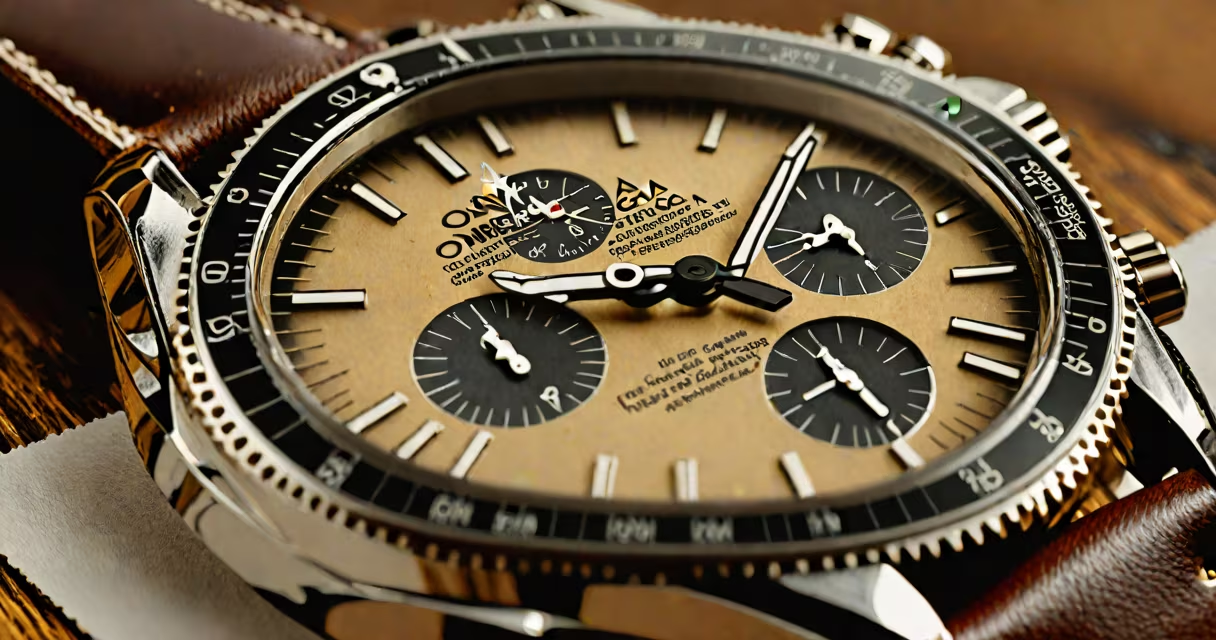
Omega watch stock refers to shares in The Swatch Group, which owns the Omega brand. The company trades on the Swiss Exchange under the ticker UHR. Omega represents about 10% of Swatch Group's sales, alongside other luxury brands like Breguet and Blancpain.
Swiss watchmakers like Omega operate in a niche luxury market where brand prestige drives demand. The industry's "big three" - Rolex, Patek Philippe, and Audemars Piguet - dominate high-end sales. Omega competes in the premium segment below these leaders but above mid-tier brands like Longines.
Omega's stock performance ties closely to Swatch Group's results. In 2023, Swatch Group reported CHF 10.1 billion in revenue, with watches accounting for 85% of sales. Omega contributed CHF 1.1 billion, making it the group's second-largest brand after Tissot.
The watch market remains volatile due to economic cycles and changing consumer tastes. In 2022, Swatch Group's stock dipped 15% amid global supply chain issues. However, it rebounded in 2023 as demand for luxury goods recovered, particularly in China and the U.S.
Omega leverages its space heritage - its Speedmaster was the first watch on the moon - to attract collectors. The brand also invests heavily in R&D, launching new models like the Seamaster Diver 300M every few years to maintain relevance.
Competitors like Rolex and Patek Philippe focus more on exclusivity, limiting production to sustain high resale values. Omega's broader distribution strategy makes its watches more accessible but can dilute long-term value.
The pre-owned watch market grew 36% in 2023, according to Morgan Stanley. This trend benefits established brands like Omega, whose vintage models gain value over time. However, it also increases competition from independent watchmakers entering the luxury segment.
Omega's stock price often correlates with global GDP growth. In 2021, Swatch Group's shares rose 20% as economies reopened post-pandemic. Conversely, during the 2008 financial crisis, watch sales dropped 25%, hitting Omega's performance hard.
| Brand | Parent Company | 2023 Revenue (USD) | Key Market |
|---|---|---|---|
| Omega | Swatch Group | $1.2 billion | U.S., China |
| Rolex | Rolex SA (private) | $8 billion (estimated) | Global |
| Patek Philippe | Patek Philippe SA (private) | $2 billion (estimated) | Europe, Asia |
Unlike Omega, Rolex and Patek Philippe remain privately held, making direct stock comparisons difficult. However, their smaller production volumes and higher price points often result in stronger secondary market performance.
Investors in Omega watch stock should monitor Swatch Group's quarterly earnings reports. The company releases financial updates in February, May, August, and November. Key metrics include sales growth in the "premium" watch segment and inventory levels in key markets like Hong Kong and Dubai.
Omega's stock tends to outperform during periods of stable economic growth. However, investors should diversify across multiple watch brands or related sectors like BB stock watches to mitigate risk. The luxury watch market remains sensitive to geopolitical tensions and currency fluctuations, particularly in Europe and Asia.
Many assume Omega's stock performance mirrors that of Rolex due to their similar reputations. However, Rolex's private ownership and limited production make its financials opaque. Omega's public trading status provides transparency but also exposes it to greater market volatility.
Investors should research each brand's unique positioning before assuming market-wide trends apply equally. For example, Patek Philippe's focus on ultra-high-net-worth clients insulates it from mid-market fluctuations affecting Omega.