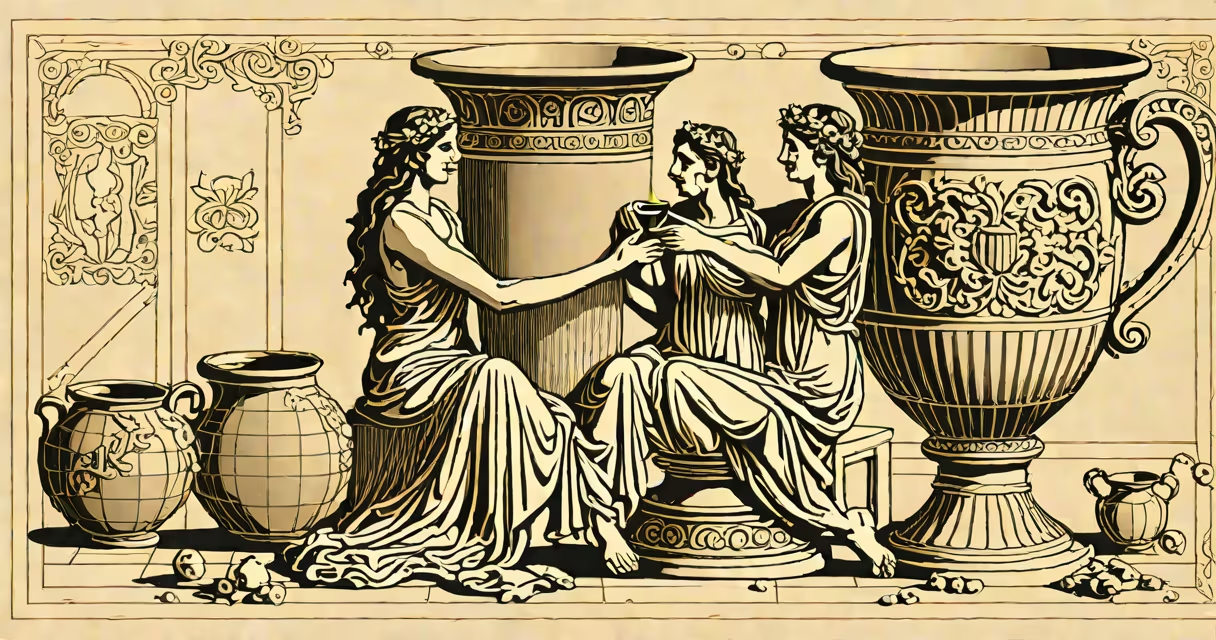
Pandora was the first woman created by the gods in Greek mythology, famously known for unintentionally releasing evils into the world when she opened a jar.
According to Hesiod's Theogony, Pandora was formed by Hephaestus using clay and given life by Athena. She was endowed with gifts by various gods: beauty from Aphrodite, persuasive speech from Hermes, and cunning intelligence from Athena. Zeus instructed Hephaestus to create her as punishment for Prometheus' theft of fire.
Each god contributed unique traits to Pandora. Aphrodite gave her irresistible charm, Hermes granted her deceitful language, and Athena taught her weaving skills. These attributes made her both alluring and dangerous, embodying the complexities of human nature.
Pandora was sent to Epimetheus, brother of Prometheus, who accepted her despite his brother's warning against gifts from Olympus. Their union marked the beginning of humanity's trials and tribulations.
The most famous aspect of Pandora's myth is the "box" (actually a jar, or pithos in Greek) she was given. According to Hesiod's Works and Days, Zeus had given her a sealed jar containing all manner of evil. Pandora's curiosity got the better of her, and she opened it, releasing suffering, disease, and other hardships into the world.
Only Hope remained inside after she closed the lid. This detail highlights the duality of human existence-suffering coexisting with hope. The myth serves as an explanation for the presence of evil in the world and the enduring nature of hope.
Contrary to popular belief, the container Pandora opened was not a box but a storage jar. The term "Pandora's box" became widely used in English only in the 16th century, likely due to a mistranslation of the original Greek text.
Another misconception is that Pandora was purely malevolent. In reality, she was a complex figure created with both positive and negative traits, reflecting the ambivalence of human nature.
Consider the myth's relevance in modern times. The phrase "opening Pandora's box" is often used to describe initiating a sequence of unpredictable events. For example, a company might hesitate to implement a new software system because doing so could "open Pandora's box" of unforeseen technical issues. This usage aligns with the myth's core theme of unintended consequences.
In my own experience, I once helped a friend reorganize their cluttered garage. We decided to tackle one small area at a time, but soon discovered that each box contained layers of forgotten items. What started as a simple cleanup task turned into a days-long project, much like opening Pandora's box.
The story of Pandora resonates because it addresses universal human experiences: curiosity, consequences, and the balance between good and evil. It also serves as a cautionary tale about the dangers of unchecked curiosity and the importance of responsibility.
For further reading on ancient Greek symbols, explore the meaning of the letter C in the Greek alphabet.