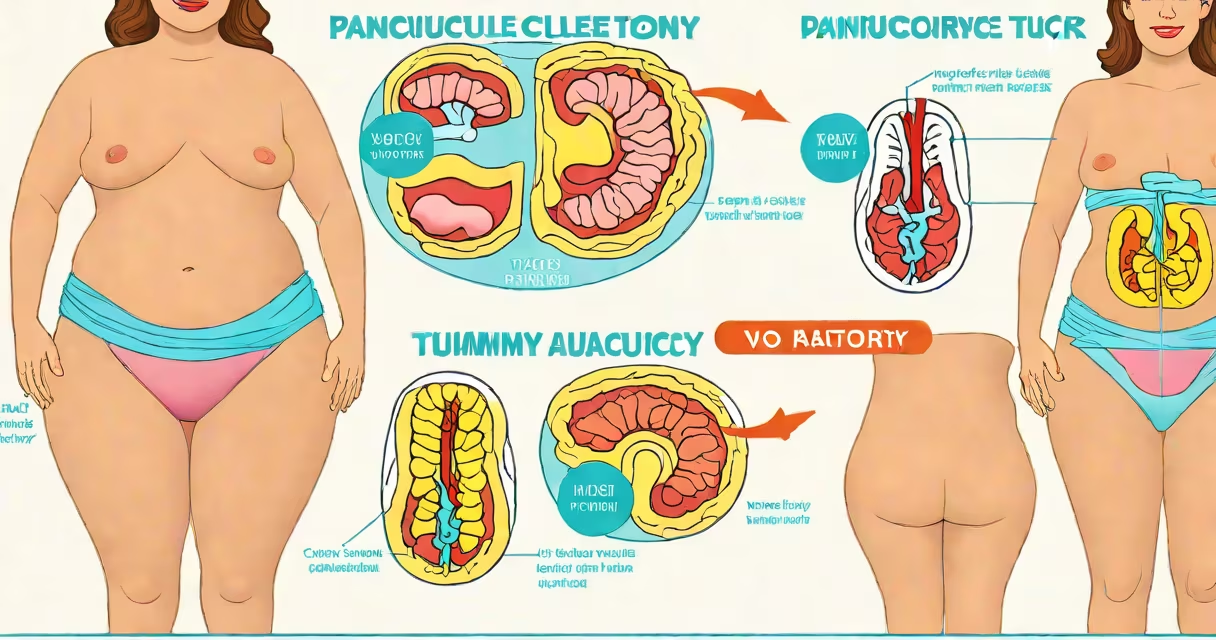
A panniculectomy removes excess abdominal skin below the navel, while a tummy tuck reshapes the entire abdomen including muscle repair. Both procedures address loose skin but serve different purposes.
A panniculectomy focuses solely on removing hanging skin (the "apron") that often forms after significant weight loss or pregnancy. Surgeons make a horizontal incision across the lower abdomen, typically leaving the belly button intact. The procedure doesn't tighten abdominal muscles.
A tummy tuck, medically called abdominoplasty, combines skin removal with muscle repair. Surgeons make a similar incision but reposition the belly button. They then tighten the underlying rectus abdominis muscles, creating a flatter abdomen. Some tummy tucks include liposuction for better contouring.
| Feature | Panniculectomy | Tummy Tuck |
|---|---|---|
| Primary Goal | Remove excess skin | Remove skin + tighten muscles |
| Belly Button | Left in place | Relocated |
| Muscle Repair | None | Yes |
| Typical Patient | Massive weight loss patients | General cosmetic patients |
Doctors recommend panniculectomies primarily for patients who've lost significant weight through bariatric surgery. The hanging skin can cause hygiene issues, back pain, or rashes. Medicare and other insurers sometimes cover this procedure when medically necessary.
Tummy tucks are generally elective procedures for people wanting to improve their appearance. They're popular among women after pregnancy or anyone looking to reduce abdominal bulging from aging or weight fluctuations. Insurance rarely covers tummy tucks unless combined with medical necessity.
Panniculectomy recovery typically takes 2-4 weeks, with less muscle soreness than tummy tucks. Results focus on improved mobility and hygiene rather than aesthetic improvement.
Tummy tuck recovery lasts 4-6 weeks, with more initial discomfort due to muscle tightening. Results show both a flatter stomach and improved muscle tone. Many patients combine tummy tucks with other procedures like breast lifts or thigh lifts.
I saw both procedures firsthand during my medical journalism research. The most striking difference was how tummy tucks created more dramatic transformations, while panniculectomies focused on functional improvements for patients who'd struggled with excessive skin.
Many people confuse these procedures because they both involve abdominal incisions. However, the key difference lies in muscle repair - which only tummy tucks perform. Another misconception is that panniculectomies can't improve appearance at all, when in fact they often do create noticeable contour improvements, just not to the same degree as tummy tucks.
According to the American Society of Plastic Surgeons, tummy tucks were the second most common cosmetic surgical procedure in 2022, while panniculectomies accounted for about 5% of all abdominoplasty procedures. Both numbers have been steadily increasing as awareness grows about body contouring options.