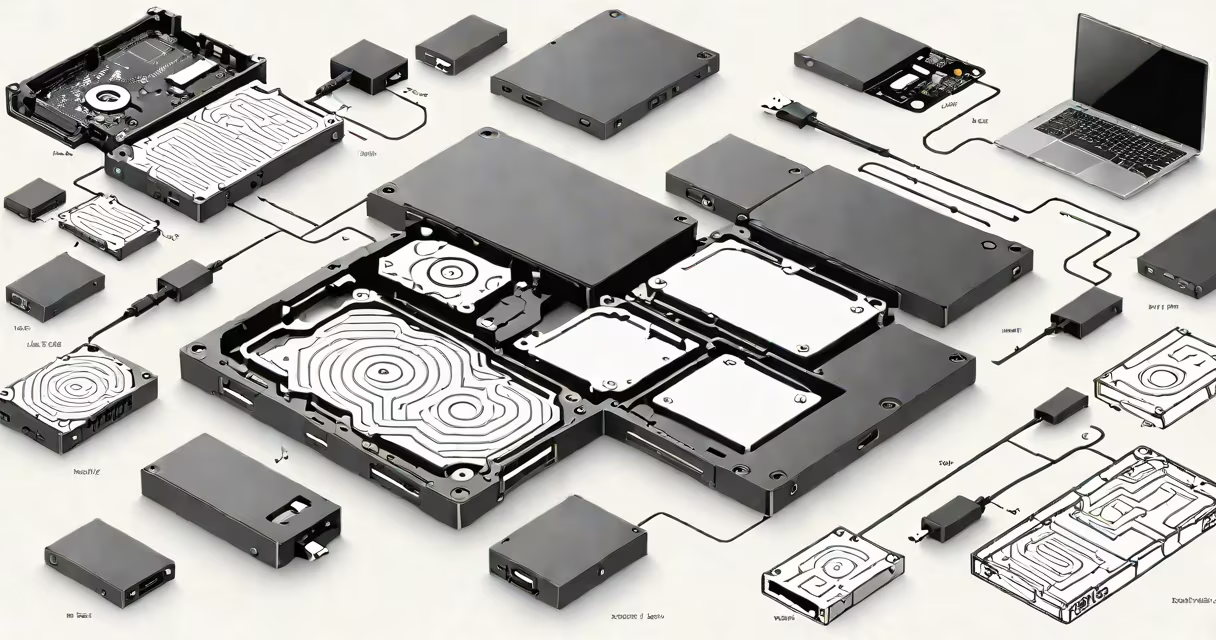
A portable external hard drive 1TB is a compact, plug-and-play storage device that connects to computers via USB to add 1 terabyte (1,000 gigabytes) of capacity. These drives typically weigh less than a pound and fit in a pocket or bag.
These devices contain spinning disk platters (HDD) or flash memory (SSD) to store data. When connected to a computer via USB, they draw power from the host device and appear as an additional drive. Files are transferred by dragging and dropping or using backup software.
| Type | Speed | Durability | Price Range |
|---|---|---|---|
| HDD (Hard Disk Drive) | 80-160 MB/s | Fragile (spinning parts) | $40-$70 |
| SSD (Solid State Drive) | 300-500 MB/s | Rugged (no moving parts) | $70-$120 |
Professionals use them for backing up photos, videos, and documents on location. Students carry course materials between home and campus. Gamers transport large game libraries. Many people keep important files off their primary computer for security.
Many assume all portable external hard drives are fragile. While HDDs contain delicate spinning parts, SSDs have no moving components and can survive drops. Some models include rubber casings and internal shock absorbers.
Another myth is that these drives automatically encrypt stored data. Most require manual setup of password protection or encryption software.
Consider your primary use case. For general file transfers, an HDD provides ample capacity at lower cost. For frequent travel or harsh environments, invest in an SSD. Check compatibility with your devices-most support Windows and Mac, but some require reformatting.
For 4K video editors or photographers working with RAW files, a 4TB external hard drive may be more practical. The price difference between 1TB and 2TB models has narrowed in recent years, making larger capacities more accessible.