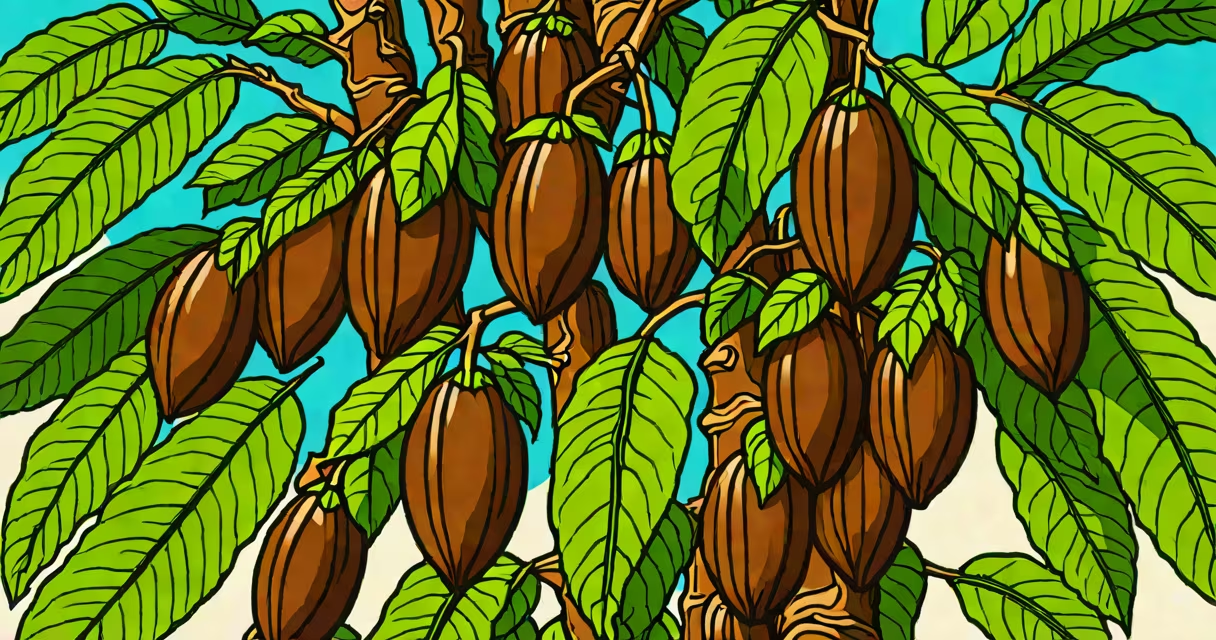
The planta de cacao is the tropical tree Theobroma cacao, which produces cacao beans used to make chocolate. This small evergreen grows in humid, shaded environments near the equator.
Cacao trees thrive in temperatures between 64°F and 82°F (18°C and 28°C) and require consistent rainfall. They grow best under partial shade, often planted alongside taller trees like bananas or rubber trees. The tree's fruit, called cacao pods, grow directly from the trunk and branches rather than hanging from them.
There are three main varieties of cacao:
| Type | Characteristics | Primary Use |
|---|---|---|
| Criollo | Rare, delicate flavor, difficult to grow | High-end chocolates |
| Forastero | Hardy, bitter, most common | Commercial chocolate |
| Trinitario | Hybrid of Criollo and Forastero, balanced flavor | Mid-range chocolates |
After harvesting, cacao pods are opened to extract the beans, which are then fermented, dried, roasted, and ground into a paste called chocolate liquor. This liquor is processed into cocoa solids and cocoa butter, the key components of chocolate.
Most of the world's cacao is grown in a narrow band around the equator, known as the "cocoa belt." West Africa produces about 70% of global supply, with Ivory Coast and Ghana as the largest exporters. Latin America and Asia also contribute.
Cacao trees have been cultivated for thousands of years. The earliest evidence of cacao use dates back to 1900 BC in Mesoamerica, where it was consumed as a bitter drink by the Maya and Aztecs. European colonization introduced cacao to global markets, leading to widespread chocolate production.
Unlike many other crops, cacao trees cannot be grown from seeds because they won't produce fruit identical to the parent plant. Farmers propagate them using grafting or cuttings from existing trees. A single tree can produce between 20 and 30 pods per year, each containing 20-50 beans.
I visited a cacao farm in Ecuador where I saw firsthand how labor-intensive the process is. Workers carefully hand-harvest pods using curved knives, then split them open to remove the beans. The beans are placed in wooden boxes to ferment for several days before being dried in the sun. This traditional method hasn't changed much over centuries.
Many people confuse cacao with cocoa, but they're different stages of the same product. Cacao refers to the plant and its unprocessed beans, while cocoa is the powder made from processed cacao beans. The term "cacao" is more commonly used in health food contexts to describe raw, unprocessed products.
Cacao trees face several threats, including disease, climate change, and deforestation. The most devastating disease is witches' broom, a fungal infection that attacks the tree's flowers and young growth. Sustainable farming practices and disease-resistant hybrids are being developed to protect cacao crops.
Beyond chocolate production, cacao has medicinal uses. Its seeds contain flavonoids, which have antioxidant and anti-inflammatory properties. Cacao is also used in cosmetics for its skin-nourishing benefits. The plant's scientific name, Theobroma cacao, means "food of the gods," reflecting its historical significance.
To learn more about cacao's role in card reading traditions, see our guide on five of cups.