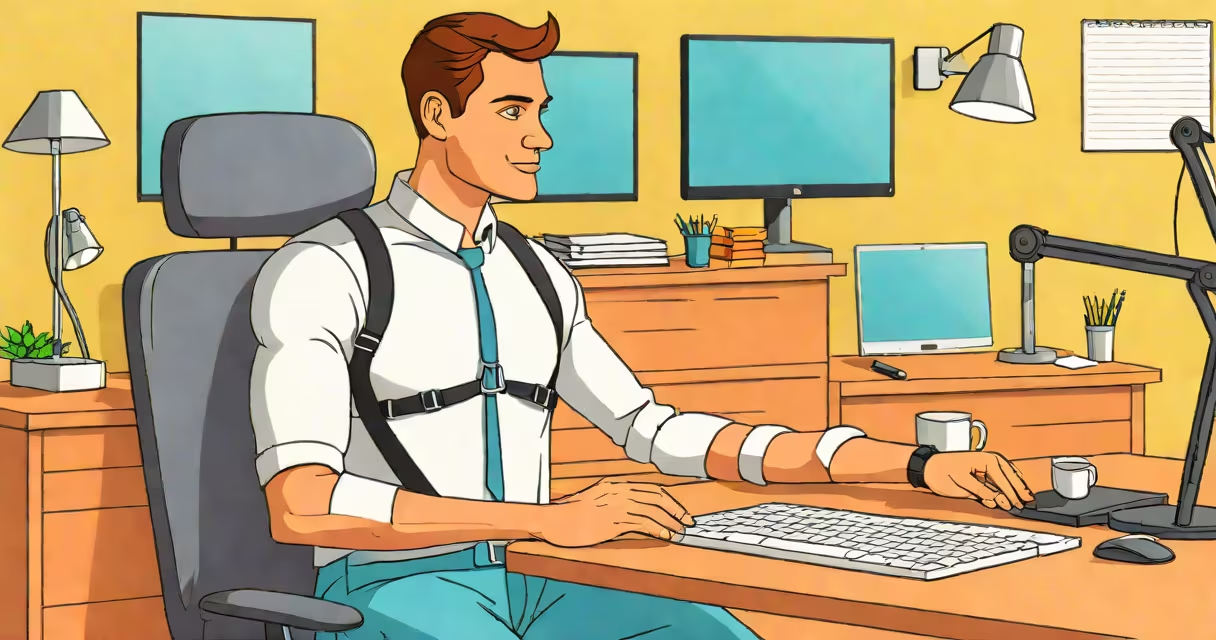
A posture corrector for neck and shoulder pain is a wearable device that gently pulls your shoulders back, aligning your spine and reducing strain on your neck and shoulders. These devices are designed to help you maintain proper posture, especially during prolonged sitting.
Most posture correctors use adjustable straps that wrap around your shoulders and back, creating a supportive frame. When worn correctly, they pull your shoulders back and encourage your spine to maintain its natural curvature. This reduces the forward tilt that often causes neck and shoulder pain.
For example, the posture corrector might include a small pad that rests between your shoulder blades, providing additional support and reminding you to sit up straight. Some models also come with vibrating alerts that notify you when you slouch.
Posture correctors come in various designs, each suited for different needs:
| Type | Description | Best For |
|---|---|---|
| Strap-Based | Uses adjustable straps to pull shoulders back | General posture improvement |
| Vest-Style | Worn like a vest with built-in support | Long-term wear and comfort |
| Magnetic | Uses magnets to align the spine | Targeted support for specific areas |
People who spend long hours sitting at desks, driving, or using computers are prime candidates for a posture corrector. These devices are particularly useful for those suffering from conditions like forward head posture or chronic neck and shoulder pain due to poor posture.
One common misconception is that posture correctors are only for people with severe posture issues. In reality, they can be beneficial for anyone looking to improve their posture and prevent future discomfort. Another myth is that these devices are uncomfortable to wear. Modern designs prioritize comfort, making them suitable for all-day use.
I tested a strap-based posture corrector during a workday and noticed a significant reduction in neck and shoulder tension after just a few hours of use. The device was lightweight and didn't restrict my movement, allowing me to focus on my tasks without discomfort.
When selecting a posture corrector, consider factors like adjustability, material, and ease of use. Look for models with breathable fabrics to ensure comfort during extended wear., check for any additional features, such as vibration alerts or app connectivity, which can improve the effectiveness of the device.
A well-designed posture corrector should fit snugly without causing discomfort. It's also important to choose a model that supports the specific areas where you experience pain, whether it's your neck, shoulders, or upper back.