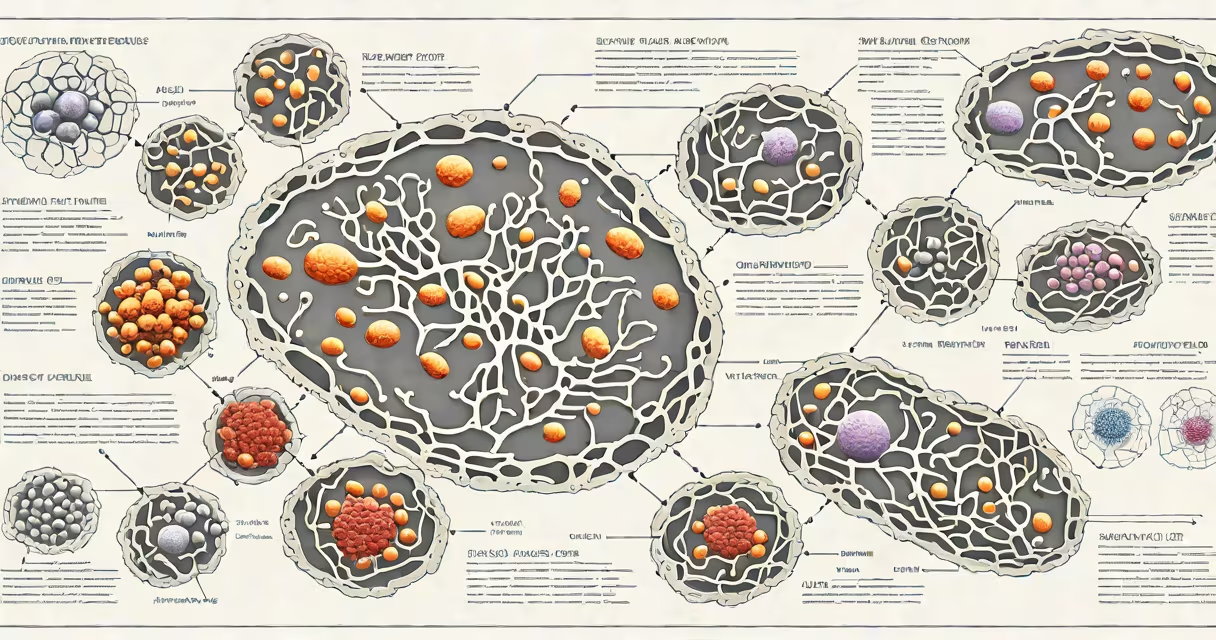
A prokaryotic cells worksheet is an educational tool that helps students identify and label key structures in bacteria and archaea, the two domains of life that lack nuclei. These worksheets typically include diagrams, comparison exercises, and fill-in-the-blank sections about prokaryotic cell features.
Most worksheets follow a similar format: they present an unlabeled diagram of a prokaryotic cell and ask students to identify structures like the cell wall, flagella, and plasmid DNA. Some worksheets also compare prokaryotic and eukaryotic cells, highlighting differences like the absence of membrane-bound organelles in prokaryotes.
For example, a typical worksheet might show two side-by-side diagrams-a prokaryotic cell and a eukaryotic cell-and ask students to label each structure correctly. This helps reinforce the key differences between these cell types.
| Type | Description | Example Task |
|---|---|---|
| Labeling Worksheets | Students identify structures in a prokaryotic cell diagram. | Label the nucleoid, cell membrane, and flagellum. |
| Comparison Worksheets | Students contrast prokaryotic and eukaryotic cells. | List three differences between prokaryotic and eukaryotic cells. |
| Fill-in-the-Blank Worksheets | Students complete sentences about prokaryotic cell functions. | Prokaryotic cells reproduce through a process called ______. |
These worksheets are commonly used in high school and college microbiology classes. They help students visualize and understand the unique characteristics of prokaryotic cells, which are essential for grasping concepts like antibiotic resistance and genetic engineering.
Many students confuse prokaryotic cells with eukaryotic cells, assuming that all cells have nuclei. However, prokaryotic cells-like those in bacteria-lack membrane-bound organelles and nuclei. A well-designed worksheet clarifies these differences with clear labeling exercises.
Another common mistake is believing that all prokaryotes are harmful. In reality, many prokaryotic cells, such as those in yogurt-making bacteria, are beneficial. Worksheets often include real-world examples to dispel these myths.
I once used a prokaryotic cells worksheet in a classroom setting, and it improved student comprehension of bacterial structures. The visual component was especially helpful for kinesthetic learners.
A prokaryotic cells worksheet is a valuable teaching tool that helps students grasp the fundamentals of bacterial and archaeal cell structures. By using labeled diagrams and comparison exercises, these worksheets make complex concepts easier to understand.