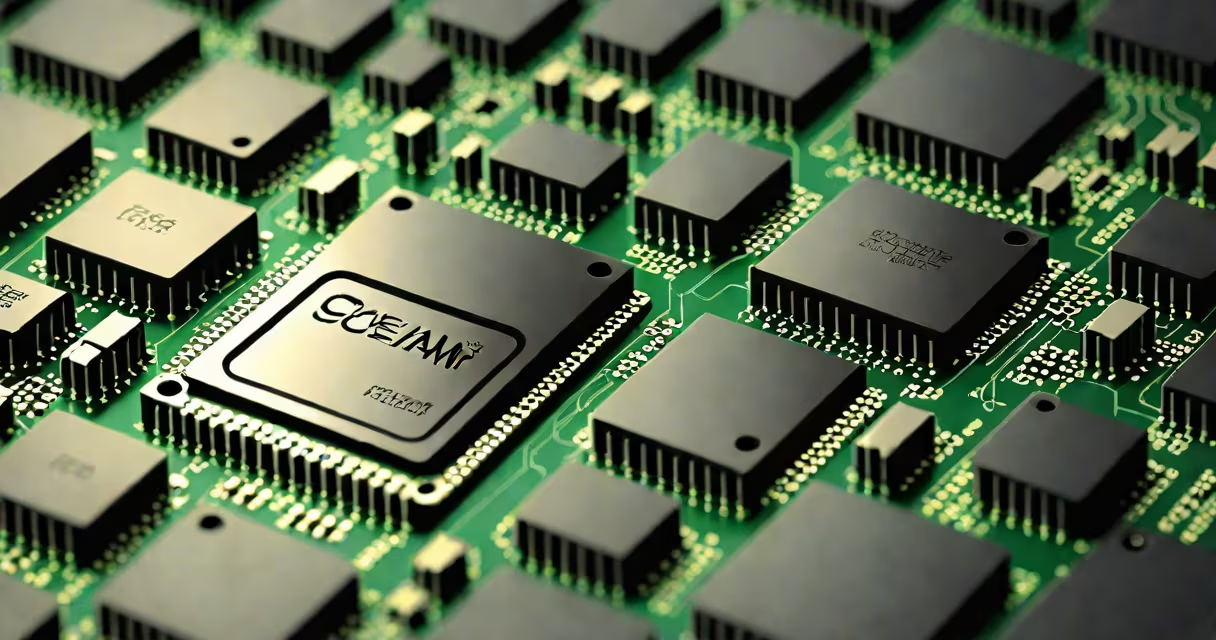
Random access memory chips are small semiconductor devices that temporarily store data your computer actively uses, like open applications or documents. Unlike permanent storage solutions such as hard drives, RAM is volatile, meaning it loses all data when power is turned off.
RAM allows data to be read or written in any random order, regardless of where the data is stored. This differs from older storage technologies like magnetic tapes, which access data sequentially. When you open a program, the operating system loads the necessary data from the hard drive into RAM, allowing the CPU to access it much faster.
RAM modules consist of multiple memory chips mounted on a printed circuit board. These chips contain millions of tiny memory cells, each storing a single bit of data. The cells are arranged in a grid, with each cell accessible via a unique address, enabling the CPU to retrieve or modify data directly without scanning through other data.
There are several types of RAM, each with different speeds, power consumption, and use cases:
| Type | Description | Typical Speed |
|---|---|---|
| DRAM (Changing RAM) | Most common type, requires frequent refreshing to retain data | 1600-3200 MHz |
| SRAM (Static RAM) | Faster and more expensive, used for cache memory | 2000-4000 MHz |
| DDR SDRAM (Double Data Rate Synchronous DRAM) | Common in modern computers, improves data transfer rates | 1600-4800 MHz |
| GDDR (Graphics Double Data Rate) | Used in graphics cards for high-bandwidth applications | 1000-1800 MHz |
Many people confuse RAM with permanent storage like SSDs or HDDs. While both store data, RAM is temporary and loses its contents when the power is off. Another misconception is that more RAM always results in better performance. While increasing RAM can improve multitasking and handle larger datasets, the actual performance gain depends on the specific tasks and software being used.
For example, a video editing application may benefit from additional RAM, while a simple text editor may not see any noticeable improvement. It's essential to understand the specific requirements of your applications and choose RAM accordingly.
When upgrading my home office computer, I noticed significant performance improvements after increasing the RAM. With more RAM, I could run multiple applications simultaneously, such as a web browser with numerous tabs, a video editing software, and a virtual machine, without experiencing slowdowns or freezes. The upgrade allowed me to work more efficiently and complete tasks faster.
However, it's important to ensure compatibility with your computer's motherboard and other components. Most modern computers use DDR4 or DDR5 RAM, and mixing different types or speeds can lead to compatibility issues or reduced performance.
RAM plays a critical role in a computer's performance. It acts as a bridge between the CPU and permanent storage, providing quick access to data and instructions. Without RAM, the CPU would have to rely solely on slower storage devices, resulting in reduced performance. According to the Intel DRAM Technology Overview, RAM speeds can vary, with higher speeds offering better performance for demanding tasks.
To speed, RAM capacity is also essential. More RAM allows you to run more applications simultaneously and handle larger datasets. For instance, a computer with 32GB of RAM can easily handle resource-intensive tasks like 4K video editing or running multiple virtual machines, while a computer with only 4GB of RAM may struggle with these tasks.
RAM is often confused with other types of memory, such as cache and permanent storage. Cache memory is a small, ultra-fast type of memory located on the CPU itself. It stores frequently accessed data and instructions to reduce the time the CPU spends waiting for data from RAM or permanent storage.
Permanent storage, such as SSDs or HDDs, stores data even when the power is turned off. It has a much larger capacity than RAM but is slower. When you turn on your computer, the operating system loads essential data from permanent storage into RAM for quick access.
Random access memory chips are important components in modern computers, providing quick access to data and instructions. Understanding the different types of RAM, their speeds, and capacities can help you make informed decisions when upgrading or building a computer. a professional, having the right amount and type of RAM can improve your computer's performance and user experience.