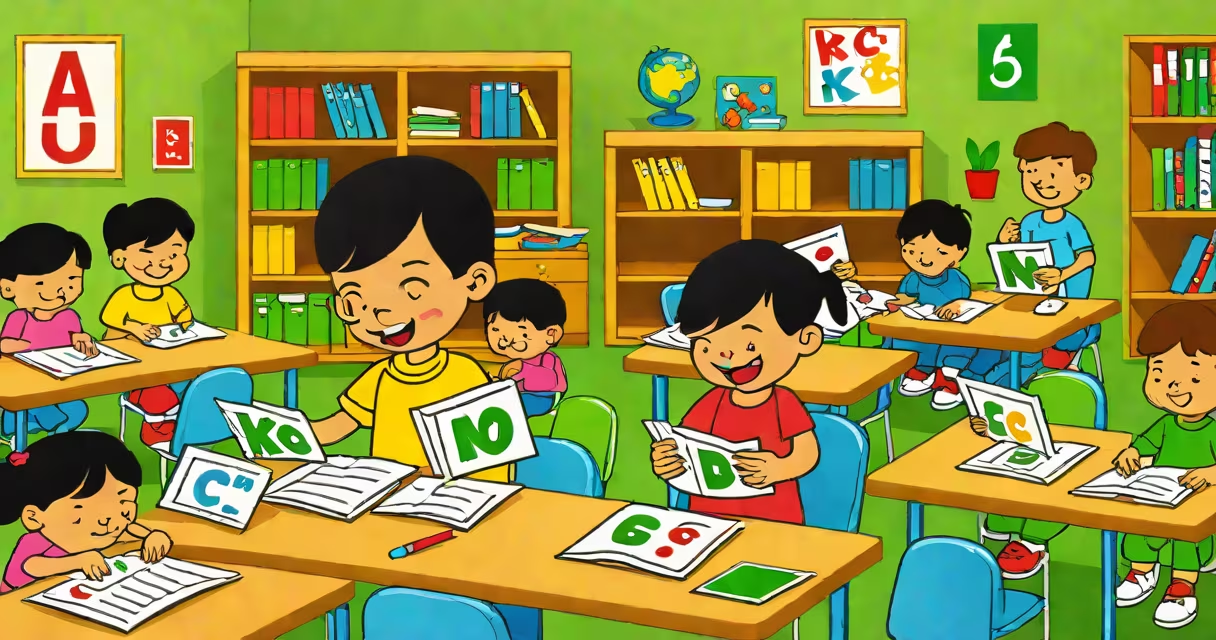
Reading and phonics for kindergarten is a structured approach to teaching young children how to decode words by connecting sounds to letters. This foundational skill helps children develop early literacy abilities.
Phonics instruction breaks down spoken language into individual sounds (phonemes) and teaches children how these sounds correspond to written letters (graphemes). For example, the word "cat" is broken into the sounds /c/ /a/ /t/. By learning these sound-letter connections, children can blend them together to read words.
There are several approaches to phonics instruction:
Research shows that explicit phonics instruction improves children's reading skills. According to the National Reading Panel, phonics instruction is important for developing word recognition skills, which are essential for fluent reading. For instance, a study published in the journal Reading Research Quarterly found that systematic phonics instruction improved kindergarteners' reading accuracy by 20%.
Many people confuse phonics with memorizing sight words. While sight words are important, phonics provides the tools to decode unfamiliar words. For example, a child who knows phonics can read "dog" even if they haven't seen the word before, whereas a child relying solely on sight words might struggle.
Another misconception is that phonics is only about letters and sounds. In reality, it also includes blending, segmenting, and manipulating sounds to build and read words. For instance, a child might learn to blend /c/ /a/ /t/ to say "cat" and then segment "cat" back into its sounds.
Let's say a teacher wants to teach the word "fish". Using synthetic phonics, the teacher would:
This step-by-step approach helps children understand the relationship between letters and sounds, which is important for reading success.