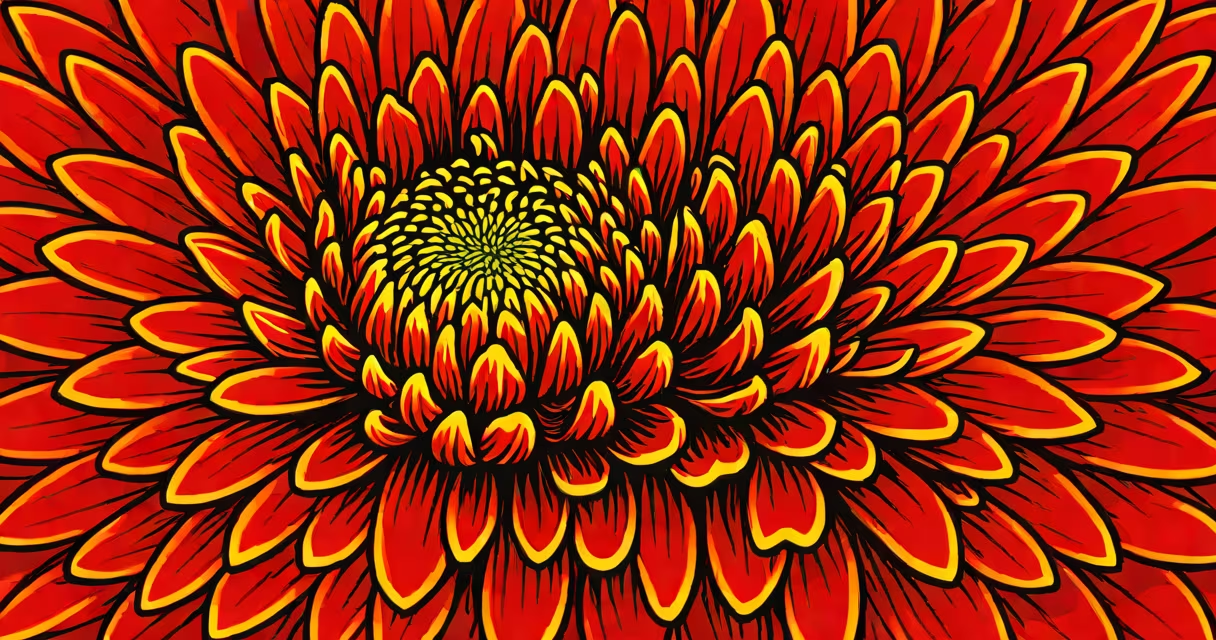
The red chrysanthemum flower meaning represents love, loyalty, and celebration in Japanese culture. These vibrant blooms symbolize deep affection and optimism.
Chrysanthemums originated in China but became deeply rooted in Japanese culture during the Heian period (794-1185). The red variety specifically gained prominence as a symbol of nobility and perfection. In Japan, the chrysanthemum is the imperial flower, representing the throne and used in the Imperial Seal of Japan.
While red chrysanthemums carry romantic connotations, other colors have different meanings:
In Japan, the Festival of Happiness (Kiku no Sekku) celebrates the chrysanthemum's beauty and resilience. The flower also appears in art and literature, often symbolizing longevity and rejuvenation. Unlike the red tulip, which signifies passionate love, the red chrysanthemum embodies a more profound, enduring affection.
Today, red chrysanthemums are popular in bouquets and floral arrangements, especially for anniversaries and romantic gestures. They also feature prominently in autumn decorations due to their late-blooming nature. In Korea, the flower is associated with autumn and is celebrated during Chuseok, the Korean Thanksgiving.
According to the Encyclopedia Britannica, the chrysanthemum was first cultivated in China as early as the 15th century BC. Its symbolism has evolved over centuries, making it a versatile and meaningful flower in various cultures.
I once gifted a bouquet of red chrysanthemums to a friend on their anniversary. The recipient later shared that the flowers brought them joy and reminded them of enduring love-a perfect reflection of the flower's meaning.