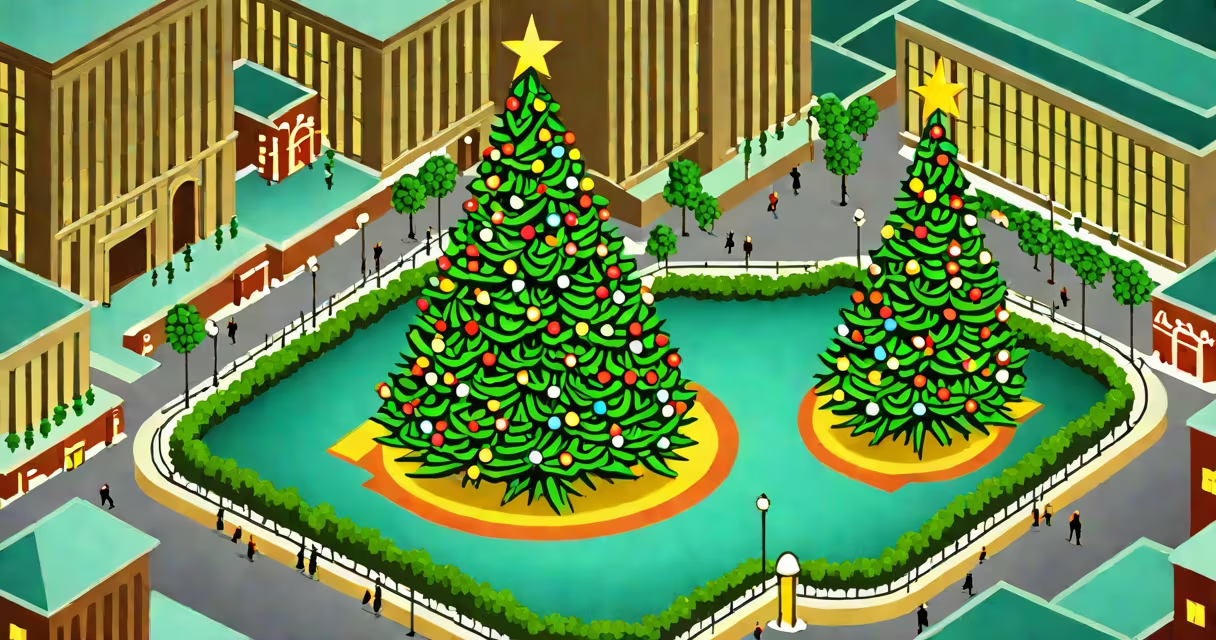
The Rockefeller Christmas tree history traces back to 1931, when workers at the newly constructed Rockefeller Center erected a modest tree to lift spirits during the Great Depression. Today, the tree stands as a symbol of hope and festivity, drawing millions of visitors annually.
The tradition started spontaneously. Construction workers gathered around a modest pine tree, decorating it with paper garlands and a few candles. This simple act of camaraderie marked the beginning of a beloved holiday ritual.
By 1933, the tree became an official event, with the first organized lighting ceremony. The tree's prominence grew alongside Rockefeller Center's reputation as a hub of commerce and culture.
Early trees were often discarded after the holidays. In 1938, the first artificial tree was used due to a shortage of natural trees. However, live trees returned in subsequent years, growing larger and more spectacular with each passing decade.
Today, the tree typically stands between 75 and 100 feet tall, weighing between 10 and 12 tons. The tree is adorned with more than 50,000 multicolored lights and a Swarovski star atop.
Each year, the tree is sourced from one of nine states, primarily from the Northeast and Midwest. The selection process involves scouting potential trees months in advance. Once chosen, the tree is carefully transported to Rockefeller Center, a process that can take days.
After arrival, the tree undergoes extensive preparation. Workers spend weeks stringing lights, attaching decorations, and ensuring the tree is secure. The lighting ceremony, broadcast nationally, marks the official start of the holiday season in New York City.
The Rockefeller Christmas tree has become a global symbol of the holiday season. It appears in countless films, television shows, and photographs, cementing its place in popular culture. The tree's annual debut signals the start of the holiday season for many around the world.
Beyond its visual appeal, the tree represents unity and resilience. During times of national crisis, such as after the 9/11 attacks, the tree served as a beacon of hope and a gathering place for collective mourning and celebration.
I visited Rockefeller Center during the 2019 holiday season. The tree, towering above the ice rink, was a breathtaking sight. The sheer scale of the decorations and the festive atmosphere created an unforgettable experience. The tree's glow illuminated the faces of visitors from all walks of life, embodying the spirit of the season.
Many believe the tree is always a Norway spruce. While this is common, other species have been used, including balsam fir and Douglas fir., the tree's location has varied over the years, initially placed near the skating rink and later moved to its current prominent position.
Another myth is that the tree is always replaced after the holidays. In reality, the tree is often donated to a community in need, where it is repurposed for various uses,.
The Rockefeller Christmas tree is typically erected in late November, with the lighting ceremony taking place in early December. The exact dates vary each year, but the tree remains on display through the New Year. For precise timing, check the official Rockefeller Center holiday schedule.
The Rockefeller Christmas tree history is proof of the enduring power of tradition and community. From its humble beginnings to its current status as a global icon, the tree continues to bring people together during the holiday season. Its story reminds us of the simple joys that can grow into something extraordinary.