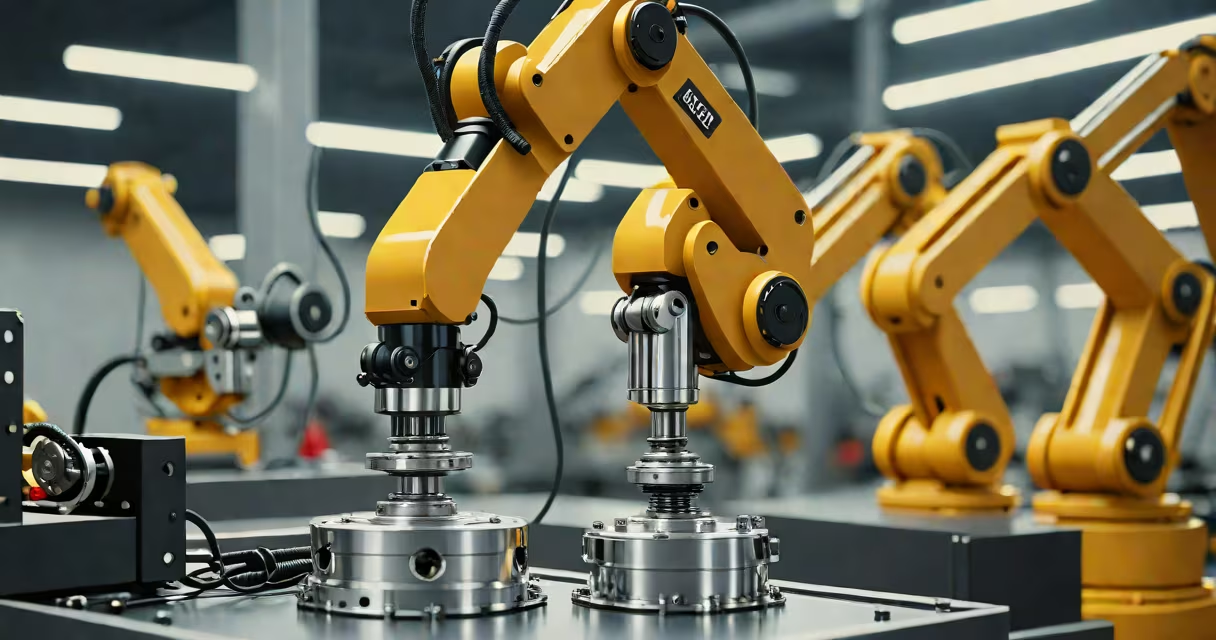
Robotic automation uses programmable machines to perform repetitive tasks with high precision, replacing human labor in manufacturing, logistics, and other industries. These systems integrate computer vision, sensors, and artificial intelligence to handle materials, assemble products, or sort items without constant human oversight.
Robotic automation relies on three core components: mechanical arms, control systems, and software. The robotic arm moves along programmed paths using servomotors for precise positioning. Control systems process input from sensors and cameras to adjust movements in real time. Software defines the task sequence, such as picking objects from a conveyor belt or welding car frames.
For example, Tesla's Fremont factory uses over 10,000 robots to build vehicles. These robots weld the car body, apply paint, and install components with millimeter accuracy. The system reduces production time while maintaining consistent quality standards.
| Type | Primary Use | Example Application |
|---|---|---|
| Articulated Robots | Assembly, welding | Car manufacturing |
| SCARA Robots | High-speed assembly | Electronics manufacturing |
| Delta Robots | Packaging, sorting | Food processing |
| Collaborative Robots (Cobots) | Assisting human workers | Small-scale production lines |
Many assume robotic automation completely replaces human jobs. However, it often augments human capabilities. For instance, cobots work alongside humans in assembly lines, handling dangerous or tedious tasks while freeing workers for more complex decision-making roles.
Another misconception is that robotic automation is limited to large factories. Small businesses also use it. A bakery might deploy a robotic arm to handle dough, improving consistency and reducing labor costs.
Robotic process automation (RPA) automates software tasks, like data entry or customer service responses, using algorithms. Physical robots automate physical tasks, like moving objects or building products. While both improve efficiency, they serve different purposes. RPA handles digital workflows, whereas robotic automation manages physical processes.
According to McKinsey, global spending on robotic automation reached $45 billion in 2022, with projections to grow at 12% annually through 2027. This growth reflects increasing adoption across industries seeking efficiency gains.
I visited a small electronics manufacturer that installed a robotic arm to place components on circuit boards. The robot reduced assembly time by 30% and improved accuracy, eliminating defects caused by human error. The company's owner noted that the investment paid for itself within six months.
Robotic automation enhances productivity and precision in industries ranging from automotive manufacturing to food processing. By understanding its applications and limitations, businesses can integrate robotic systems effectively, balancing efficiency with human labor.