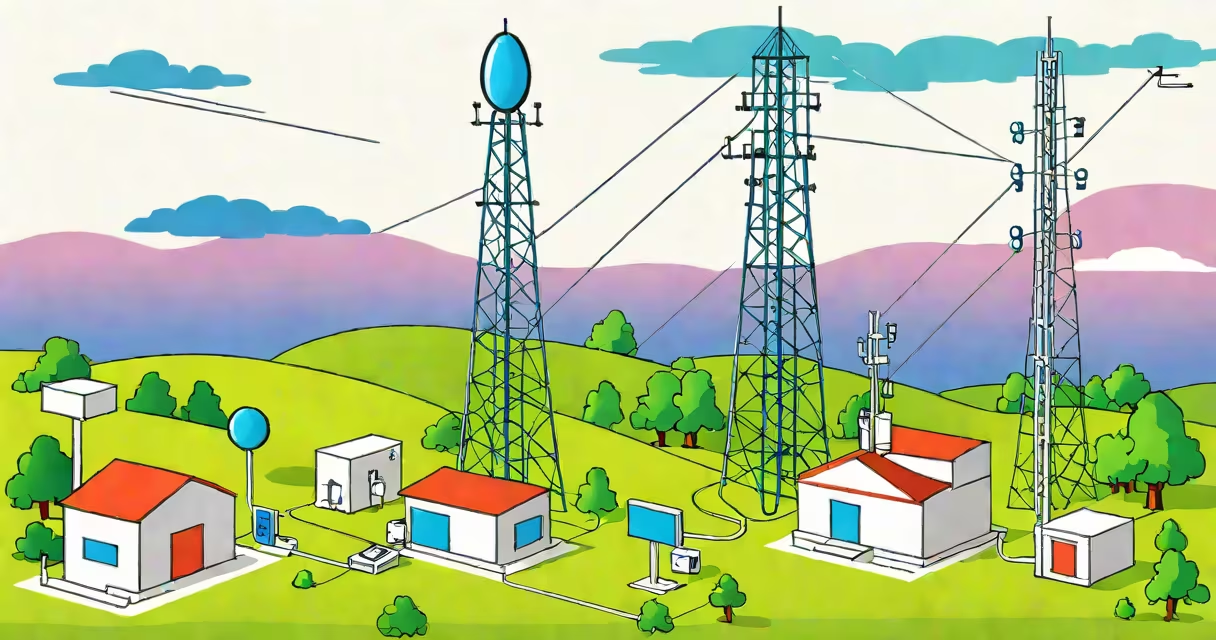
A signal booster for mobile network is a device that captures weak cellular signals, amplifies them, and rebroadcasts them to improve coverage in areas with poor reception. These systems consist of an external antenna, an amplifier, and an internal antenna.
Signal boosters operate in three main steps:
This process works for both incoming and outgoing signals, improving call quality and data speeds for all nearby mobile devices.
Signal boosters come in different forms to suit various needs:
| Type | Use Case | Coverage Area |
|---|---|---|
| Home/Office Booster | Improving signal in small indoor spaces | Up to 5,000 sq ft |
| Vehicle Booster | Enhancing signal in cars, trucks, or RVs | Entire vehicle interior |
| Enterprise Booster | Boosting signal in large buildings or campuses | Up to 1 million sq ft |
Most boosters support multiple carriers and frequency bands, ensuring compatibility with various mobile networks.
Signal boosters are most effective in areas with weak but detectable signals, such as:
They won't create signal where none exists, but they can improve marginal reception.
Many people confuse signal boosters with Wi-Fi extenders or assume they work like repeaters for walkie-talkies. Unlike Wi-Fi systems that require internet connectivity, mobile signal boosters directly amplify cellular signals from nearby towers. They don't create new signals but improve existing ones.
Another misconception is that boosters interfere with carrier networks. However, FCC-approved boosters operate within legal limits and actually reduce dropped calls by strengthening signals. According to the Federal Communications Commission, properly installed boosters improve network efficiency by reducing the need for repeated transmissions.
I tested a home signal booster in a rural cabin where calls frequently dropped. After installation, call quality improved from one bar to full signal strength. Data speeds increased from 0.5 Mbps to consistent 4G LTE performance. The system maintained this improvement during rain and wind, conditions that previously disrupted service.
For optimal results, position the external antenna where it can receive the strongest signal, typically near a window or on a roof. The internal antenna should be placed centrally where devices are most used. Most systems include tools to help with placement and alignment.