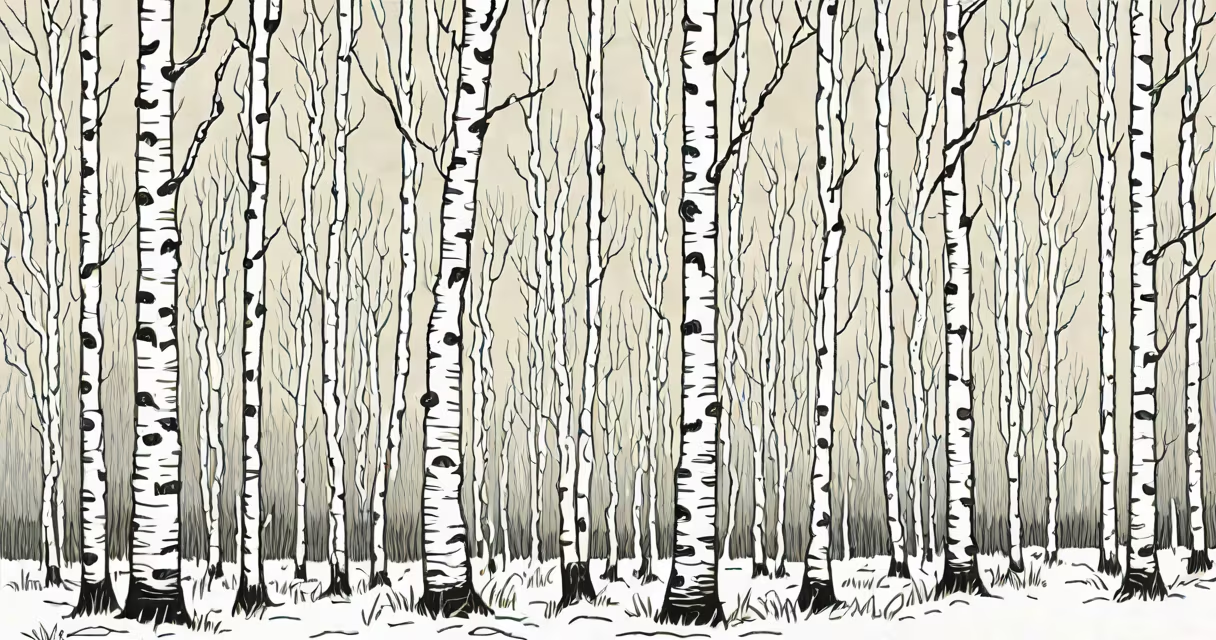
Silver birch trees (Betula pendula) are slender, fast-growing deciduous trees known for their distinctive white bark and triangular leaves. They thrive in temperate climates across Europe and Asia.
Silver birches grow quickly, reaching heights of 10-20 meters (33-66 feet) within 20 years. Their white bark peels in horizontal strips, revealing a darker layer beneath. The trees produce catkins in early spring, followed by small, winged seeds.
| Type | Scientific Name | Key Feature |
|---|---|---|
| Silver Birch | Betula pendula | White bark, triangular leaves |
| Downy Birch | Betula pubescens | Hairy buds and leaves |
| Yellow Birch | Betula alleghaniensis | Yellowish bark, native to North America |
Silver birch trees are common in forests, parks, and gardens. Their lightweight wood is used for plywood, furniture, and even charcoal. The trees also play a role in traditional medicine, with bark extracts used for skin conditions.
One non-obvious fact: silver birch trees are pioneer species, meaning they colonize open ground quickly after disturbances like fires or logging. This makes them important for soil stabilization and system recovery.
Many people confuse silver birch trees with paper birches (Betula papyrifera), which are native to North America and have even more peeling bark. Unlike silver birches, paper birches have a stronger reddish-brown tint.
During a hike in the Scottish Highlands, I noticed how silver birch trees stood out against the greenery. Their white bark made them easy to spot, even from a distance. The trees were also home to various birds and insects, showcasing their ecological importance.