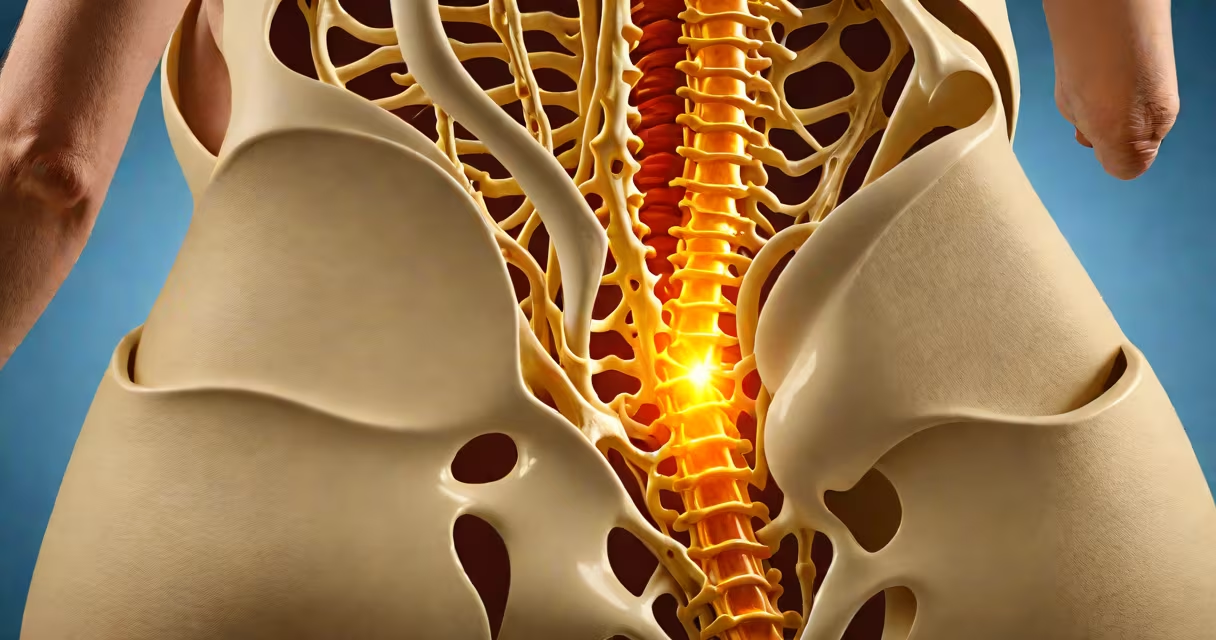
A slipped disc causing hip pain typically results from a herniated disc in the lower back compressing nearby nerves, such as the sciatic nerve. This compression sends pain signals to the hip area, creating discomfort or sharp pain.
A slipped disc, or herniated disc, occurs when the soft inner gel of a spinal disc pushes through a tear in the tough outer layer. When this happens in the lower back, it can press on the sciatic nerve or other nearby nerves. The sciatic nerve runs from the lower back through the hips and down the legs, so compression can cause pain to radiate to the hip area.
The most common types of slipped discs affecting the hip include:
Hip pain from a slipped disc is most common in adults aged 30 to 50. It often occurs due to repetitive stress, poor posture, or sudden injury. Activities like heavy lifting, twisting motions, or prolonged sitting can exacerbate the condition.
Many people assume hip pain always originates from the hip joint itself. However, a slipped disc in the lower back is a frequent hidden cause. Another misconception is that rest alone will resolve the issue, but targeted physical therapy and proper posture adjustments are often necessary for recovery.
Treatment for a slipped disc causing hip pain usually begins with conservative methods:
I once worked with a patient who experienced persistent hip pain for months before discovering the true cause was a slipped disc in the lower back. After a few sessions of physical therapy focused on core strengthening and nerve mobilization, their pain improved.
Consult a healthcare professional if hip pain persists for more than a few weeks, worsens over time, or is accompanied by numbness, tingling, or weakness in the leg. Early diagnosis and treatment can prevent long-term complications.
According to the American Academy of Orthopaedic Surgeons, about 90% of people with a herniated disc improve with nonsurgical treatments within six weeks. However, seeking medical advice early can lead to faster recovery.