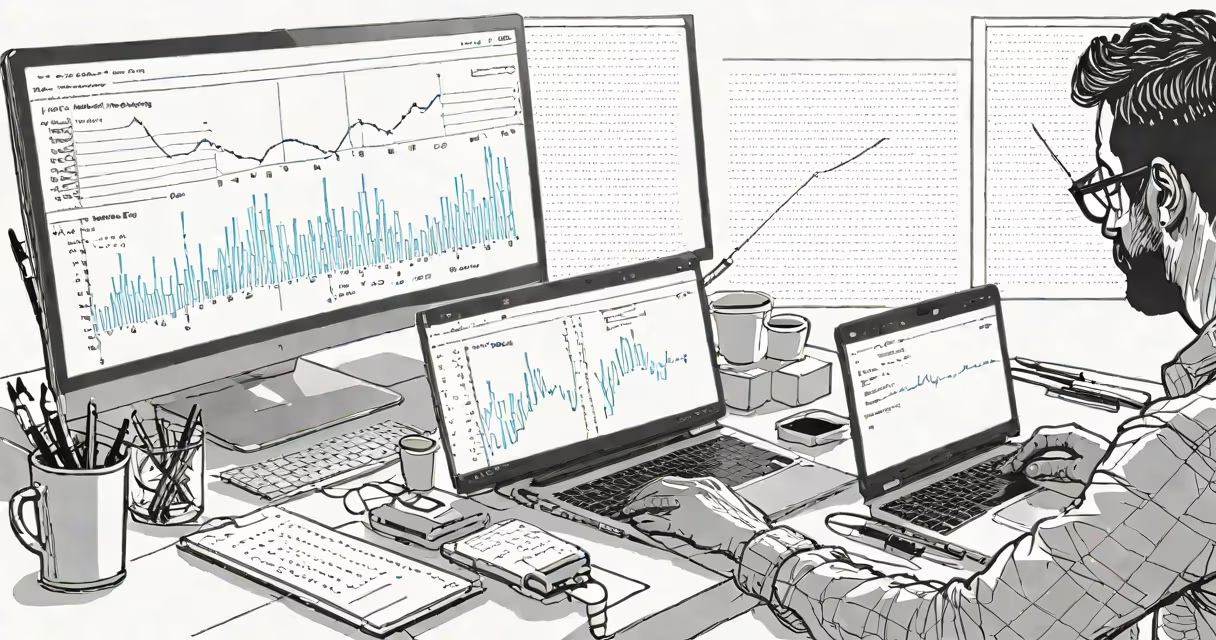
Software engineering to data science is a career transition where professionals use their programming and problem-solving skills to analyze data and derive insights. This shift involves learning new tools and techniques while applying existing software development expertise.
Software engineers moving into data science typically follow a structured path. They start by learning data-specific programming languages like Python or R, then master data manipulation libraries such as Pandas. Next, they explore statistical analysis and machine learning frameworks like Scikit-learn. Finally, they gain experience with data visualization tools like Tableau or Matplotlib.
The transition often leads to roles like data analyst, data engineer, or data scientist. Each role requires different levels of expertise in statistics, machine learning, and big data technologies. For example, a data analyst focuses on interpreting data and creating reports, while a data scientist builds predictive models.
| Role | Primary Skills | Key Tools |
|---|---|---|
| Data Analyst | SQL, Excel, Statistical Analysis | Tableau, Power BI |
| Data Engineer | Big Data Technologies, ETL Processes | Apache Spark, Hadoop |
| Data Scientist | Machine Learning, Deep Learning | TensorFlow, PyTorch |
This transition is common in tech companies, finance, healthcare, and e-commerce. Organizations value the analytical and technical skills of software engineers in data-driven decision-making. For instance, a software engineer at an e-commerce company might transition to a data scientist role to improve recommendation algorithms.
Many believe that software engineering and data science are entirely separate fields. However, both require strong programming skills and problem-solving abilities. The main difference lies in the focus: software engineering emphasizes building applications, while data science centers on analyzing data to extract insights.
Another misconception is that the transition requires starting from scratch. In reality, many skills from software engineering, such as algorithm design and debugging, are transferable to data science. For example, understanding how to improve code for performance is valuable when working with large datasets.
Consider a software engineer who works on developing web applications. To transition into data science, they might start by taking online courses in Python and data analysis. They then practice using Pandas to manipulate datasets and create visualizations with Matplotlib. Next, they explore machine learning by building a simple model to predict customer churn. Finally, they apply these skills in a real-world project, such as analyzing user behavior data to improve a company's product offerings.
I personally observed this transition firsthand when a colleague moved from developing backend services to analyzing user engagement metrics. By using their existing programming skills and learning new data analysis tools, they successfully transitioned into a data scientist role within six months.