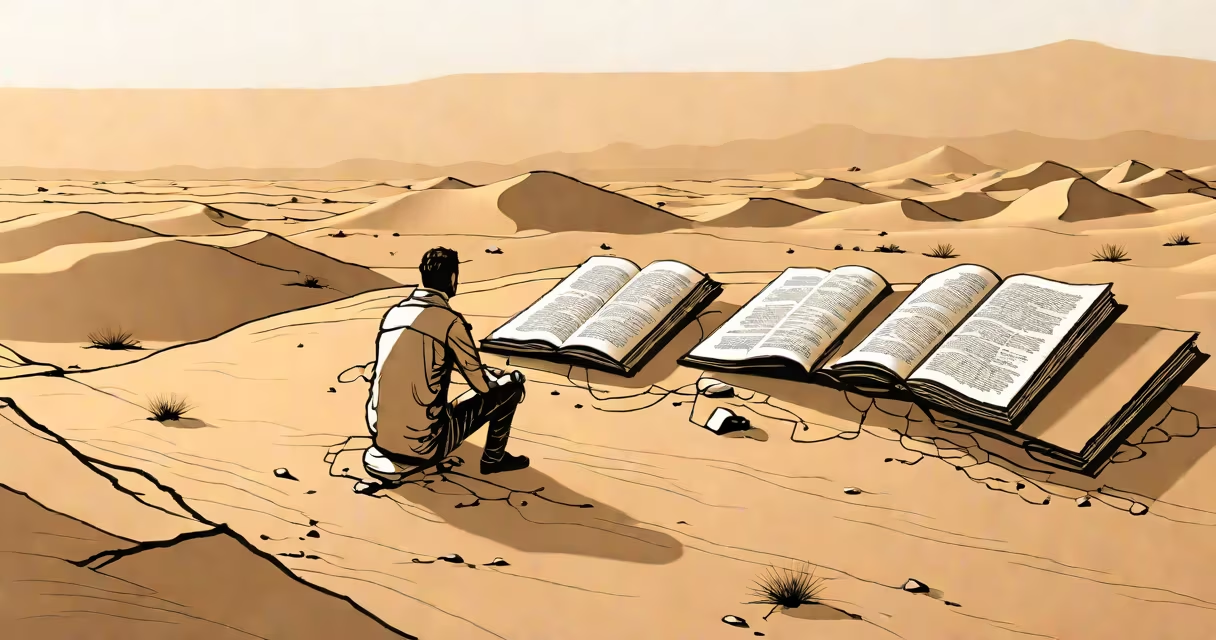
In the Bible, solitude is voluntary withdrawal from social interaction to seek God, as seen in Jesus' 40-day fast in the wilderness (Matthew 4:1). Unlike loneliness, which is unwanted isolation, biblical solitude is chosen for spiritual renewal.
Biblical solitude involves physical separation on God. It's not about being alone but about intentional spiritual engagement. For example, Moses spent 40 days alone on Mount Sinai receiving the Ten Commandments (Exodus 34:28). This solitude wasn't about loneliness but about divine encounter.
| Type | Example | Purpose |
|---|---|---|
| Prayerful solitude | David in the caves of Adullam (1 Samuel 22:1) | Seeking God's guidance |
| Contemplative solitude | Elijah under the broom tree (1 Kings 19:4) | Spiritual renewal |
| Preparatory solitude | Jesus in Gethsemane (Mark 14:32) | Spiritual preparation |
Biblical solitude occurs in moments of crisis, decision-making, or spiritual dryness. For instance, Abraham left his family to follow God's call (Genesis 12:1), experiencing solitude as he journeyed to an unknown land. This solitude was a test of faith and obedience.
Solitude is also used for repentance. After committing adultery with Bathsheba, David spent time in solitude, seeking forgiveness (Psalm 51:10-12). This shows that solitude can be a path to restoration.
Many confuse solitude with loneliness, but biblical solitude is active and purposeful. Loneliness is often passive and unwanted, while solitude is chosen for spiritual growth. For example, the prophet Elijah fled to the wilderness not out of loneliness but to escape Jezebel's threats and seek God's presence (1 Kings 19:3-4).
Another misconception is that solitude is always about retreat. Sometimes, it's about standing alone, like Daniel refusing to eat the king's food (Daniel 1:8-14). Here, solitude is about maintaining faith in the face of peer pressure.
Biblical solitude often leads to encounters with God. When Jacob was alone, he wrestled with an angel (Genesis 32:24-30). This encounter changed Jacob's life and renamed him Israel. Such solitude moments are major, not just about being alone.
I once spent a weekend in solitude, following the biblical model. I withdrew to a quiet place, focusing on prayer and reflection. The experience was challenging but deeply rewarding, leading to a renewed sense of purpose and spiritual clarity.
Solitude is chosen for spiritual growth, while loneliness is unwanted isolation. For example, the psalmist writes, "I am like a desert owl, a solitary bird on a roof" (Psalm 102:6). This describes loneliness, not solitude. In contrast, Jesus sought solitude to pray (Luke 5:16), showing its purposeful nature.
Understanding this distinction is important. Loneliness can lead to despair, while solitude can lead to divine encounter. For instance, the prophet Elijah was lonely when he fled from Jezebel but found solace and purpose in his solitude under the broom tree (1 Kings 19:4-8).
The solitude definition bible reveals that biblical solitude is purposeful separation for spiritual growth, not loneliness. It involves physical separation on God, as seen in Jesus' 40-day fast in the wilderness. Understanding this distinction can lead to deeper spiritual encounters and growth.