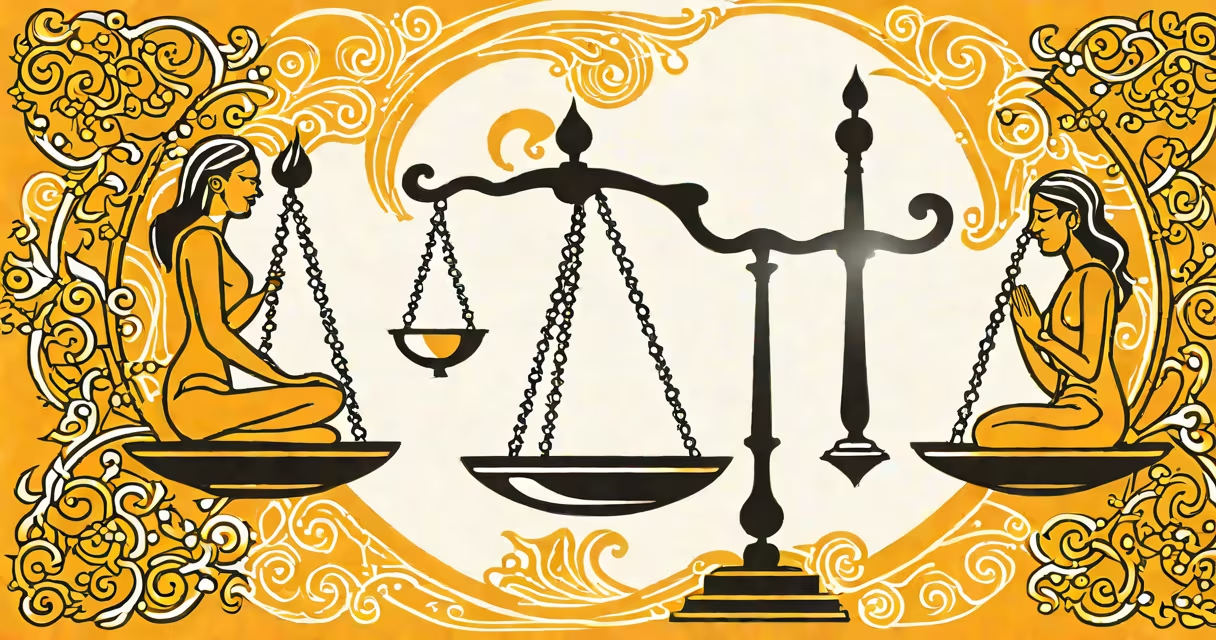
Spiritual duality is the concept of balancing opposing forces within spiritual beliefs, recognizing that both light and dark, creation and destruction, and other contrasts exist together in harmony. This principle appears in many religious and philosophical traditions as a way to understand the complexity of existence.
Duality in spirituality suggests that reality consists of complementary opposites that interact to create balance. These pairs often represent fundamental aspects of life, such as good and evil, masculine and feminine, or active and passive energies. The interplay between these forces is seen as essential for maintaining equilibrium in the universe.
The most common forms of spiritual duality include:
Many cultures and religions incorporate duality into their frameworks. For example, Taoism's yin and yang symbolizes the balance of opposing forces, while Christianity often depicts the struggle between divine goodness and human sin. These concepts help believers understand the nature of existence and their place within it.
One frequent misunderstanding is that spiritual duality equates to moral absolutism, where one force is inherently superior to its opposite. However, most traditions emphasize that both forces are necessary and interdependent. Another misconception is that duality implies a lack of unity, when in fact, many spiritual paths see duality as a path toward greater harmony and wholeness.
For instance, in Hinduism, the concept of sacraments often reflects the balance between material and spiritual aspects of life, reinforcing the idea that duality leads to a deeper understanding of the divine.
Understanding spiritual duality requires recognizing that these opposing forces are not in conflict but rather work together to create a balanced whole. This perspective encourages individuals to embrace both aspects of life, fostering growth and wisdom.