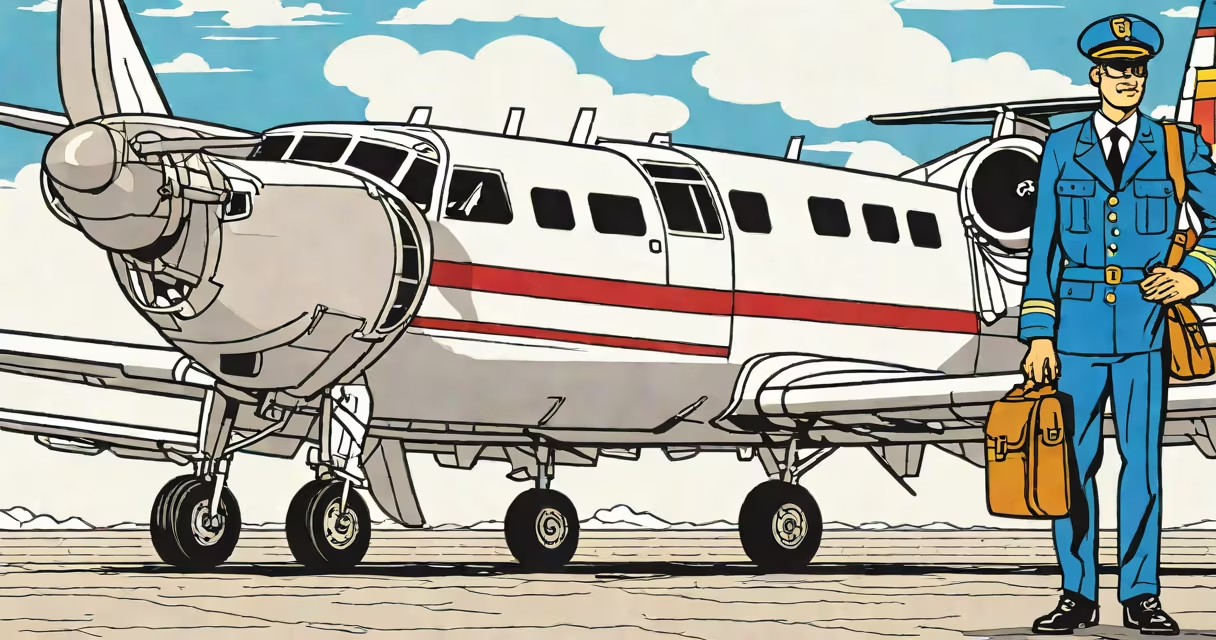
A commercial pilot holds a license from aviation authorities like the FAA or EASA, allowing them to fly aircraft for compensation. This career requires structured training, certifications, and flight hours.
Becoming a commercial pilot involves multiple stages, starting with obtaining a private pilot license (PPL) and progressing through instrument rating (IR), commercial pilot license (CPL), and finally an airline transport pilot license (ATPL). Each stage builds on the previous one, increasing your flying skills and knowledge.
The process typically takes 1-3 years for initial licenses and additional time for advanced ratings. Flight schools offer accelerated programs, while others combine training with college degrees in aviation.
Pilots progress through several certifications:
| Certification | Flight Hours | Key Requirements |
|---|---|---|
| Private Pilot License (PPL) | 40 hours | Pass written and practical exams |
| Instrument Rating (IR) | 50 hours | Fly using only instruments |
| Commercial Pilot License (CPL) | 250 hours | Pass written and practical exams |
| Airline Transport Pilot License (ATPL) | 1,500 hours | Pass written and practical exams |
Commercial pilots work for airlines, cargo companies, charter services, and corporate aviation. Airlines require pilots to transport passengers safely and efficiently, while cargo pilots focus on delivering goods on time.
Corporate pilots fly executives and private individuals, often requiring flexibility and discretion. Cargo pilots operate under tight schedules, prioritizing speed and reliability.
Many believe becoming a pilot is only for the wealthy or those with military experience. While cost is a factor, financing options and scholarships exist. Military service provides valuable experience but isn't mandatory.
Another myth is that pilots only fly. They also handle pre-flight checks, navigation, communication, and emergency procedures. Ground training covers meteorology, physics, and regulations.
John, 18, enrolls in a flight school offering an accelerated program. He earns his PPL after 6 months, then gains experience flying with instructors. Over the next year, he completes his IR and CPL, accumulating 250 flight hours. John then joins a regional airline as a first officer, building hours toward his ATPL. After 1,500 hours, he upgrades to captain.
John's process took 3 years, combining flight training with part-time work. He financed his training through loans and scholarships, proving that becoming a commercial pilot is achievable with dedication and planning.
Beyond flight hours and exams, aspiring pilots need medical certification, often a Class 1 medical for commercial pilots. They must pass background checks and meet age requirements (usually 23 for ATPL). Strong math, physics, and English skills are essential.
During a visit to a local flight school, I observed students training in simulators and real aircraft. Instructors emphasized precision, communication, and quick decision-making. The rigorous process ensures pilots handle real-world challenges safely and effectively.