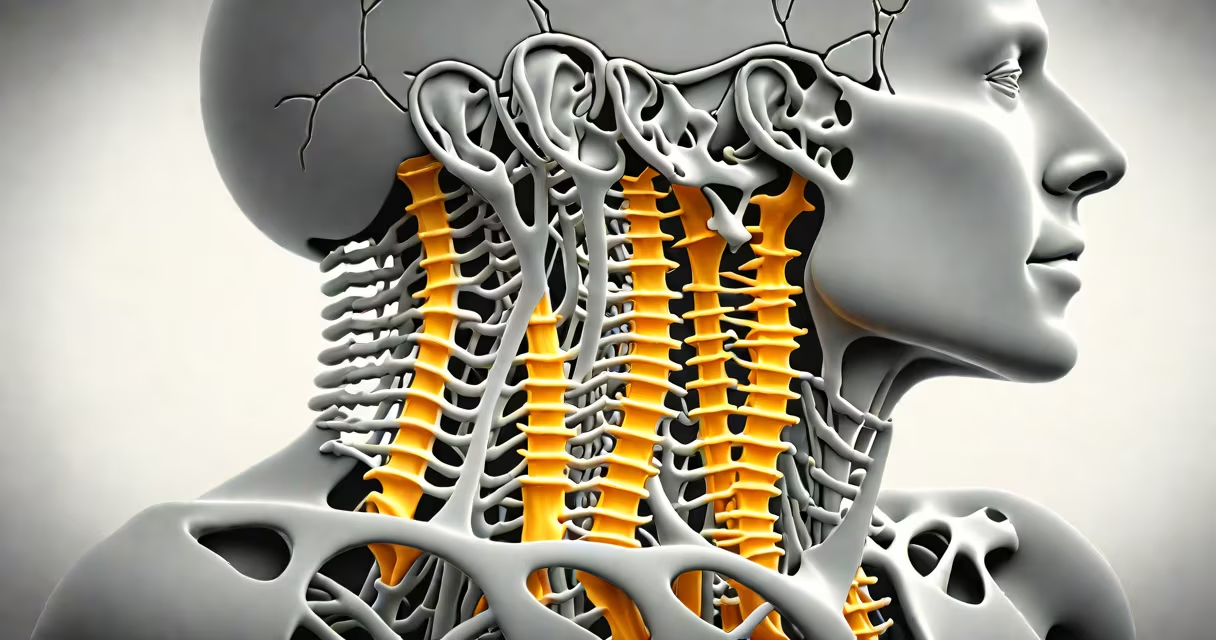
A stiff sore neck results from inflammation, injury, or muscle tension affecting the cervical spine and surrounding tissues. Common causes include poor posture, muscle strains, and sleep positions.
The neck contains seven cervical vertebrae, muscles, ligaments, and nerves. When these structures become irritated or damaged, they trigger pain and reduced mobility. The body responds by tightening muscles as protection, creating stiffness.
Most cases resolve within days. Persistent stiffness beyond a week may indicate a more serious condition requiring medical attention.
| Type | Duration | Common Causes |
|---|---|---|
| Acute | Sudden onset, lasts hours to days | Sleep position, sudden movement |
| Subacute | Lasts 1-6 weeks | Muscle strain, poor posture |
| Chronic | Persists beyond 6 weeks | Degenerative diseases, arthritis |
Poor posture tops the list of causes. Many people develop stiffness from prolonged computer use or looking down at phones. Other frequent triggers include:
Consult a doctor if stiffness:
These symptoms may indicate serious conditions like meningitis or spinal problems.
For mild cases, gentle stretching and over-the-counter pain relievers often help. Maintaining good posture during work and sleep prevents many occurrences.
I've found that adjusting my workstation ergonomics dramatically reduced my frequency of morning stiffness. Simple changes like raising my monitor to eye level made a noticeable difference within weeks.
For persistent issues, see a physical therapist who can recommend targeted exercises. In some cases, doctors may prescribe muscle relaxants or other medications.
Learn what to do sore neck at home for immediate relief. For neck pain accompanied by sore throat or body aches, see our guide on body aches sore throat stiff neck combinations.