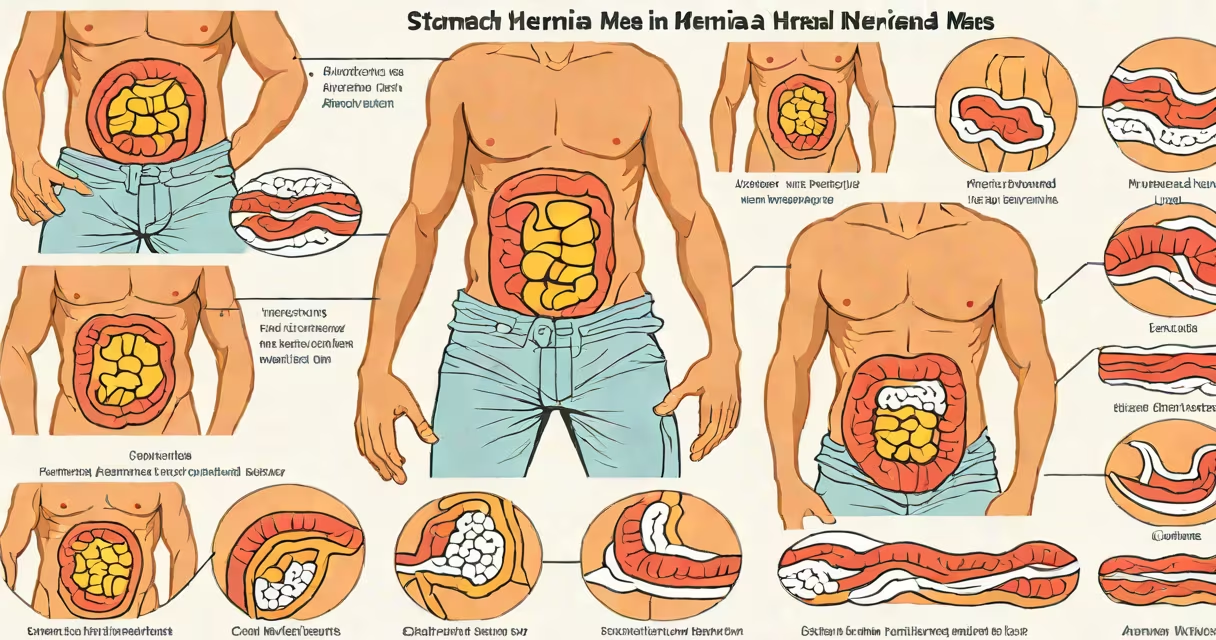
A stomach hernia in men happens when part of an internal organ pushes through a weak spot in the abdominal wall. This creates a bulge that may cause discomfort or pain, especially when bending, lifting, or coughing.
The abdominal wall is a complex structure of muscles and connective tissue that holds organs in place. Weaknesses can develop due to aging, injury, or chronic strain. When pressure inside the abdomen increases-from heavy lifting, persistent coughing, or obesity-organs can protrude through these weak points.
For example, an inguinal hernia occurs in the groin area, while a hiatal hernia involves the stomach pushing through the diaphragm. Both types are common in men, particularly those over 40.
| Type | Location | Common Causes |
|---|---|---|
| Inguinal Hernia | Groin | Aging, heavy lifting, chronic constipation |
| Hiatal Hernia | Upper abdomen (diaphragm) | Obesity, smoking, chronic acid reflux |
| Umbilical Hernia | Near the belly button | Obesity, multiple pregnancies (rare in men), heavy lifting |
| Ventral Hernia | Previous surgical incision site | Surgery complications, infection, poor wound healing |
Many men with stomach hernias notice a visible bulge, especially when standing or straining. Other symptoms include:
If the hernia becomes incarcerated (stuck in place) or strangulated (blood supply cut off), seek immediate medical attention. These conditions cause severe pain, nausea, and inability to pass stool.
Doctors diagnose hernias through physical exams and imaging tests like ultrasounds or CT scans. Treatment depends on severity:
I once knew a man who ignored his inguinal hernia for years, assuming the discomfort was just part of aging. After a sudden bout of severe pain, he underwent surgery and recovered fully within weeks-a reminder that early intervention is key.
While some risk factors (like aging) can't be avoided, men can reduce their chances of developing a hernia by:
Many men confuse hernia symptoms with other conditions like muscle strains or digestive issues. A hiatal hernia, for instance, may mimic heartburn or acid reflux. Always consult a doctor for accurate diagnosis.
According to the American College of Surgeons, hernias affect about 1 in 4 men over their lifetime, making them one of the most common abdominal issues. Early detection and treatment improve outcomes.