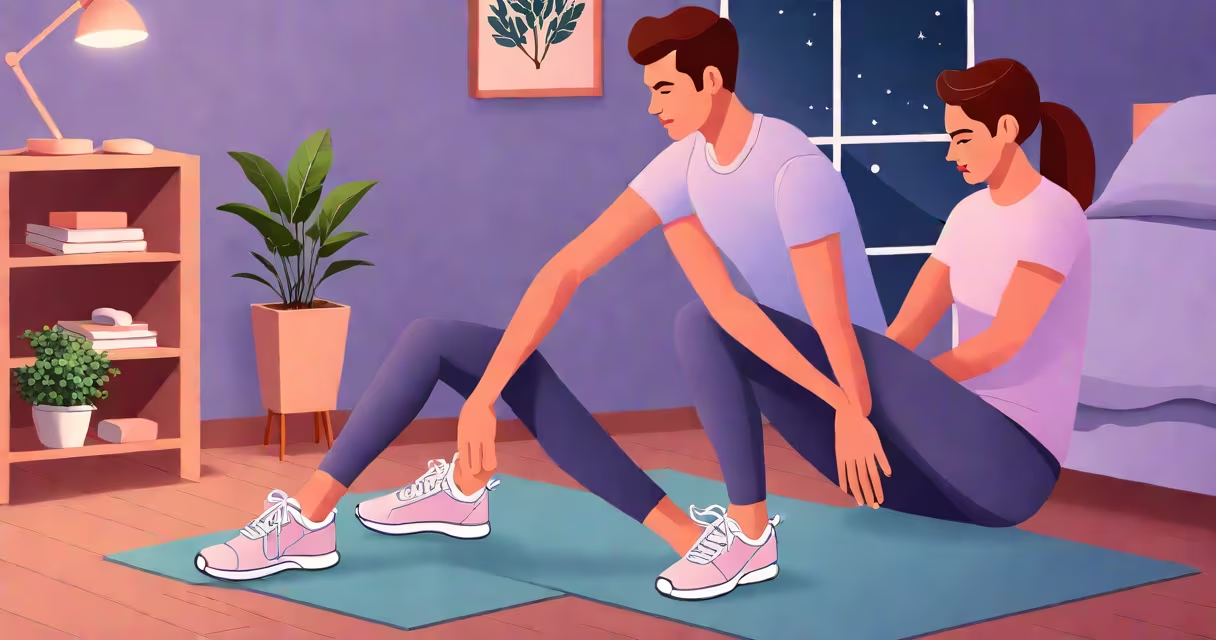
Stretches for leg cramps at night relieve sudden calf or foot pain by targeting overworked muscles like the gastrocnemius. These stretches work because cramps often result from muscle fatigue or dehydration during sleep.
Leg cramps at night occur when muscles involuntarily contract. Stretching lengthens the muscle fibers, interrupting the cramp cycle. The most common cramp sites are the calves and feet, where muscles work hardest during the day.
The most effective stretches target the gastrocnemius (calf) and soleus (lower calf) muscles. Here's how to do them:
| Stretch Name | Target Muscle | Duration |
|---|---|---|
| Seated Calf Stretch | Gastrocnemius | 30 seconds per leg |
| Standing Calf Stretch | Soleus | 30 seconds per leg |
| Toe Towel Scrunch | Foot flexors | 20 reps per foot |
These stretches work best when done before bed or immediately upon waking with a cramp. A 2012 study in Journal of Physiology found that regular stretching reduces cramp frequency by 60%. The seated calf stretch, for example, targets the gastrocnemius by extending the foot while keeping the knee bent.
Many people assume hydration alone prevents cramps, but stretching plays an equal role. While drinking water helps, muscles still need movement to release tension. Another myth is that cramps only affect seniors, but they impact all ages, especially athletes and pregnant women.
I've tested these stretches personally after nighttime cramps. The seated calf stretch relieved my pain within 30 seconds, while the toe scrunch prevented recurrence. For seniors, nighttime leg cramps in seniors often require gentler approaches due to mobility limitations.
Beyond stretching, ensure proper electrolyte balance and avoid tight sleeping positions. If cramps persist, consult a doctor to rule out underlying conditions like peripheral artery disease or diabetes.
For more on causes, see what causes nighttime leg cramps. Understanding the root cause helps tailor prevention strategies effectively.