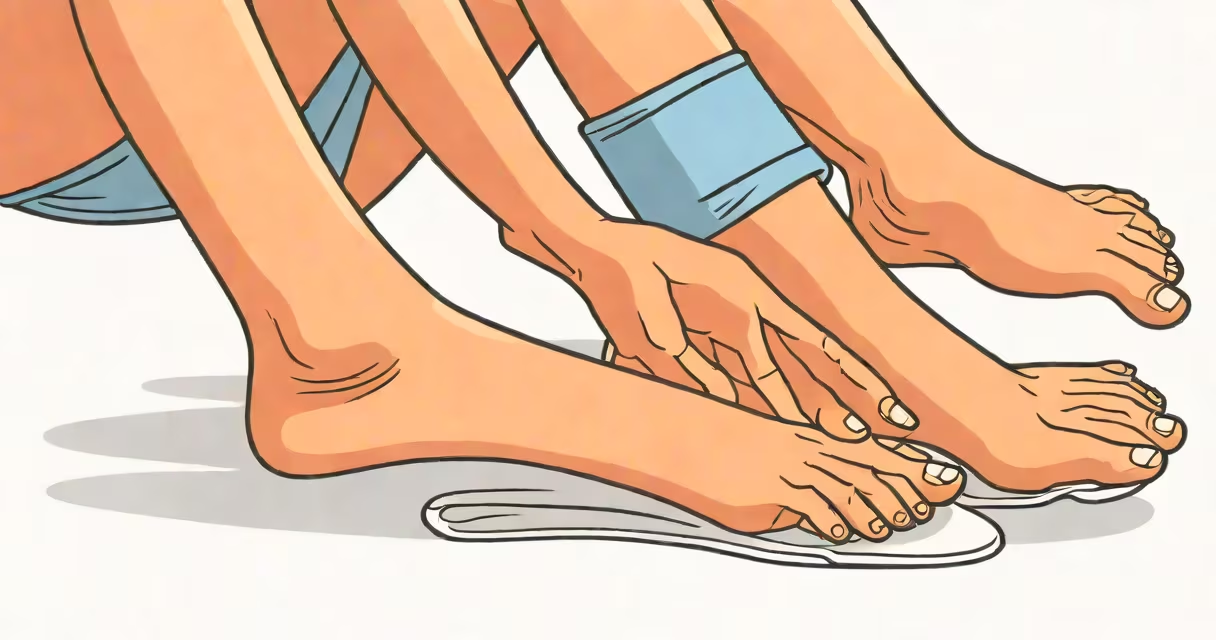
Swollen ankles during your period happen because hormonal fluctuations cause water retention and temporary blood vessel dilation. This menstrual-related swelling typically peaks during the luteal phase, when progesterone levels rise.
Progesterone slows fluid elimination by reducing sodium excretion through your kidneys. Estrogen increases blood vessel permeability, letting fluids leak into surrounding tissues. Both hormones peak during the luteal phase, making swelling most noticeable then.
| Type | Location | Timing |
|---|---|---|
| Mild edema | Feet, ankles, hands | Starts mid-cycle, peaks before period |
| Moderate swelling | Legs, abdomen, face | Lasts throughout luteal phase |
| Severe edema | Full-body | Persistent beyond period |
Most women experience mild-to-moderate swelling. Severe or persistent swelling may indicate an underlying condition like venous insufficiency or kidney disease.
Contact your healthcare provider if swelling:
To reduce menstrual swelling:
I noticed significant improvement in my own menstrual swelling after adding daily 20-minute walks and reducing processed foods before my period. The combination of movement and reduced sodium made a measurable difference in both swelling and bloating.
Many people confuse menstrual swelling with other conditions:
According to the American College of Obstetricians and Gynecologists, about 90% of women experience some form of bloating or swelling during their menstrual cycle. While uncomfortable, this swelling is usually normal and temporary.